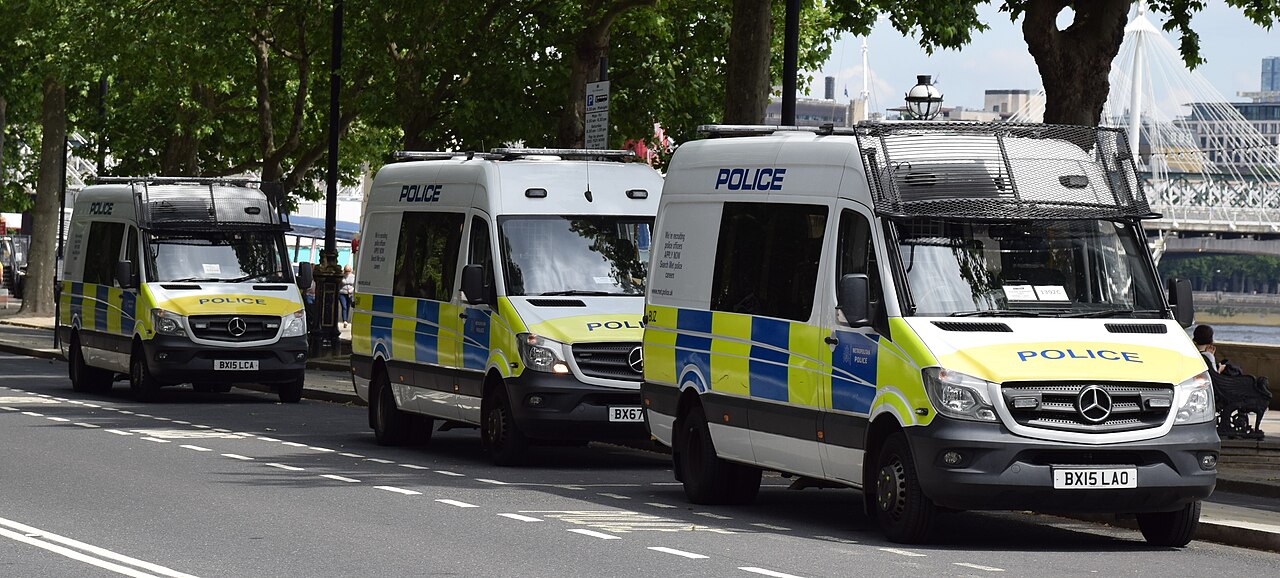
The London Metropolitan Police in action/inaction.
A total of 746 rapes were recorded in London in January, according to publicly available crime data from the Metropolitan Police Service.
The figures mean that, on average, one rape was reported roughly every 60 minutes in the British capital during the first month of the year.
The data, broken down by borough, show particularly high numbers in several inner-city districts. Southwark recorded 41 cases—the highest total—followed by Tower Hamlets and Haringey with 40 each, and Croydon with 39. Newham, Lambeth and Lewisham also reported more than 30 cases each. Even in boroughs with lower totals, double-digit figures were common. Kingston upon Thames recorded 12 cases, Richmond upon Thames 11, and Bexley and Harrow 10 each.
Separate data obtained under the Freedom of Information Act show that in 2023, 780 individuals were investigated for rape offences. Of those, 544 were British nationals, 229 were foreign nationals and seven were of unknown nationality. The statistics do not clarify whether British nationals were born in the UK or naturalised.
Organised group-based sexual abuse in London, often referred to as ‘grooming gangs’—with its existence denied by Labour mayor Sadiq Khan—may well be a contributing factor to the grim statistics.
The numbers came as Britain’s Labour government is still considering adopting an official definition of “Islamophobia,” a move that could have unintended consequences for open discussion of criminal trends, among other social problems.
A recent paper by the think tank Policy Exchange warned that, in past grooming gang (i.e. rape gang) scandals involving largely Pakistani-heritage male groups, authorities were reluctant to act for fear of being branded racist or anti-Muslim.
Noting that perpetrators in Rotherham “were given special treatment because of their race and/or religion,” the report stated
Not only did the gangs exist but a major reason why they went largely unhindered was that people in authority were afraid of being branded racist or anti-Muslim if they acted.