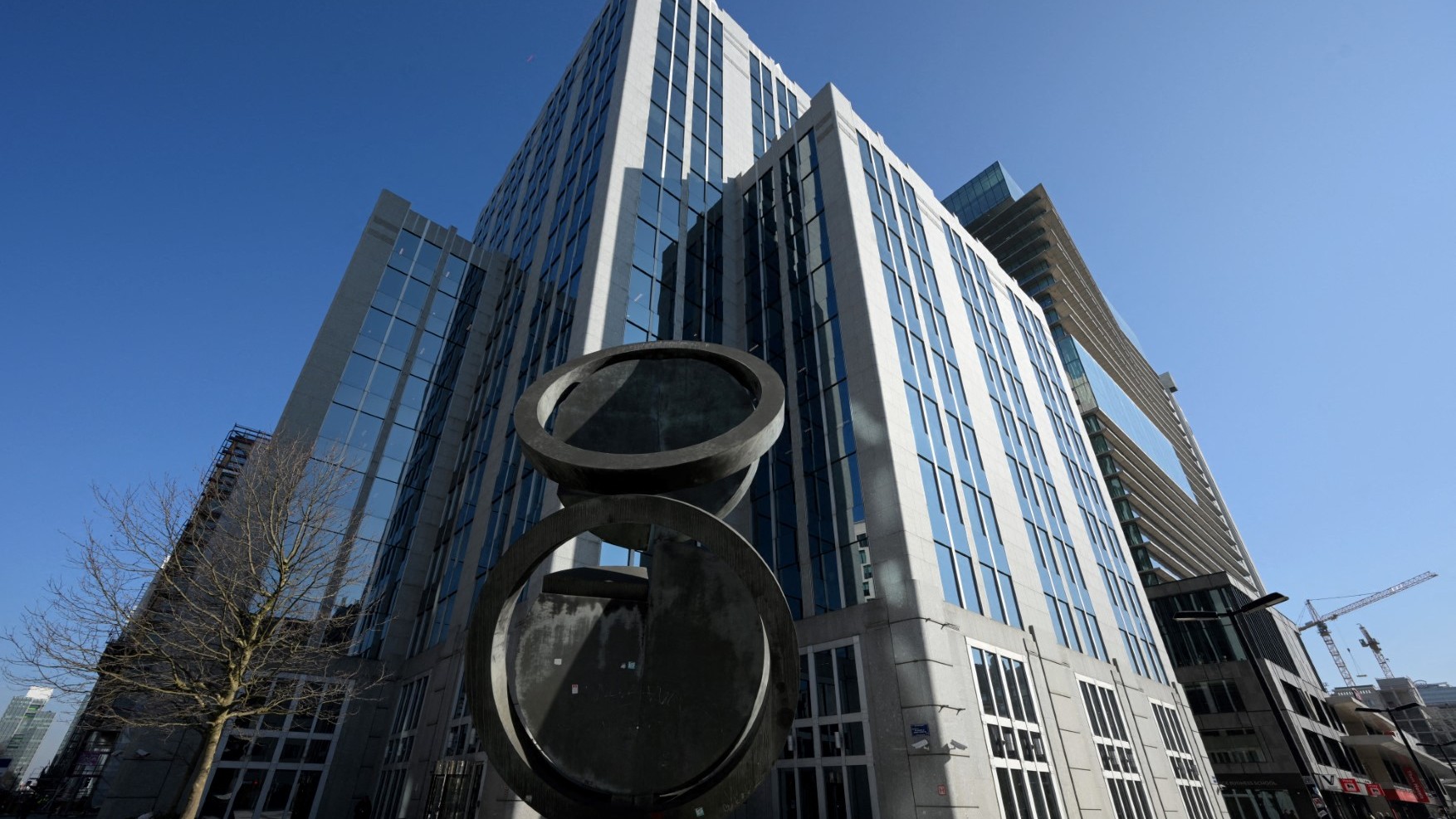
The building housing Euroclear, an international fund depository based in Brussels, Belgium
Nicolas Tucat / AFP
On Friday, December 12th, Russia’s central bank announced that it is pursuing legal action against Euroclear, the Belgium-based financial group holding Moscow’s frozen international reserves.
The European Union wants to convert the frozen assets of the Russian Central Bank into a zero-interest loan to finance Ukraine’s military and budgetary needs in the coming years.
On Friday, Russia’s central bank said it was filing “a lawsuit against Euroclear in the Moscow Arbitration Court” due to “the illegal actions” of the institution.
“The actions of Euroclear depository caused damage to the Bank of Russia due to the inability to manage funds and securities belonging to the Bank of Russia,” the bank said in a statement.
It remains unclear whether the lawsuit has formally been filed or how any Russian-based legal claim would be enforced internationally. Euroclear declined to comment directly but noted it is currently involved in over 100 legal cases in Russia.
G7 countries have already used interest accrued on frozen assets to fund a $50-billion loan for Ukraine. The EU’s plan involves a complex structure whereby Euroclear would loan the money to the EU, which in turn would lend it to Ukraine. Kyiv would only be required to repay the loan after Russia ends the war and pays reparations for the damage caused—an outcome that currently appears highly unlikely.
The Danish Presidency of the EU announced on Thursday that EU ambassadors have authorized the European Commission to keep €210 billion in Russian state assets blocked until the Kremlin pays post-war reparations to Ukraine.
Belgian prime minister Bart De Wever has consistently opposed the confiscation of Russian assets, saying it presents an unacceptable financial risk for Brussels—one that could effectively bankrupt the country—and also warned it would undermine the ongoing U.S. peace efforts. He also stressed in an interview it is highly unlikely that Russia would lose the war, making reparations to Ukraine a highly unlikely scenario.