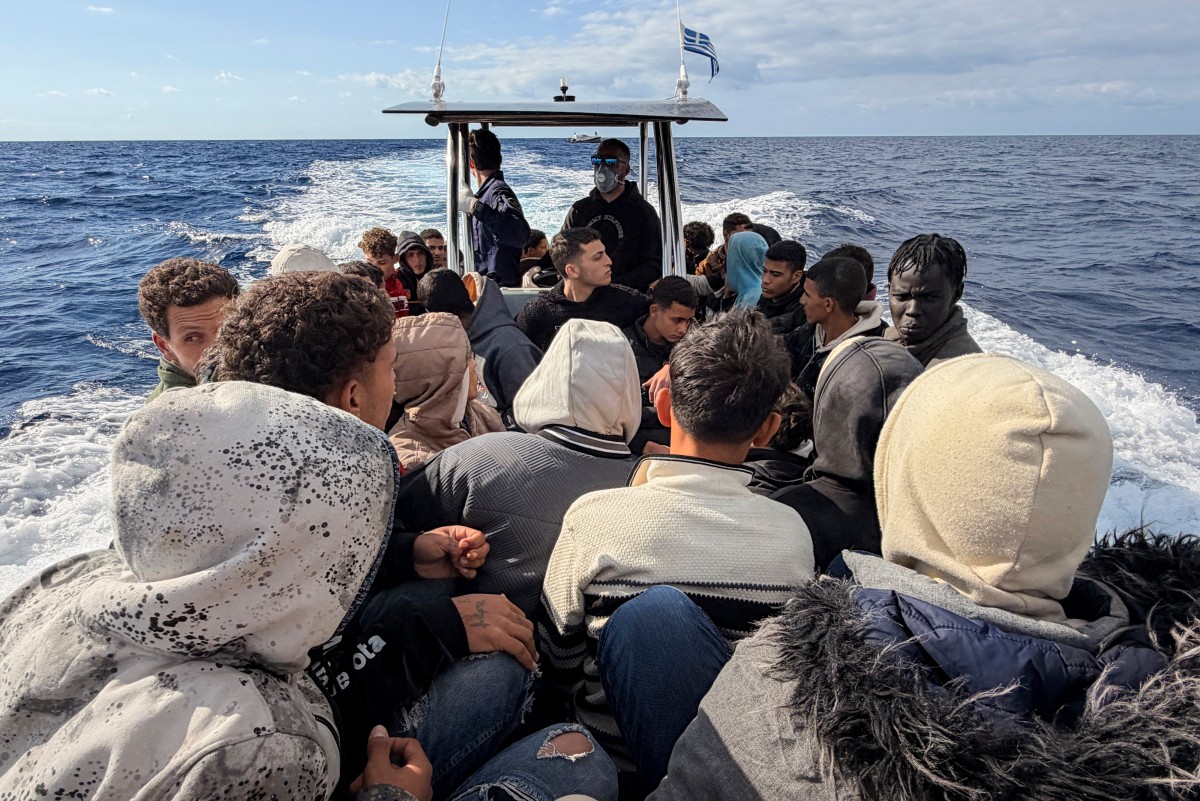
Locals, helping the Greek Coast Guard in their rescue operation, navigate towards the south coast of Crete island, on November 18, 2025, aboard of a rubber boat with migrants, who were picked up at sea while attempting to cross the Mediterranean sea.
Eleftherios Elis Mitza/AFP.
The long-awaited trial of 24 humanitarian workers on Lesbos has begun, marking a significant moment in Greece’s effort to strengthen border security during years of intense migration pressure.
The defendants, active on the island between 2016 and 2021, face serious charges—including participation in a criminal organisation, facilitating the illegal entry of third-country nationals, and money laundering—offences that carry sentences of up to 20 years.
Greek authorities argue that the case centres on safeguarding the country’s borders at a time when Lesbos had become a major gateway for irregular migration. Officials maintain that strict enforcement is necessary both to protect national security and to curb smuggling networks that profit from dangerous sea crossings.
Among the accused is Seán Binder, a volunteer with the non-governmental organization ERCI, arrested in 2018 alongside Syrian activist Sarah Mardini. While he insists his actions were humanitarian, the prosecution argues that informal rescue operations risk interfering with official border controls and may inadvertently support smuggling routes.
Since 2020, Greece has tightened regulations for NGOs and individuals working with migrants, and no independent search-and-rescue groups now operate on Lesbos, even though new arrivals continue. Authorities say these measures ensure clearer oversight and prevent unregistered actors from operating in sensitive border areas.
Although critics—including human rights groups—claim the charges are excessive, the case reflects a wider European shift toward firmer migration management. Governments across the continent are increasingly prioritising secure borders and stricter controls to deter irregular arrivals and limit the influence of unofficial rescue operations.