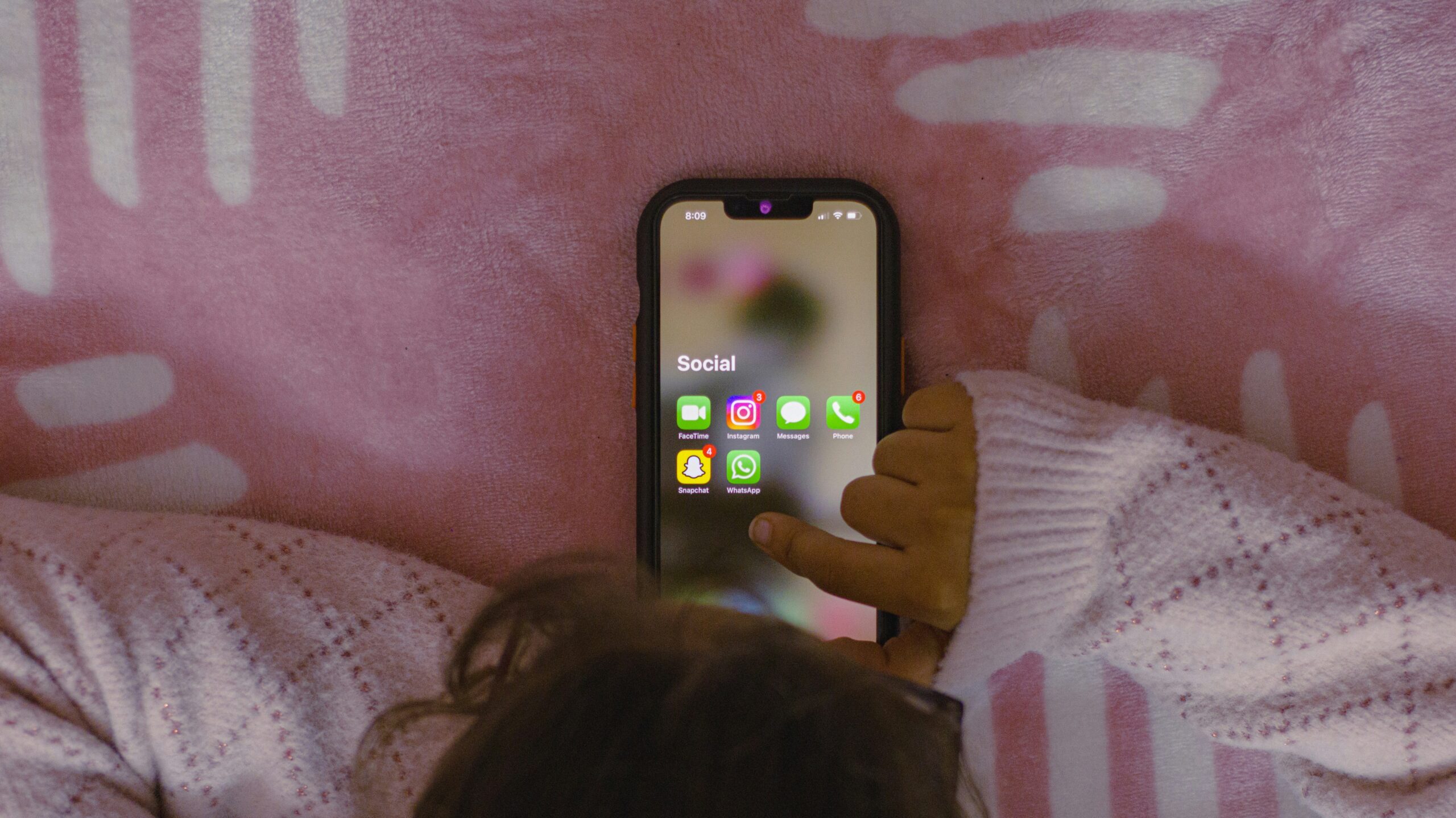
Photo by Sanket Mishra on Unsplash
Children under five should be limited to one hour of screen time a day, the UK government has said, as ministers respond to mounting evidence that early and prolonged exposure to digital devices may be affecting development.
New guidance published by the Department for Education, backed by Education Secretary Bridget Phillipson, advises that children under two should avoid screens altogether unless using them with an adult. It also recommends keeping screens away from mealtimes and before bed, and discourages fast-paced content.
Prime Minister Keir Starmer said parents face a “battle” in managing screen use, with devices now embedded in everyday life.
The recommendations follow a review of available evidence by England’s children’s commissioner Rachel de Souza and paediatrician Russell Viner. Their findings suggest that extended periods of solo screen use are linked to poorer sleep, reduced physical activity, and weaker developmental outcomes.
Researchers are also examining the effects of increasingly fast-moving digital content. Studies indicate that rapid visual stimulation can overwhelm young children’s ability to process information and may trigger stress responses, while reducing time spent in direct interaction with parents and caregivers.
The guidance emphasises that not all screen use is equal. Watching content with an engaged adult is associated with better outcomes than passive use, and parents are encouraged to model healthier behaviour themselves, as children tend to mirror adult habits.
However, officials acknowledge that limiting screen time can be difficult in practice. Parents often rely on devices to manage daily routines, particularly during busy periods such as mornings or mealtimes.
The move comes as concerns grow about how early exposure to screens is shaping behaviour. High levels of dependence on digital devices at a young age, alongside reduced face-to-face interaction, have prompted warnings that the long-term effects on attention, emotional regulation, and social development are not yet fully understood.
Ministers say the guidance is intended to support, rather than judge, families. It will be kept under review as further evidence emerges.
The government is also consulting on stricter rules for older children, including a possible ban on social media access for under-16s. Shadow education secretary Laura Trott said the current guidance was a step forward but called for more decisive action.