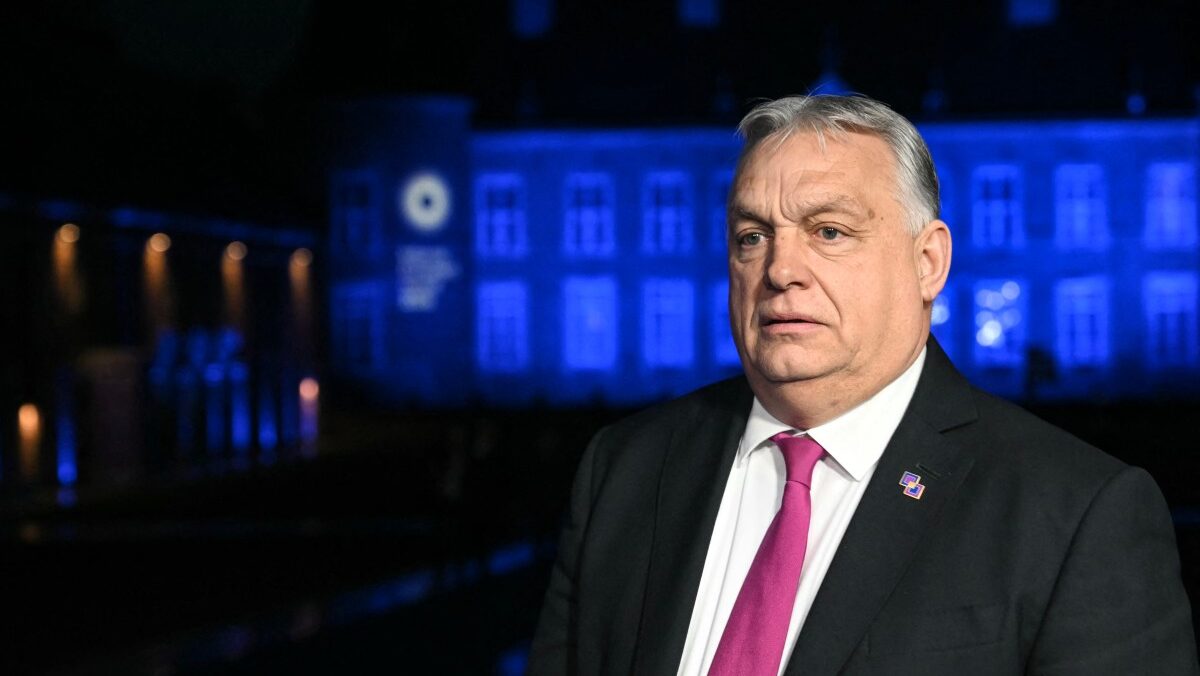
Hungary’s Prime Minister Viktor Orbán leaves after attending the Informal EU Leaders’ Retreat at the Alden Biesen Castle, in Rijkhoven on February 12, 2026.
NICOLAS TUCAT / AFP
Hungarian prime minister Viktor Orbán spoke to GB News in his first interview with a UK broadcaster, explaining Hungary’s approach to controlling illegal migration.
His administration has maintained strict border measures since the 2015 migration crisis, aiming to prevent unauthorized crossings into the country.
Orbán highlighted that the key to Hungary’s approach is “determination”:
So if you decide that you stop them, stop them. It’s sometimes not the nicest job, but if you decide that this is our borderline and nobody can cross it without our permission, you have to keep the line and you have to do so.
The prime minister stressed that crossing the border without permission is treated as a criminal offense.
Since implementing the border measures, which include razor-wire fences along the southern borders with Serbia and Croatia, armed police patrols, surveillance cameras, and fiber-optic sensors, illegal crossings have been sharply reduced. Authorities redirect migrants attempting to enter to legal entry points where they can claim asylum under Hungarian and EU law. Attempted crossings fell from more than 100,000 in 2022 to around 12,000 last year. Migrants who make it through the fence unlawfully are not allowed to remain in Hungary.
Meanwhile, the UK has continued to face high numbers of migrants crossing the Channel. In 2025, 41,427 people crossed illegally, only slightly below the 2022 record of 45,755. The British government has spent more than €2 billion on border security measures in recent years, but small boat arrivals remain a persistent challenge.