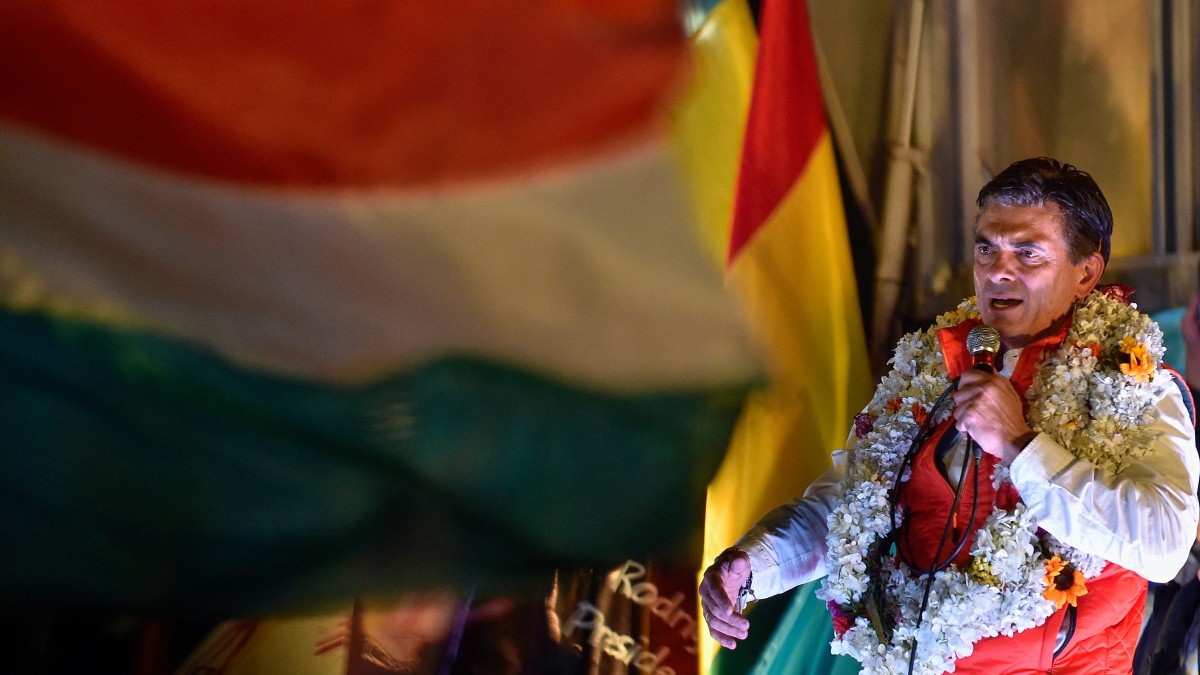
Bolivia’s president-elect Rodrigo Paz, delivers a speech to supporters following the results of the run-off presidential election in La Paz, on October 19, 2025.
Jorge Bernal / AFP
On October 19th, Sunday, Bolivians elected centre-right senator Rodrigo Paz Pereira as their new president, ending two decades of Socialist rule that left the South American nation deep in economic crisis.
With 97.8% of ballots counted, the Supreme Electoral Tribunal said Paz had 54.6% of the vote.
The result sparked celebrations across La Paz, where crowds gathered with fireworks and music. “We came to celebrate the victory with great hope of a new direction for Bolivia,” said Julio Andrey, a 40-year-old lawyer.
Paz, 58, the son of a former president, has pledged what he calls “capitalism for all”—a mix of decentralization, lower taxes, fiscal discipline and continued social spending. In his victory speech, he declared that Bolivia was “reclaiming its place on the international stage.”
Paz also said he had received a congratulatory message from U.S. president Donald Trump, while Secretary of State Marco Rubio stated that Washington “stands ready to partner with Bolivia on shared priorities.” Rubio added that “after two decades of mismanagement, President-elect Paz’s election marks a transformative opportunity for both nations.”
Under former Socialist president Evo Morales, Bolivia nationalized industries, broke ties with Washington and aligned with other leftist governments. Paz’s victory marks a sharp political and economic turn for the country.