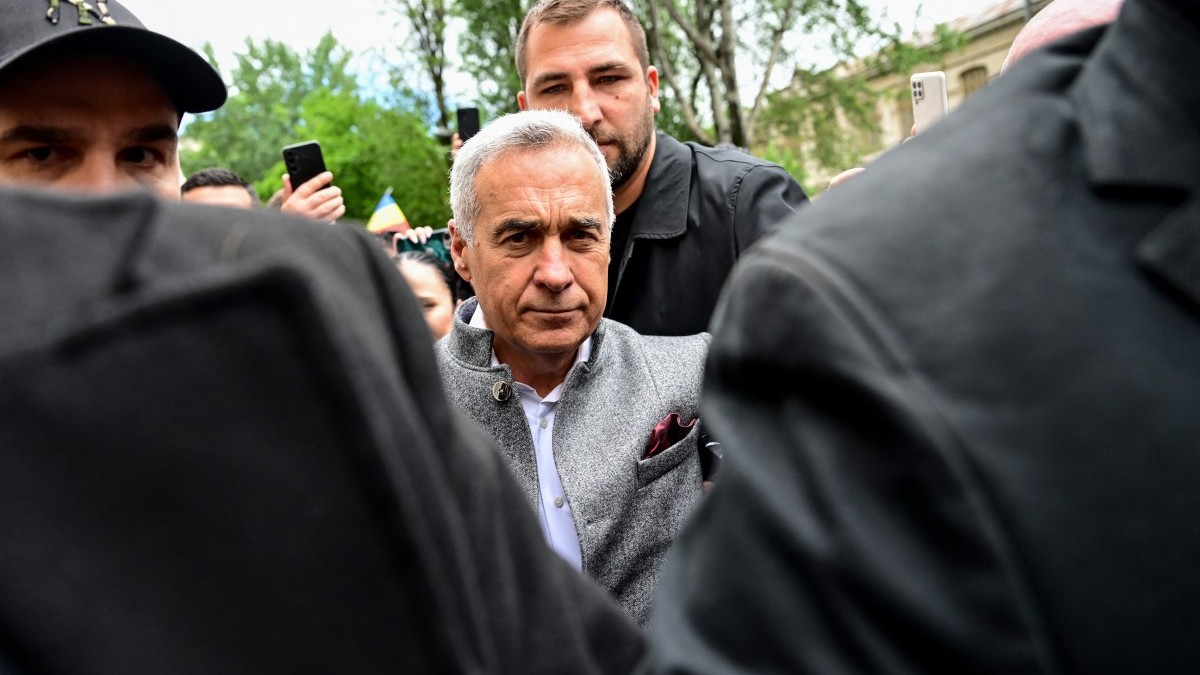
Călin Georgescu (C) arrives at the Prosecutor General’s Office sourrounded by his bodyguards in Bucharest, Romania, on May 27, 2025.
Daniel Mihailescu / AFP
Romanian former presidential candidate Călin Georgescu was indicted by prosecutors on Tuesday, September 16, charged with complicity in undermining the constitutional order, spreading false information, and founding an antisemitic organisation (in three of the six charges).
Prosecutor general Alex Florenta set out the case against Georgescu and 21 other individuals—ncluding alleged paramilitary leader Horatiu Potra—each allegedly “the beneficiary of Russia’s hybrid war actions.”
The Constitutional Court’s decision in December 2024 to cancel the election was justified by claims of “foreign state” influence—widely interpreted as meaning Russia. But critics argue the annulment also reflected pressure from the European Union to prevent a NATO-skeptic, pro-sovereignty candidate from advancing. Romania’s annulled presidential elections hence sparked controversy, with critics warning that pressure from Brussels has undermined national sovereignty.
Right-winger and conspiracy theorist Georgescu won the first round of voting in November but was subsequently banned from taking part in the re-run after prosecutors. Known for his conservative social views and opposition to supranational control, Georgescu now faces up to 20 years in prison if convicted. Prosecutors allege he benefited from Russian “hybrid war” activities, including disinformation and cyberattacks, accusations his supporters dismiss as politically motivated.
Among the 21 others indicted in the case are Horaţiu Potra, a dual Romanian–French national described by authorities as a paramilitary leader. Prosecutors claim he intended to mobilize unrest in Bucharest after the election’s cancellation. Potra has since fled the country.
For many Romanians, the central issue is no longer Georgescu himself, but whether their democratic process is being undermined by outside interference. The annulment of an election result—in an EU member state—has deepened public mistrust and fueled debate over the extent to which national sovereignty is being eroded in the name of “European stability.” As if to confirm this, former European Commissioner Thierry Breton strongly hinted that EU pressure could have played a role in the decision to cancel last year’s election following the first round victory of Georgescu.
Eventually the re-run of the presidential election was won by Nicușor Dan, with runner-up national sovereigntist George Simion vowing to continue to fight to put Romania “first.” Ultimately pressure on Romanians to vote the ‘correct’ way has added to the populist pressures facing Brussels, further undermining the EU claims to support democracy.