Genya SAVILOV / AFP
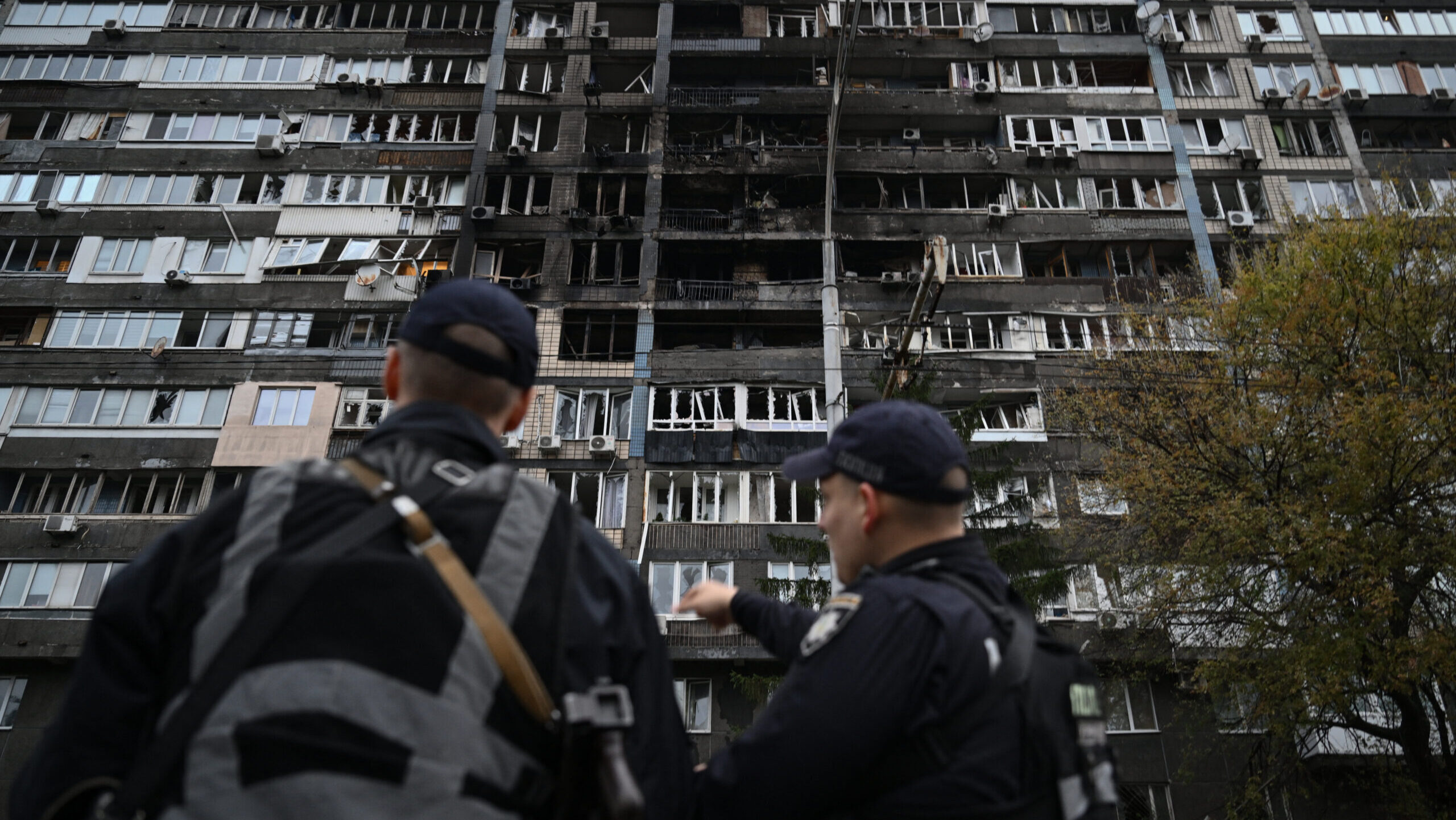
Early on Friday, October 10th, Kyiv experienced widespread power and water outages following what the air force described as a “massive attack,” as Russian forces struck the city’s infrastructure.
“The capital of the country is under an enemy ballistic missile attack and a massive attack by the enemy strike drones,” the Ukrainian air force said, urging locals to remain in shelters.
Kyiv mayor Vitali Klitschko said that Russian forces had struck “critical infrastructure,” reporting at least nine people wounded, five of whom were hospitalized. He posted on Telegram
The left bank of the capital is without electricity. There are also problems with water supply.
Energy Minister Svitlana Grynchuk said Russian forces were “inflicting a massive strike” on the grid. “As soon as security conditions allow, energy workers will begin clarifying the consequences of the attack and restoration work,” she said.
Fearing an incoming hypersonic Kinzhal missile—especially hard to detect and intercept—Kyiv placed the entire country on alert on Friday.
Ukraine has stepped up its own drone and missile strikes on Russian territory. On Tuesday, October 7th Ukraine launched a large barrage of UAVs for a second night in a row at Russia, which said it had shot down 184 of the projectiles. According to a statement from Russia’s defence ministry, most of the drones were intercepted over the border regions of Kursk and Belgorod.
The strikes followed Monday’s reported interception of 251 UAVs, one of Kyiv’s largest attacks to date, which caused two fatalities and left around 1,000 people without electricity in Belgorod.
Tuesday’s attack came after Ukrainian president Volodymyr Zelensky announced that ‘Ukraine is ready to begin exporting weapons,’ portraying his country as an emerging regional hub for arms production, including drones.