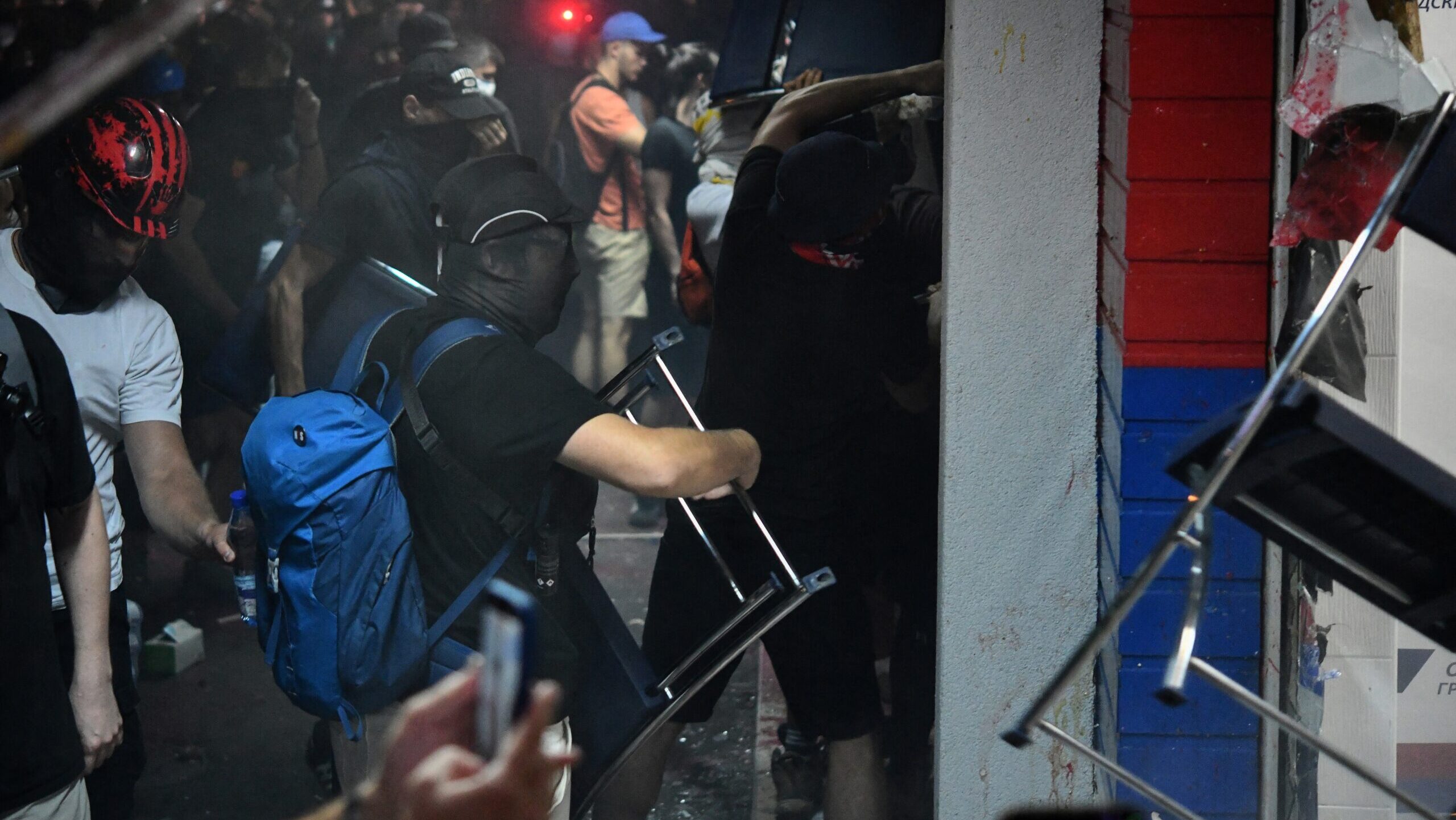
Protestors vandalise the Novi Sad headquarters of the ruling Serbian Progressive Party (SNS)
Photo by AFP
Thousands of anti-government protesters clashed with police again on Friday in the Serbian capital, Belgrade. The unrest—ongoing since Wednesday evening—has raised serious concerns about a possible escalation in the fight for early elections, with violence spreading to more than 30 towns across the country since Thursday.
A series of clashes erupted in central Belgrade on Friday, marking the fourth consecutive night of violence between riot police and rival groups. Tear gas, stun grenades, and fireworks were used against opposition demonstrators.
Protests have taken place almost daily in Serbia since November, with hundreds of thousands attending some rallies. The catalyst was the collapse of a railway station roof that killed 16 people. Public outrage and calls for a transparent investigation eventually led to the announcement of early elections.
While the demonstrations had remained mostly peaceful, tensions escalated sharply this week when large groups of pro-government supporters—many wearing masks and some armed with batons and fireworks—attacked protesters. Dozens have been arrested across the country in recent days, including after the ruling party’s offices in Novi Sad were ransacked.
Police have rejected accusations of excessive force, claiming instead that protesters attacked officers. More than 120 police officers have reportedly been injured over the past few nights.
Although the protests have led to the resignation of the prime minister and the collapse of his cabinet, Vučić remains firmly in control of the newly reshuffled government.