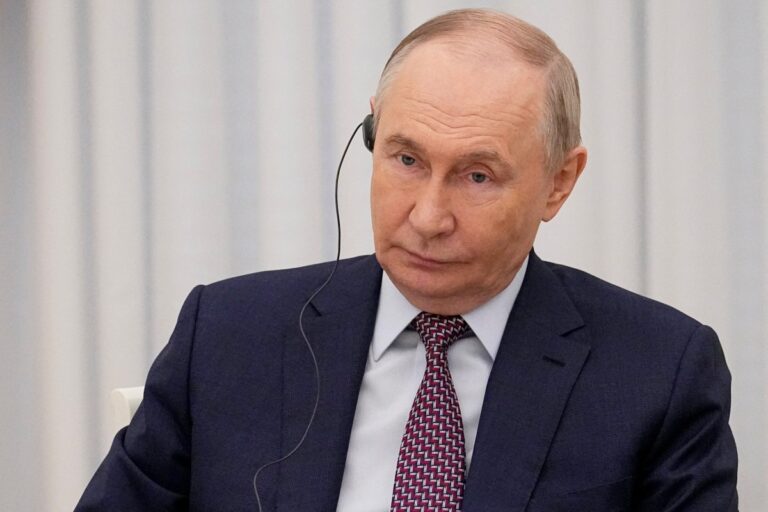
Slovakia’s Foreign Minister Juraj Blanár during a joint press conference with Poland’s Foreign Minister (not seen) after their meeting in Warsaw on March 13, 2025.
Wojtek Radwanski / AFP
Slovakia has resisted calls from Brussels to curb its purchases of Russian energy, citing high costs and long-term contractual obligations. On Wednesday, September 24th Foreign Minister Juraj Blanár emphasized that halting Russian gas imports could cost the country up to €10 billion.
He stressed that diversification takes time and urged “some kind of empathy” from EU partners.
Blanár also pointed to what he called a certain hypocrisy in EU criticism. While Slovakia and Hungary are accused of being outliers for maintaining ties with Russia, he noted that liquefied natural gas deliveries to Western Europe from Russia have increased by 30% over the past year. He argued this shows the picture is “more colourful than black and white,” highlighting inconsistencies in EU enforcement of sanctions.
Brussels is advancing a 19th sanctions package aimed at phasing out Russian LNG by 2027, a year earlier than planned. Slovakia and Hungary have vowed to oppose any new sanctions that threaten their energy security, with the LNG ban designed to spare pipeline supplies.
Hungary’s Foreign Minister Péter Szijjártó added that energy supply is a purely physical issue: “It’s nice to dream about buying oil and gas from sources other than Russia, but we can only purchase where infrastructure exists.”
This stance follows Prime Minister Robert Fico’s consistent opposition to previous sanctions. Earlier this month, he warned that Slovakia would block any further measures unless Brussels adjusted climate and energy targets, and he previously criticized the 18th sanctions package as “idiotic,” citing risks of energy shortages and financial exposure to Gazprom.