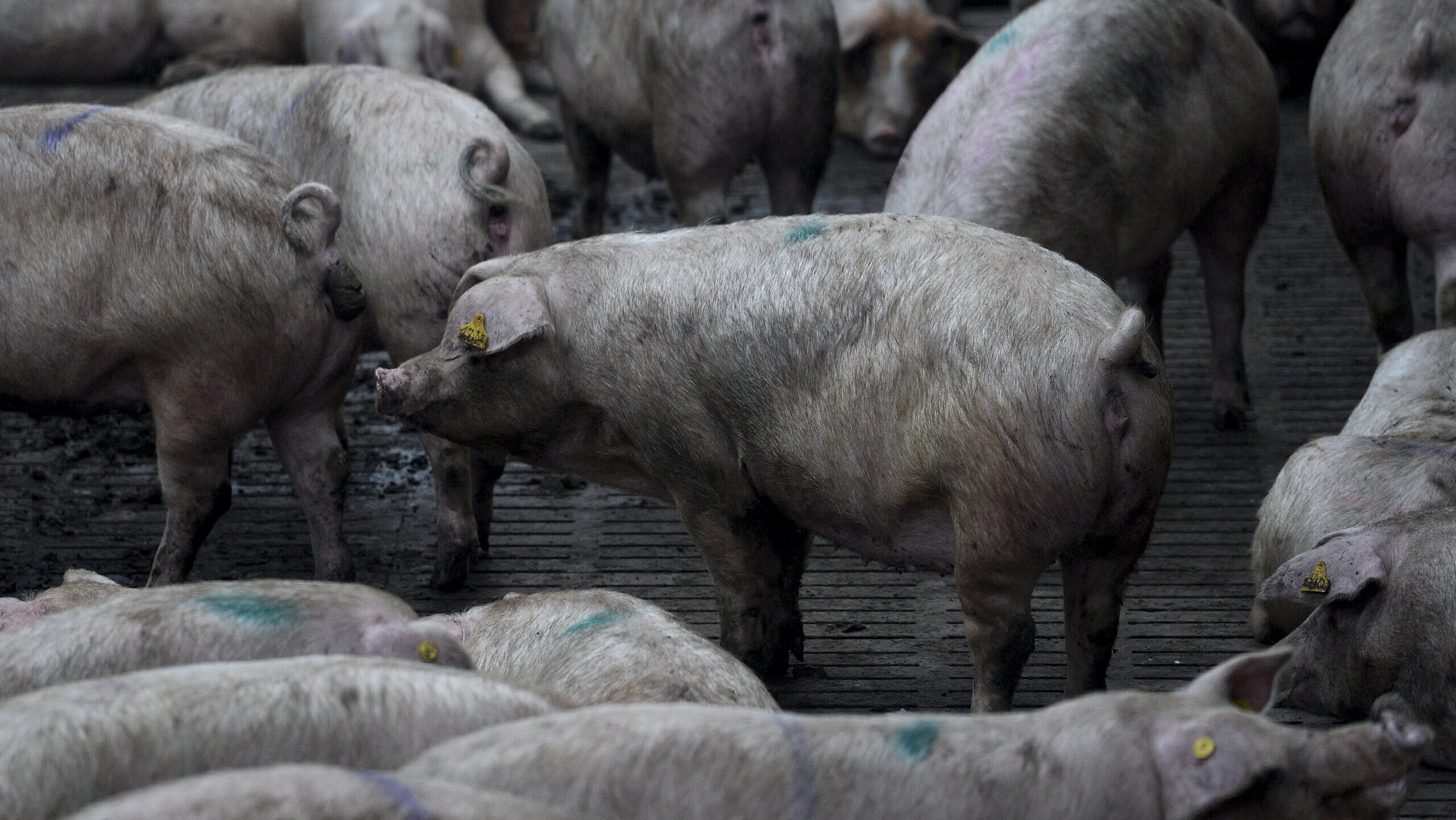
Pigs in a pen in La Portella near Lleida, Catalonia
JOSEP LAGO / AFP
Spain moved on Saturday to contain the economic fallout from its first cases of African swine fever (ASF) in 31 years, after two infected wild boars were detected in Catalonia. The Agriculture Ministry warned the outbreak poses a serious threat to the country’s pork sector, one of the largest in the world.
Agriculture Minister Luis Planas said Madrid’s goal was to “limit the economic impact on the agricultural sector as much as possible,” as export disruptions began to mount. Spain is the world’s third-largest producer of pork and pork derivatives, exporting nearly three million tonnes a year to more than 100 countries. But Planas confirmed that around one-third of those markets had already suspended imports automatically following Friday’s announcement.
Mexico — a major buyer of Spanish pork — was among the first to halt shipments, issuing a suspension hours after Catalan officials confirmed the ASF cases, the country’s first since 1994.
Regional authorities in Catalonia have created two containment zones around the affected area and imposed restrictions on outdoor activities to prevent further spread.
ASF does not affect humans but is highly contagious and fatal for pigs. The disease remains active across several EU and Eastern European states, keeping the continent on alert.