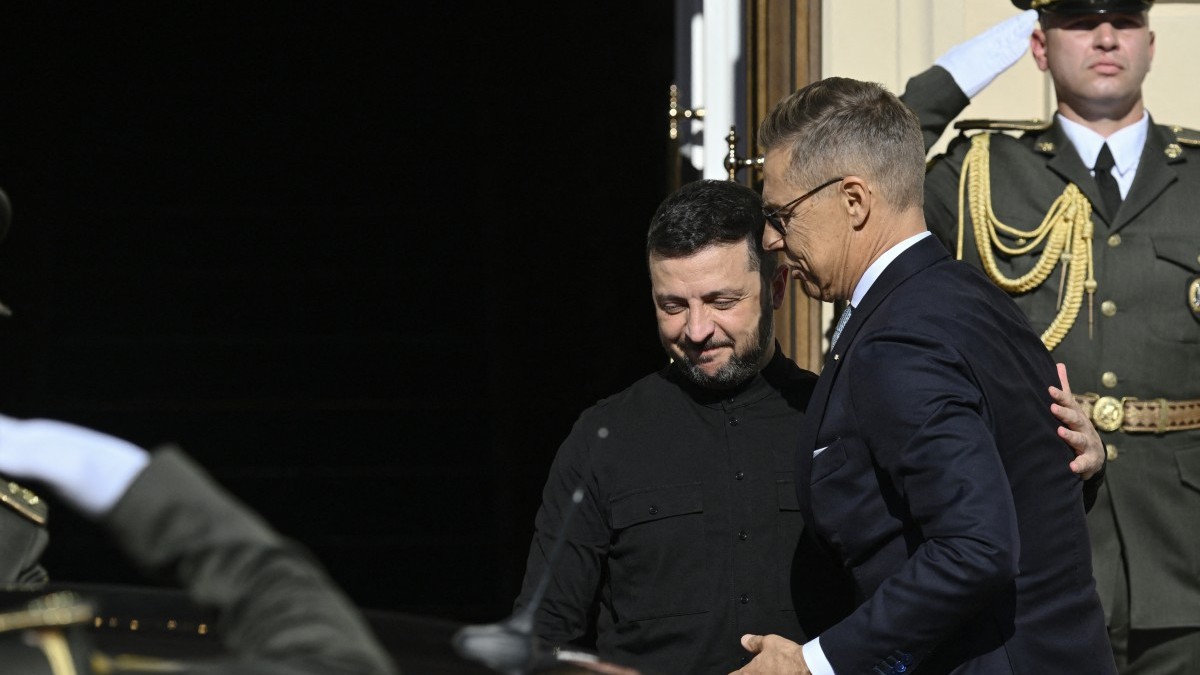
Volodymyr Zelensky welcomes Finland’s President Alexander Stubb in Kyiv on September 11, 2025
Genya Savilov / AFP
Thursday, September 11th saw Finnish President Alexander Stubb visit Kyiv to meet with Ukrainian officials and review matters of security cooperation. Up for discussion were sanctions targeting Russia, according to Andriy Yermak, Chief of Staff of Ukraine’s Presidential Office.
Stubb, a close European confidant of U.S. President Donald Trump, has previously participated in high-level diplomatic discussions ahead of Trump’s meetings with Russian President Vladimir Putin.
During his visit, Stubb met with President Volodymyr Zelensky and visited the Wall of Remembrance to honor Ukraine’s fallen soldiers. The two leaders are set to discuss security projects, European integration, infrastructure investments, and guarantees for Ukraine’s security.
According to Yermak
We will also discuss increasing pressure on Russia, sanctions, and the importance of lasting peace. We are grateful for the consistent and strong support of Finland and Alexander Stubb personally.
Finland—which joined NATO in 2023—shares a 1,300-kilometer border with Russia and has strengthened its defense ties with Western allies since the war began.
Stubb has argued that sanctions targeting countries still trading with Moscow are the most effective way to push Russia to end the war.
In contrast, Hungary has voiced criticism of Ukraine’s actions in bilateral relations. Meeting with Ukrainian Deputy PM and minister in charge of EU integration Taras Kachka in Budapest on Thursday, Foreign Minister Péter Szijjártó stated that the deterioration of relations is entirely Ukraine’s responsibility, adding that Hungary has consistently supported positive gestures such as the Budapest Hungarian-Ukrainian bilingual school and the recent launch of direct train services.
Szijjártó also demanded Ukraine restore the rights of the Hungarian community in Transcarpathia and cease endangering Hungary’s energy security, emphasizing
Not Russia, but ourselves prompted this request.
Szijjártó argued that Ukraine’s European Union accession is contrary to Hungary’s economic and security interests, suggesting instead strategic EU-Ukraine cooperation.