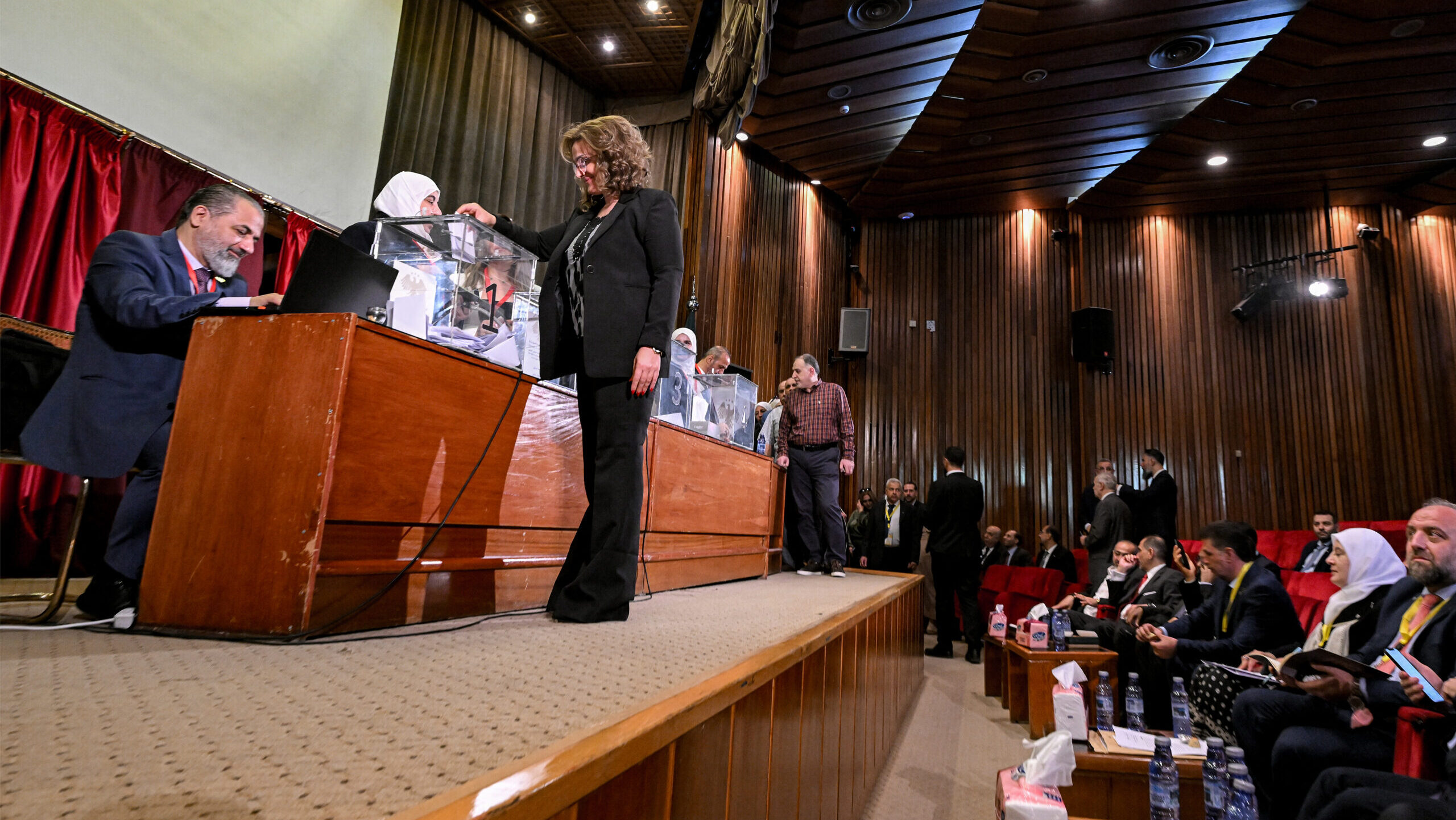
A member of Syria’s local committees votes in the country’s selection process to designate an interim parliament
LOUAI BESHARA / AFP
Syria held its first parliamentary election on Sunday, October 5th, nearly a year after Bashar al-Assad was ousted. The vote was not a direct election by citizens: instead, around 7,000 appointed electors cast ballots. Authorities said a lack of “reliable census data” caused by years of war prevented a nationwide popular vote.
The new parliament has 210 seats—70 members are appointed by interim President Ahmed al-Sharaa and 140 are selected by subcommittees overseen by committees he appointed.
The parliament’s main role will be drafting a new constitution and electoral law as part of the post-Assad transition.
Critics argue the system is not fully democratic and favors insiders, while others see it as a step forward compared to the Assad era.
In Damascus, 490 candidates competed for only 10 seats, with just 500 electors voting. Early results show few women or minorities winning seats, though some unexpected outcomes occurred, such as Sunni candidates winning in Latakia, once an Assad stronghold.
The poll even saw Syrian-American Jew Henry Hamra—whose father was reportedly the last rabbi to leave Syria—run for a seat in the new legislature.
Supporters claim the process marks progress, citing public debates and the absence of prearranged outcomes—something they say was unheard of under Assad.