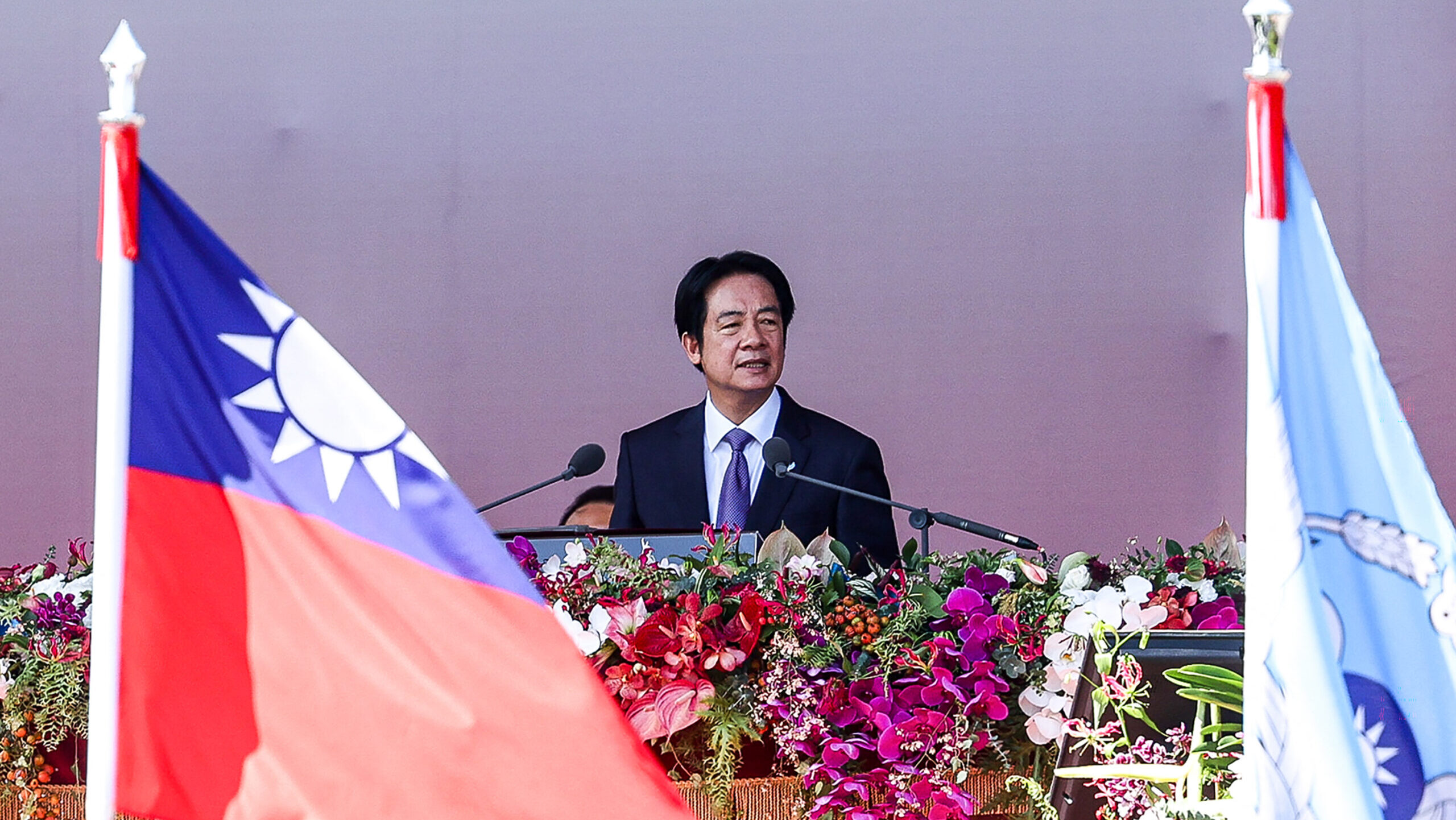
Taiwan’s President Lai Ching-te
I-Hwa Cheng / AFP
Taiwanese President Lai Ching-te vowed on Friday, October 10, to accelerate the development of a multi-layered air defence system as part of efforts to counter “enemy threats.” The announcement came a day after his government warned that China is enhancing its ability to attack the East Asian country’s main island.
During Taiwan’s National Day celebrations, Lai declared
We will accelerate our building of the T-Dome, establish a rigorous air defence system in Taiwan with multi-layered defence, high-level detection, and effective interception.
Unnamed sources compared the newly announced so-called Taiwan or “T-Dome” to Israel’s Iron Dome network, which can intercept a range of short-range weapons and operate in all types of weather. While the T-Dome shows Taiwan’s commitment to self-defence, the implementation of the dome will be challenging, analysts claim.
The issue of defense has always been divisive in Taiwan. Now Lai’s opponents accuse him of using the fear of a Chinese invasion to shore up his support, and urge more diplomacy with Beijing. Meanwhile the defence ministry warned that China could suddenly turn military drills into actual attacks to catch Taiwan off-guard.
Lai said Taiwan was determined to “maintain peace through strength” and called on China to “renounce the use of force or coercion to change the status quo across the Taiwan Strait.”
Lai’s speech followed a bruising year for the president, a staunch defender of Taiwan’s sovereignty who is loathed by Beijing. A failed effort this year to unseat dozens of opposition lawmakers left the government weakened, while U.S. tariffs on Taiwanese shipments eroded confidence in the key relationship.
Lai reiterated on Friday, October 10, plans to ramp up defence spending to more than 3% of gross domestic product next year and 5% by 2030:
We will advance the integration of high-tech and AI technologies to build a smart defence combat system, maximising effective deterrence for our asymmetric strategy.
Taiwan will also boost its own defence industry and strengthen domestic supply chains to build a “robust line of defence”, he said.
While Taiwan has increased spending on its military in recent years, it would be massively outgunned in a conflict with China and remains heavily reliant on Washington as its biggest arms supplier to deter Beijing from attacking.
U.S. president Donald Trump is expected to meet with his Chinese counterpart Xi Jinping in the coming weeks, as the rival superpowers thrash out a trade deal that could impact Taiwan.
“I don’t think China will react with a military drill,” said James Yifan Chen, a political expert, noting Beijing will want to maintain a “good atmosphere” ahead of the meeting.