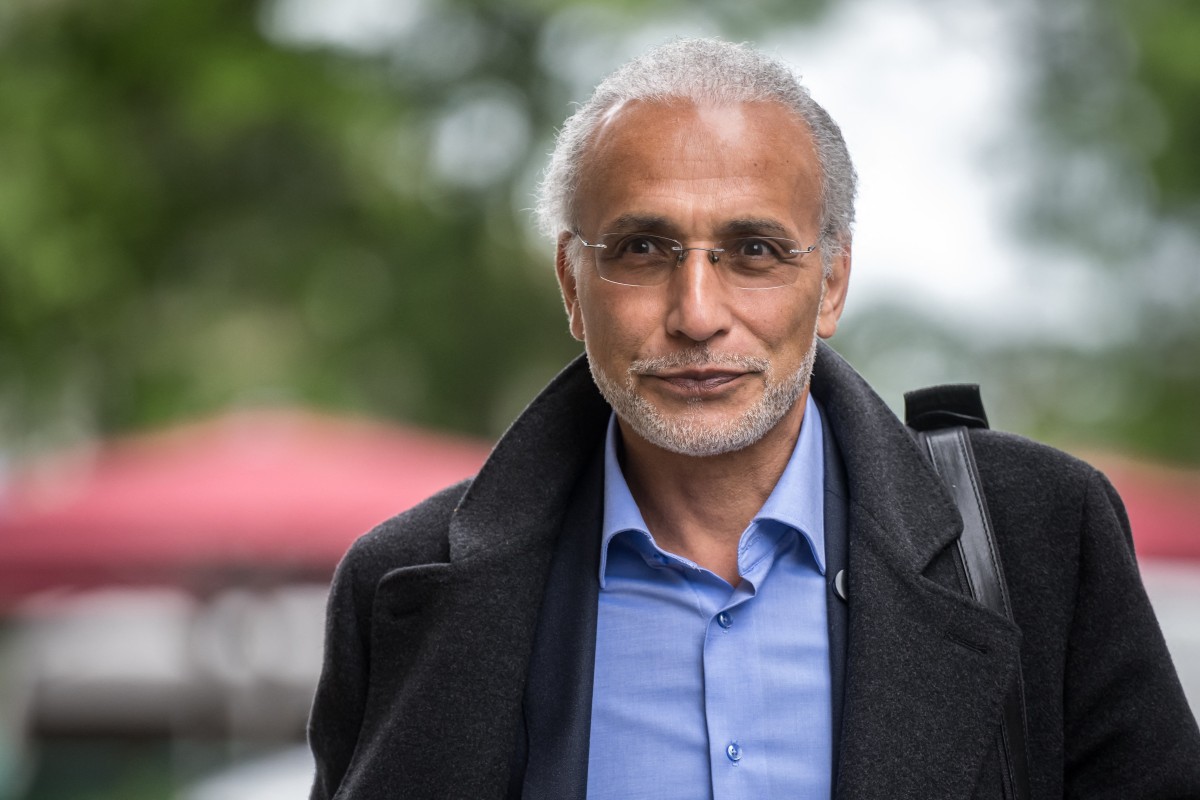
Swiss passport holder and leading ‘Islamologist’ Tariq Ramadan arrives at Geneva’s courthouse on May 29, 2024, for the final day of his appeal trial over charges of rape and sexual coercion. He stood trial in absentia at the Paris Criminal Court, on March 2, 2026.
FABRICE COFFRINI / AFP
In a definitive conclusion to a decade-long legal struggle, a Paris criminal court sentenced Swiss Islamic scholar Tariq Ramadan to 18 years in prison for the rape of three women.
The verdict was reached behind closed doors and in the defendant’s absence. The court found Ramadan guilty of systematic sexual violence committed in various Parisian hotels between 2009 and 2016. In addition to the heavy prison term, the court imposed a permanent entry ban on Ramadan and strictly prohibited any future contact with his victims.
The ruling largely validated the testimony of the plaintiffs, including high-profile activist Henda Ayari, whose 2017 complaint first shattered Ramadan’s public image.
While the defense argued that his absence was due to a multiple sclerosis flare-up in a Geneva hospital, court-appointed experts ruled him fit for trial, leading to a verdict in absentia.
For years, Ramadan was a celebrated intellectual at institutions such as Oxford University, presenting himself as a bridge between Islam and European values. However, critics long maintained he led a “dual life”—a moderate public persona masking an ideology rooted in the Muslim Brotherhood, the organization founded by his grandfather, Hassan al-Banna.
With this 18-year sentence following a prior conviction in Switzerland, the once-influential mediator of “European Islam” faces the total collapse of his academic and moral legacy.