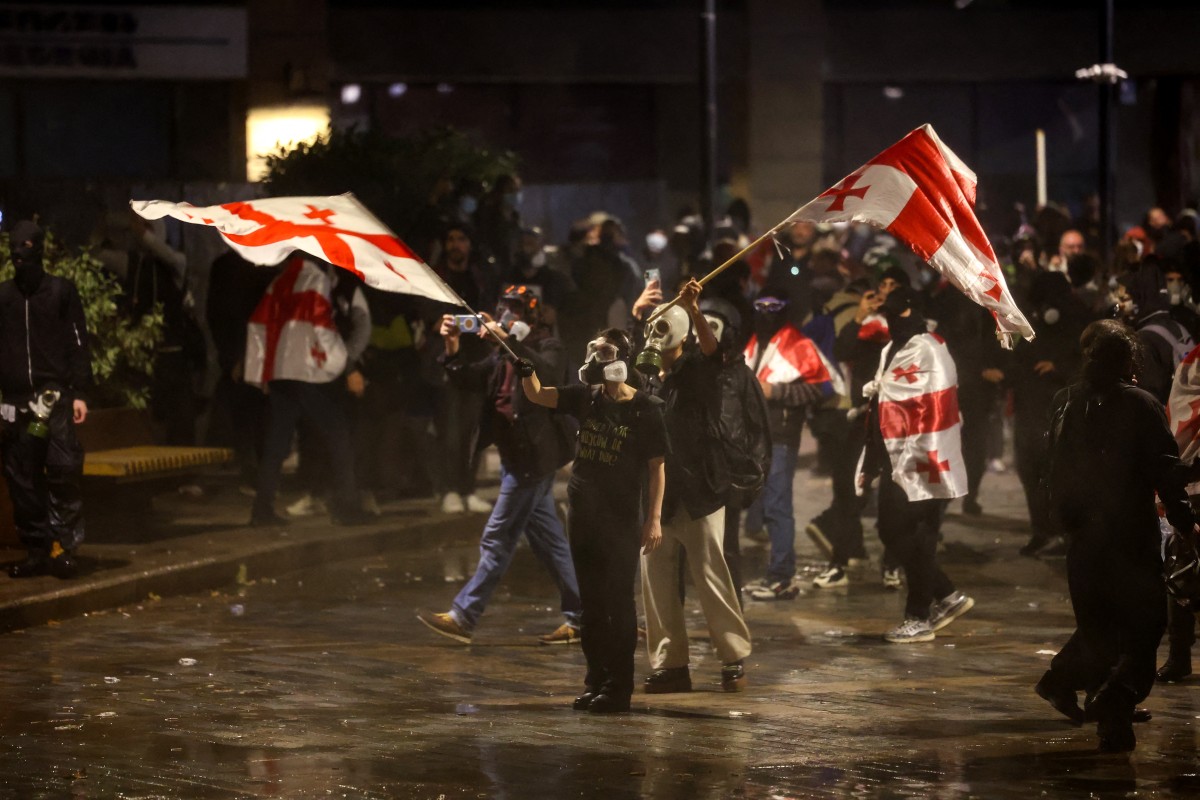
Protesters face riot police during an opposition rally on the day of local elections in central Tbilisi on October 4, 2025.
GIORGI ARJEVANIDZE/AFP.
Georgia’s State Security Service (SSG) has acknowledged that police deployed CS gas against protesters in early December 2024—and not, as alleged by the BBC, an early 20th Century toxin.
At the heart of the controversy is Bromobenzyl cyanide, also known by its military name camite. Deployed by allied chemical warfare units during the First World War, it was phased out in the 1930s. Britain’s public broadcaster has claimed that it reappeared when used against Georgian protestors in 2024.
In a December 6th briefing, SSG Deputy Head Lasha Maghradze said CS gas was used “as necessary” during the December 4-–5 clashes. This contradicts the BBC claims that camite was used during the 2024 protests.
However, to date Maghradze has avoided naming any substances used—alongside water cannons—when demonstrations first broke out on November 28th. Protesters and journalists reported severe symptoms, worse than from normal tear gas exposure, prompting speculation about chemical agents. Yet Maghradze has insisted that the Interior Ministry had “never purchased” camite—the long-discontinued French chemical agent abandoned almost a century ago.
The argument looks set to continue, reflecting both the political agenda of the BBC and the status of Georgia as a troublesome candidate for European Union membership.