

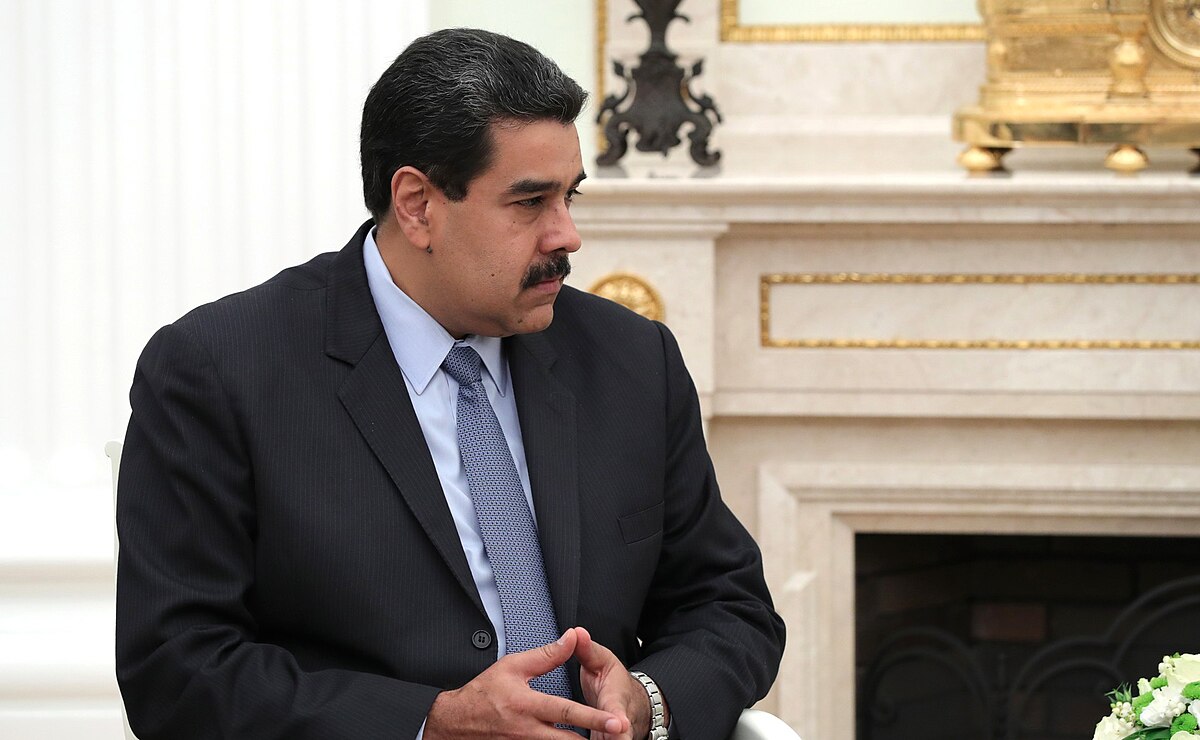
Nicolás Maduro (in 2017).
Tuesday, November 11th saw Venezuela announce what it called a major, nationwide military deployment to counter the U.S. naval presence off its coast.
Washington is conducting a military campaign in the Caribbean and eastern Pacific, deploying naval and air forces to curb drug trafficking. Yet the operation has sparked fears in Caracas that regime change—the ouster of Venezuelan president Nicolás Maduro—is the ultimate U.S. goal.
Washington’s forces have carried out strikes on at least 20 vessels in international waters since early September, killing at least 76 people, according to U.S. figures. But the United States has yet to release evidence that the vessels were used to smuggle drugs or posed a threat to the country. The United States has also ordered the USS Gerald R. Ford carrier strike group to Latin America, deployed F-35 stealth warplanes to Puerto Rico and currently has six U.S. Navy ships in the Caribbean, as part of its counter-narcotics efforts.
The Venezuelan Defense Ministry issued a statement on November 11th announcing a “massive deployment” of land, sea, air, river and missile forces as well as civilian militia. These high-profile government announcements are common in Venezuela recently, but they do not necessarily lead to visible military deployments on the ground.
Last week, President Donald Trump played down the prospect of going to war with Venezuela but he did claim that Maduro’s days are numbered.

.jpg)