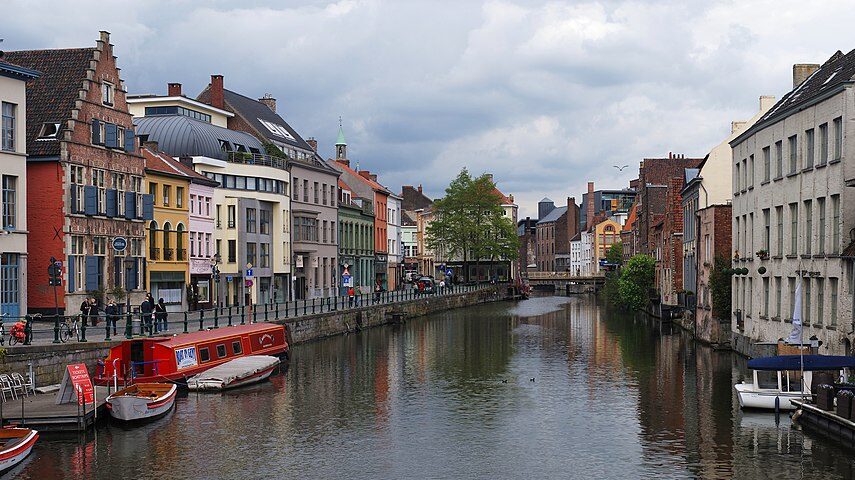
View of the Lys river in the centre of Ghent, Belgium.
Alvesgaspar, CC BY-SA 3.0, via Wikimedia Commons
The three official languages make Belgian everyday life even more difficult. The Flemish part, where people speak Dutch (or Flemish), has long struggled to integrate non-native speakers and recent figures reveal that language training programs are falling short.
Flemish Parliament member Ilse Malfroot (Vlaams Belang) criticized the region’s Dutch as a Second Language (NT2) programs after Minister Zuhal Demir (N-VA) confirmed that only 41% of students found work three months after completing a course.
Malfroot also pointed out that attendance is not monitored in classes. “How can you measure the effectiveness of training if you don’t even know if students are actually attending?” she asked, calling the policy “overly permissive” for newcomers.
The number of programs combining language learning with workplace experience remains very low. In 2024, only 353 job seekers participated in IBO-T, an individual vocational training program that includes language support—one of the most effective ways to help non-native speakers secure sustainable employment.