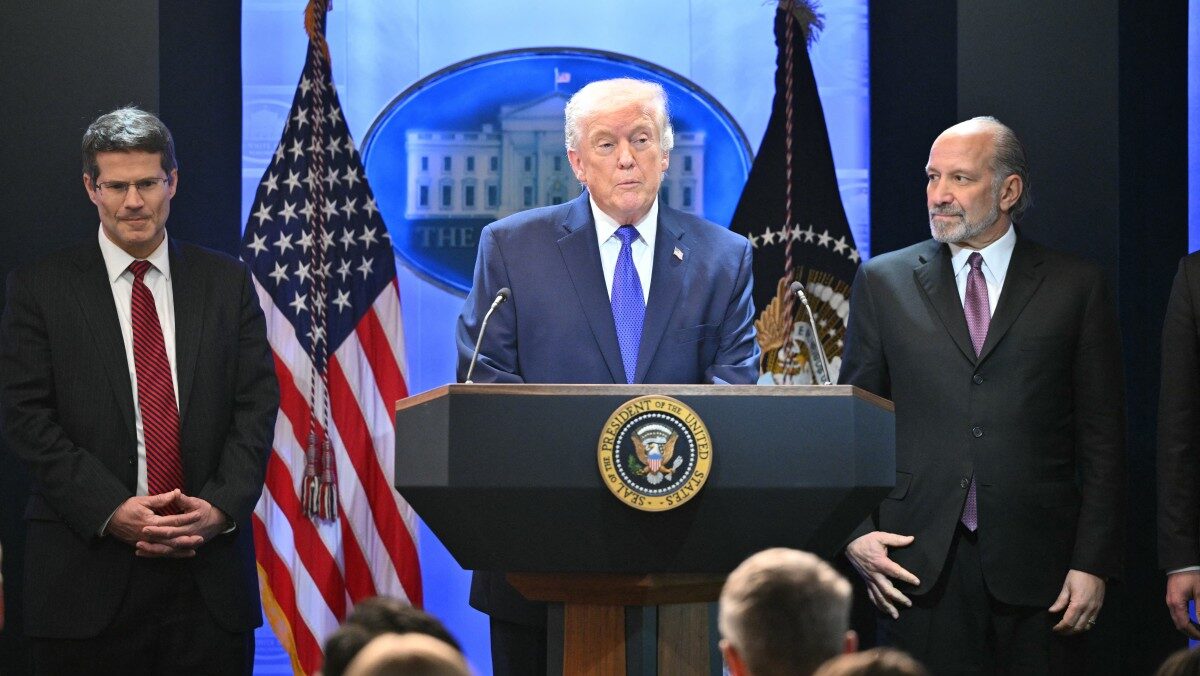
Mandel NGAN / AFP
U.S. president Donald Trump on Friday imposed a new 10% tariff on imports into the United States, hours after the Supreme Court limited his use of a 1977 emergency law to levy sweeping duties.
The new tariff, signed in the Oval Office and described by Trump as “effective almost immediately,” will take effect on February 24 and remain in place for 150 days, according to a White House factsheet. Exemptions apply to goods covered under the US-Mexico-Canada Agreement and sectors already subject to separate investigations, including pharmaceuticals.
The move follows a six-to-three ruling by the Supreme Court that the International Emergency Economic Powers Act does not authorize the president to impose tariffs. Chief Justice John Roberts wrote that the law contains “no reference to tariffs or duties.”
Trump said the decision would not deter his broader trade strategy, arguing the ruling leaves him “more powerful” and able to pursue alternative mechanisms. Treasury Secretary Scott Bessent said the administration’s approach would result in “virtually unchanged tariff revenue” in 2026.
The ruling does not affect sector-specific tariffs on steel and aluminum. Business groups welcomed the decision for providing clarity, while trading partners, including the European Union, Britain, and Canada, said they were reviewing the implications.