

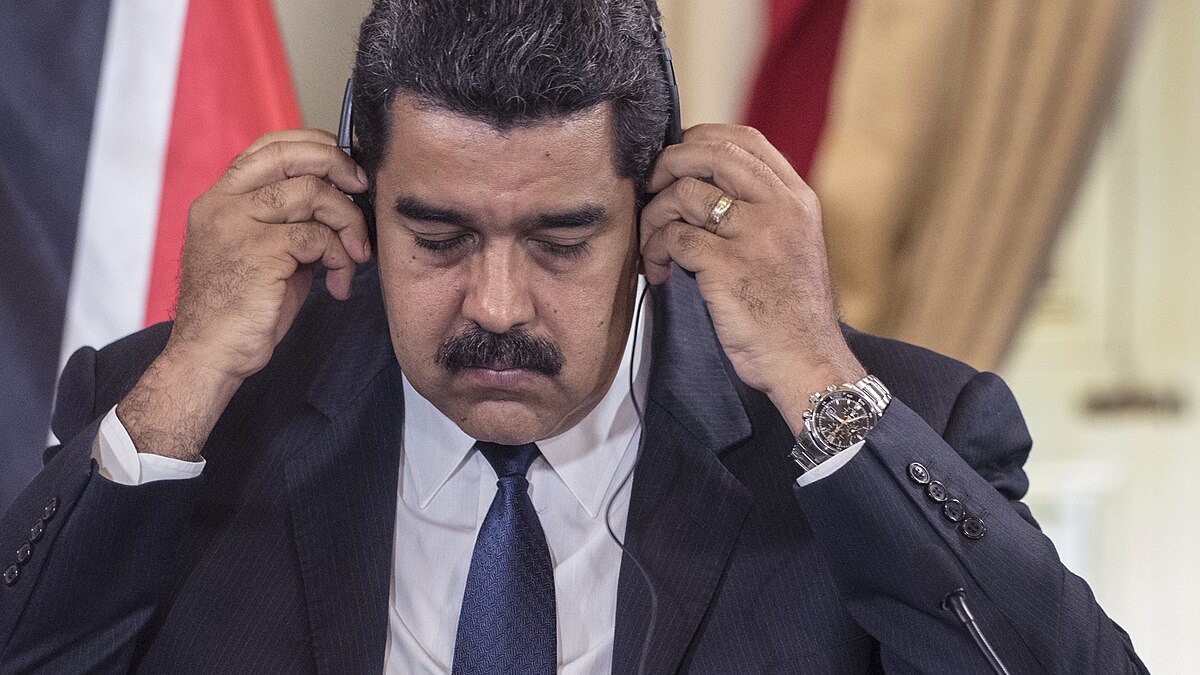
Nicolás Maduro.
U.S. president Donald Trump has ordered what he described as a “total and complete blockade” of all sanctioned oil tankers entering or leaving Venezuela. The move escalates pressure on President Nicolás Maduro’s government and directly targets the country’s main source of revenue.
In a statement posted on Truth Social, Trump accused the Venezuelan regime of terrorism, drug smuggling, and human trafficking, declaring it a foreign terrorist organization—and justifying the move as a response to the “theft of U.S. assets.” The White House has not clarified how the blockade would be enforced, though the administration has already deployed thousands of troops and multiple naval assets to the region.
Venezuela’s government swiftly rejected the order, calling it a “grotesque threat” and accusing Washington of seeking control over the country’s vast oil resources. Legal experts have also raised concerns, warning that a blockade is traditionally considered an act of war under international law. Democratic representative Joaquin Castro said the move lacked congressional authorization and reflected a dangerous expansion of presidential power.
Oil prices rose more than 1% in Asian trading following the announcement, driven by fears of reduced Venezuelan exports. Brent crude futures rose 57 cents, or 0.9%, to $59.50 a barrel, while U.S. West Texas Intermediate gained 59 cents, or 1%, to $55.86 a barrel in early Asian trading.
Markets remain relatively well supplied for now, but analysts say a prolonged disruption could push prices up by several dollars a barrel and worsen Venezuela’s economic and humanitarian crisis, potentially triggering new waves of migration across the region.

.jpg)