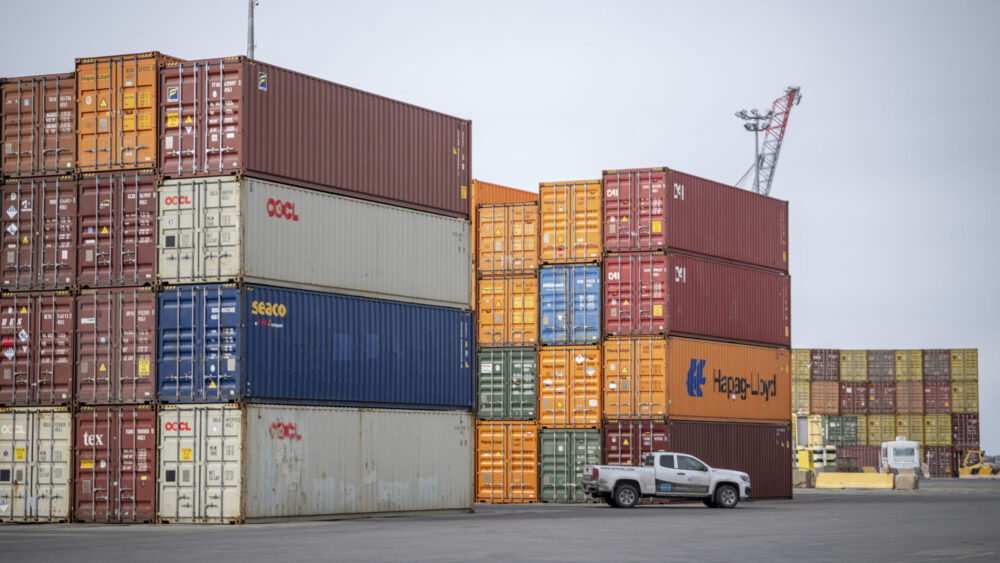
Shipping containers at the Port of Montreal
ANDREJ IVANOV / AFP
U.S. president Donald Trump issued an executive order to bring in tariffs aiming to reduce the U.S. trade deficit. The document, signed on Thursday, July 31st, calls the deficit an “unusual and extraordinary threat to the national security and economy of the United States.”
Scores of U.S. trading partners will now face a new regime of levies, while others—who secured trade deals in advance of Trump’s announcement—will likely fare better. The UK and European Union will see their own recent deals become operational, whereas major allies such as Canada, which recently incurred Trump’s wrath by recognising Palestinian statehood, face tariffs of up to 35%.
The new trading arrangements are explicitly linked to global and domestic politics. Internationally, Trump has said he is prepared to use tariffs as a form of sanctions, for instance to reduce the influence of the BRICS group of nations. Within the U.S., the revenues generated by the new regime could pay for tax cuts, while encouraging overseas firms to invest in America, creating new jobs.
Less aggressive than the levies the president announced on “liberation day” (April 2nd), this latest round of tariffs has—to date—had a less unsettling impact on the world financial markets.