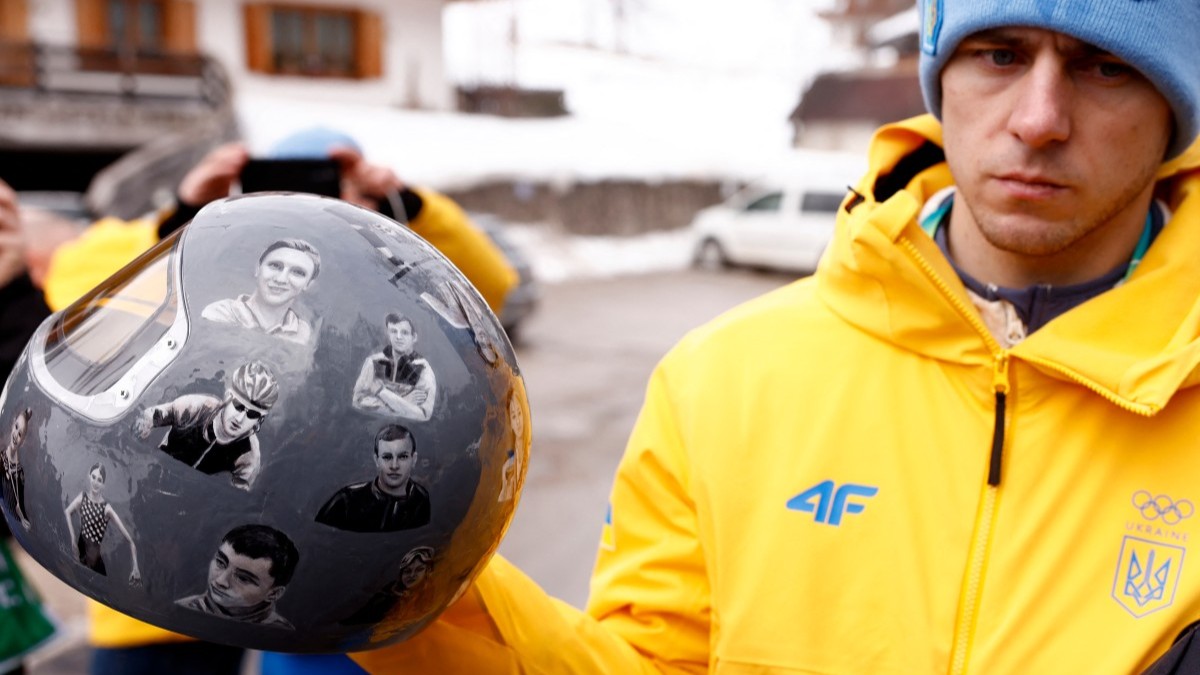
Ukraine’s skeleton racer Vladyslav Heraskevych holds his helmet, which depicts victims of his country’s war with Russia, in Cortina d’Ampezzo on February 12, 2026.
ODD ANDERSEN / AFP
The Milano Cortina Winter Games faced a moment of intense controversy on Thursday, February 12th, as Ukrainian skeleton racer Vladyslav Heraskevych was disqualified just minutes before his event. The 27-year-old athlete was barred from competing due to his “helmet of remembrance,” which featured the images of two dozen Ukrainian athletes killed during the Russia-Ukraine war.
The International Olympic Committee (IOC) ruled that the tribute violated strict regulations intended to keep political messaging off the field of play. While Heraskevych was initially threatened with the loss of his Olympic accreditation, a last-minute intervention by President of the IOC Kirsty Coventry allowed him to keep his credentials and remain at the Games, though his disqualification from the race stood.
The situation was marked by high emotions. Coventry, who met with Heraskevych near the start gate, was seen in tears as she explained to reporters that no compromise could be reached. Although she acknowledged the power of his message of remembrance, she emphasized the necessity of maintaining a “safe environment” through strict rule enforcement.
The IOC had suggested compromises including wearing a black armband or showing the helmet before and after racing, Heraskevych, however, remained defiant, stating that the IOC appeared “afraid” of the voices of his fallen compatriots. “I will not get my Olympic moment,” he said, “but I will not betray their memory.”
As the Ukrainian team prepares to appeal the decision at the Court of Arbitration for Sport (CAS), the case reignites the global debate over where to draw the line between national grief and political neutrality in international sports.
“If we allow one athlete this expression … it will lead to chaos,” IOC spokesperson Mark Adams said at a press conference.