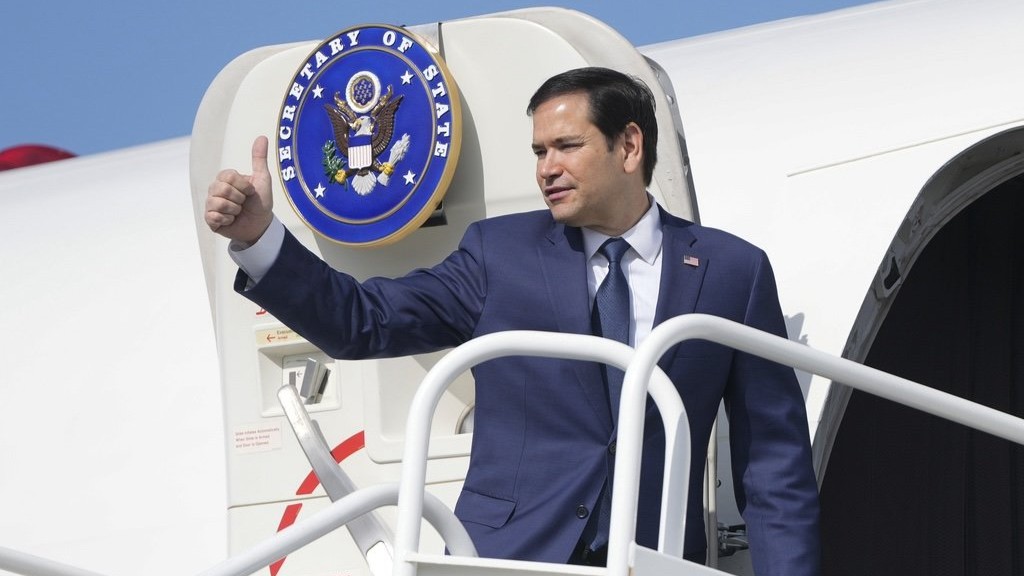
U.S. Secretary of State Marco Rubio aboard Air Force Three
By Embassy of the United States of America to Italy – https://x.com/AmbasciataUSA/status/1890115144887500861/photo/1, Public Domain, https://commons.wikimedia.org/w/index.php?curid=170552344
The United States on Tuesday, January 13th, formally designated Muslim Brotherhood branches in Egypt, Lebanon and Jordan as terrorist organizations. The decision marks a significant escalation in U.S. efforts to curb the influence of the pan-Islamist movement.
Secretary of State Marco Rubio said the designations were the opening step in a sustained campaign to counter what Washington describes as violence and destabilization by Muslim Brotherhood affiliates. Treasury Secretary Scott Bessent added that the group has a “longstanding record of perpetuating acts of terror,” and said the U.S. would work aggressively to cut it off from the global financial system. As a result any assets linked to the designated branches will be blocked.
The Egyptian Muslim Brotherhood rejected the move, vowing to challenge it through legal channels. In a statement, it denied involvement in violence or threats against the United States, arguing that the designation was driven by foreign pressure, particularly from the United Arab Emirates and Israel. By contrast, Egypt, Saudi Arabia and the United Arab Emirates— all of which have sought to suppress the Brotherhood — welcomed the decision as a recognition of the group’s extremist ideology and security threat.
The designation also has regional implications. U.S. officials cited alleged coordination between Brotherhood branches and militant groups such as Hamas and Hezbollah while experts say the move will increase pressure on countries like Turkey, where exiled Brotherhood members have found a base. Although analysts doubt the decision will destroy the organization, they agree it significantly constrains its political, financial and diplomatic space.