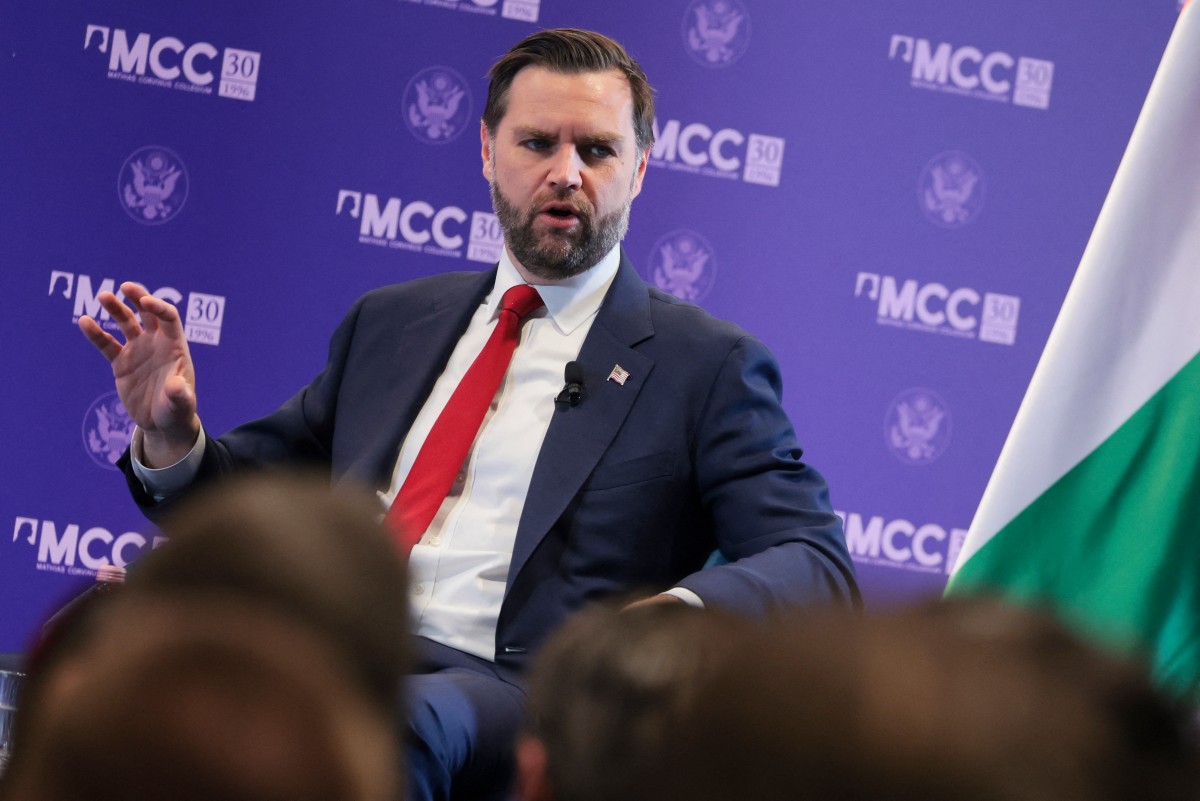
U.S, vice president JD Vance delivers remarks at the Mathias Corvinus Collegium in Budapest on April 8, 2026, on the second day of his visit to Hungary.
Jonathan Ernst / POOL / AFP
Wednesday, April 8th saw U.S. vice president JD Vance criticize European leaders for failing to do enough to end the Ukraine conflict, describing it as the “hardest” war to solve.
Speaking during a visit to Hungary, Vance highlighted that Washington’s recent ceasefire agreement with Iran demonstrates the effectiveness of decisive U.S. action:
We’ve been disappointed by a lot of political leadership in Europe because they don’t seem particularly interested in solving this particular conflict.
Vance acknowledged that progress has been made in negotiations between Kyiv and Moscow, adding
We’ve got pieces of paper from the Ukrainians and pieces of paper from the Russians. We’ve actually got them to state their positions and over time their positions have gotten closer and closer together.
Vance expressed cautious optimism, noting that while a final resolution has not been reached, the war “has stopped making sense.” He emphasized that resolving the conflict requires cooperation from both sides:
We’re talking about haggling at this point over a few square kilometres of territory in one direction or another, is that worth losing hundreds of thousands of additional Russian and Ukrainian young men? Is that worth an additional months or even years of higher energy prices and economic devastation?
During his visit, Vance praised Hungarian prime minister Viktor Orbán. “The most helpful has been Viktor, because Viktor is the one who’s encouraged us to truly understand this, to understand from the perspective of both the Ukrainians and the Russians what is necessary for them to end the conflict,” he said.