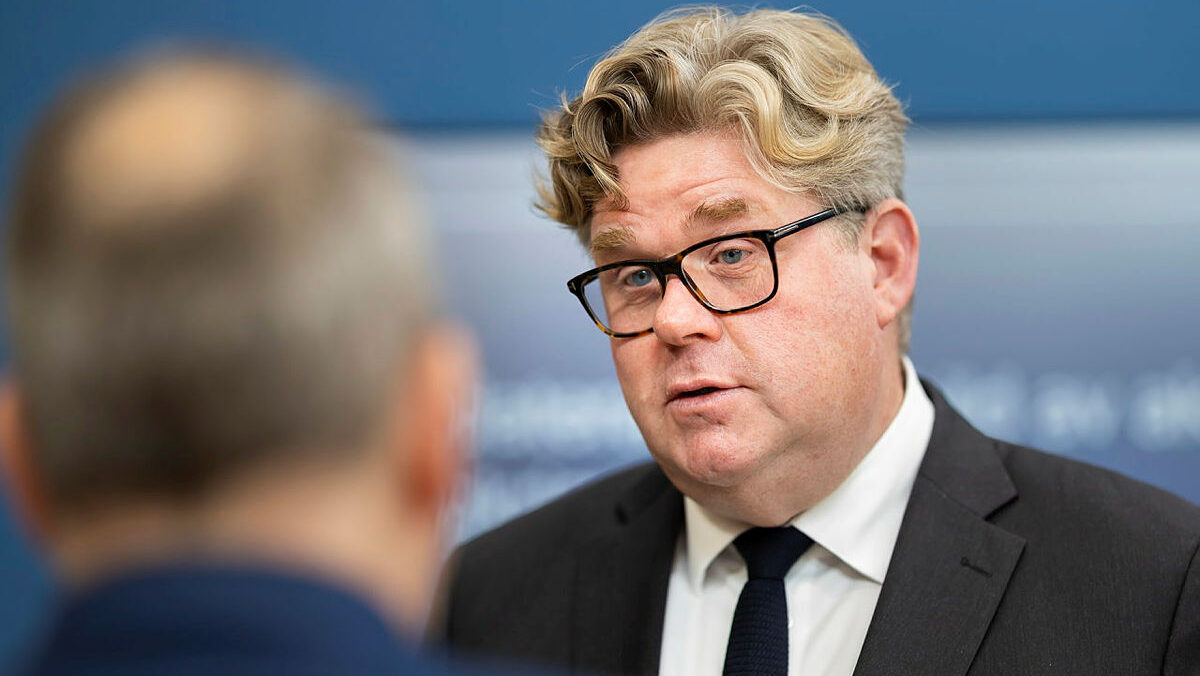
Swedish Minister of Justice Gunnar Strömmer
Ninni Andersson / Regeringskansliet
Sweden’s police have revealed that more than 67,000 people are now involved in or connected to organised gang crime, underscoring the scale of a crisis that has transformed one of Europe’s most peaceful nations into a hotspot of deadly violence.
According to a new national assessment published on Friday, November 7th, 17,500 individuals are considered active gang criminals, while a further 50,000 are believed to have links to criminal networks through family, social circles, or low-level offences.
The figures represent a sharp rise from last year’s estimate of 14,000 active members, though police said the increase is partly due to a revised counting method.
Police Commissioner Petra Lundh described the situation as “extremely serious” at a joint press conference in Stockholm with Justice Minister Gunnar Strömmer.
“We see no clear signs of either an increase or decrease, but the groups of active gang criminals—and those connected to them—are far too large,” Lundh said.
The officials also presented limited demographic data about the gangs. Eight in ten active gang members hold Swedish citizenship, though the police did not specify how many are first- or second-generation immigrants. Just under one in ten have dual citizenship, while slightly more than 10%are foreign nationals. The average age of those identified as gang criminals is 28.
Strömmer called the report “confirmation of a continuing grave situation” but insisted that government policies were beginning to make an impact. He cited a modest drop in shootings as evidence of progress. However, bombings have continued to rise, and 2025 may still end as one of the worst years on record for gang-related violence.
Sweden has experienced near-daily shootings and explosions in recent years, many of them carried out by teenagers recruited as “child soldiers” by criminal groups. Police say gang leaders often operate from abroad, directing attacks via encrypted messaging apps.
The centre-right government of Prime Minister Ulf Kristersson has vowed to restore order through sweeping criminal justice reforms. Among the measures are lowering the age of criminal responsibility from 15 to 13, creating special youth prisons for violent offenders, and abolishing lenient youth sentencing.
Lundh stressed that policing alone could not solve the problem. “This type of crime cannot simply be prosecuted away. We must also prevent it earlier and stop the influx of children and young people ready to commit violent acts,” she said.
Despite tougher laws and expanded police powers, Sweden’s gang war remains a defining political and social challenge—one that continues to test the country’s stability.