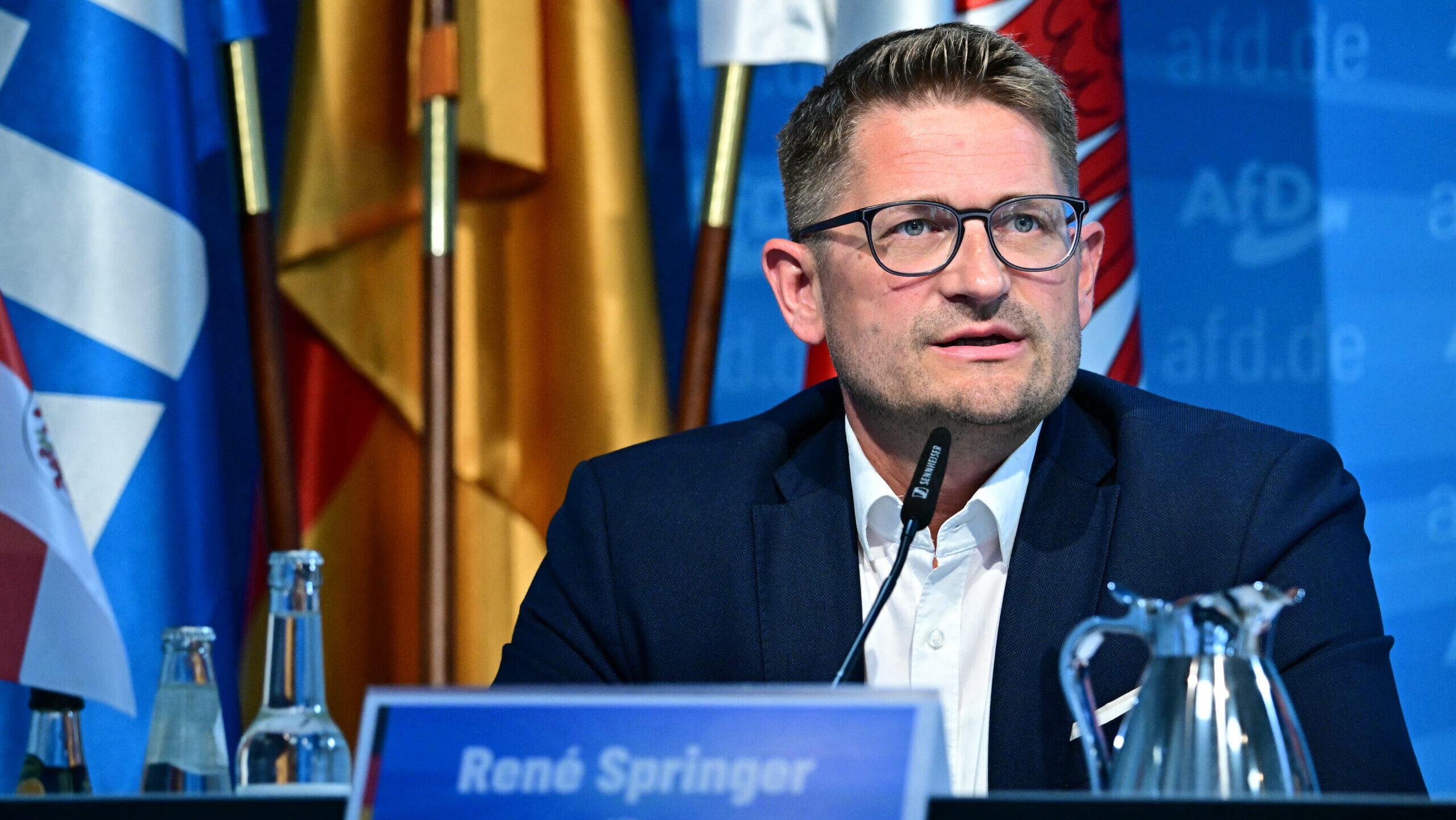
AfD social policy spokesman René Springer
Tobias Schwarz / AFP
Germany’s largest opposition party, the Alternative for Germany (AfD), is demanding an overhaul of the nation’s child benefit system following the release of new official figures showing a sharp increase in payments transferred to children living outside the country.
AfD’s social policy spokesman, René Springer, stated, “The transfer of full child benefit payments to foreign accounts must be stopped. Child benefit payments abroad must finally be adjusted to the cost of living in the country.”
This political demand is a direct response to a report by Junge Freiheit, citing data from the Family Benefits Office of the Federal Employment Agency. According to the agency’s figures, approximately €650 million in child benefit was sent to children residing abroad in 2024. This represents a significant increase of around €125 million from the previous year and a staggering rise of more than 1,700% since 2010, when the figure stood at just €35.8 million.
In 2023, around 313,000 children living abroad received German child benefits—307,000 of them within the EU. Poland topped the list with 171,000 recipients, followed by Romania, the Czech Republic, Croatia, and France.
Total child benefit expenditure shows that 77.3% went to German beneficiaries, while 22.7% went to foreign families; however, a different picture emerges for the Kinderzuschlag (child supplement) payments, an additional payment for low-income households who cannot make ends meet with the standard child benefit alone. 49% of these payments were received by foreign families, meaning foreign recipients are represented in this benefit category at more than twice their share of the general population.
AfD sees this as an additional fundamental flaw in the system. Springer argued that the fact that nearly every other euro of child supplement goes to foreign families “demonstrates the federal government’s failure in migration policy.”
He added, “If foreigners in Germany can only make ends meet by supplementing their income with social benefits, it is clear that immigration is a loss-making business for Germany,” and called for an end to the migration of what he labeled “low-skilled foreigners.”
Pointing to a potential model for reform, Springer cited Denmark, suggesting that “the entitlement for foreigners should be tied to clear requirements: a valid residence permit and several years of employment.”