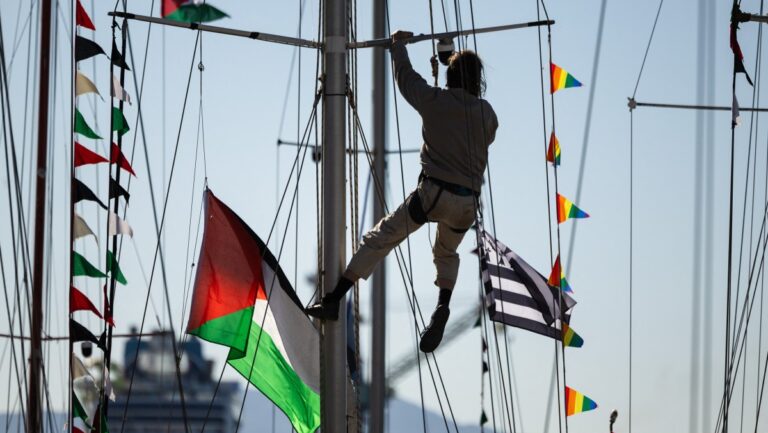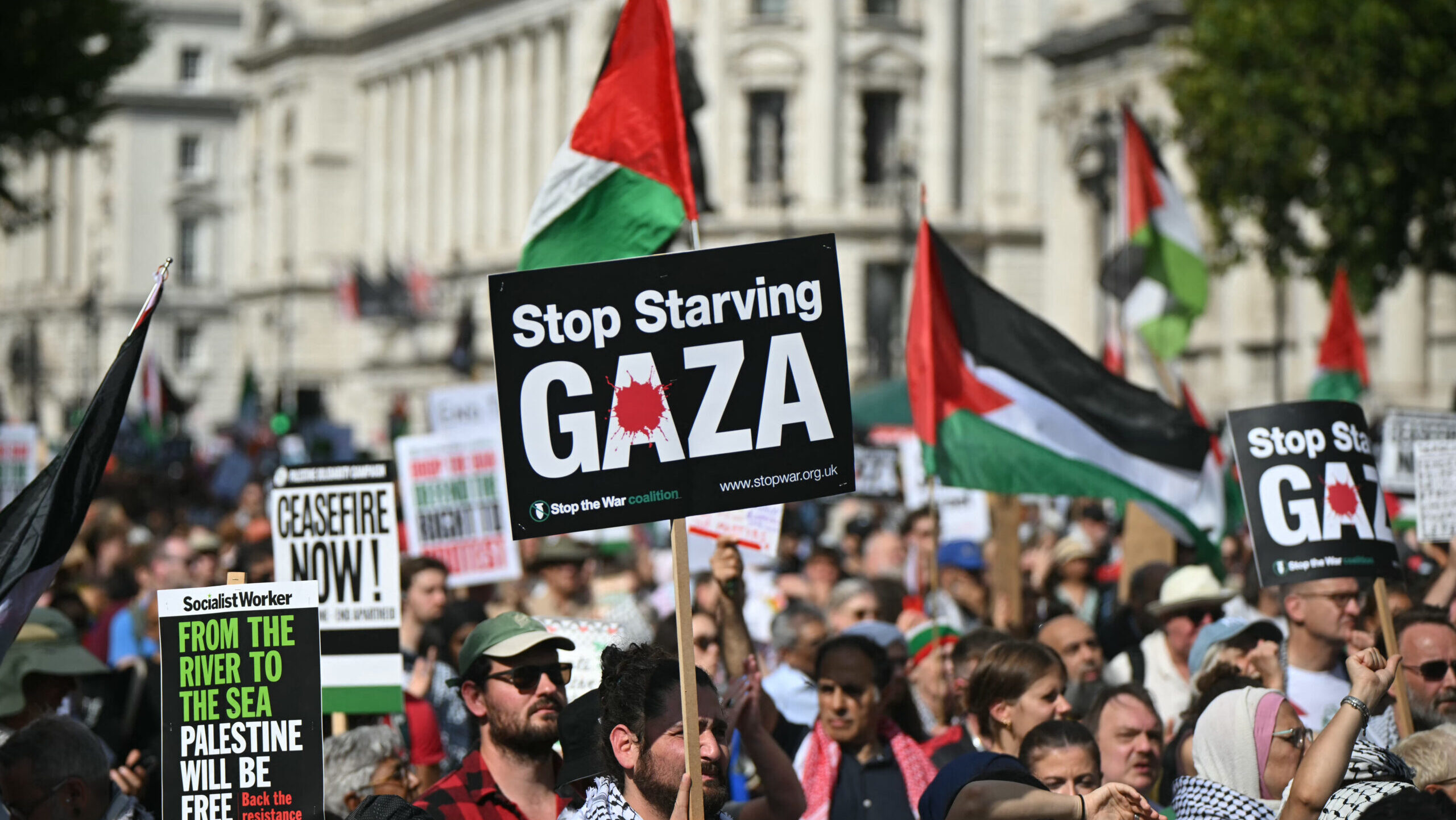
A pro-Palestine protest in London on September 6, 2025
JUSTIN TALLIS / AFP
Thousands of pro-Palestinian demonstrators are expected to flood central London on Saturday—just a day after a ceasefire between Israel and Hamas took effect—prompting accusations that organisers are fuelling division.
The Palestine Solidarity Campaign (PSC) will bus supporters from across the country to march through Westminster and Waterloo from midday. The demonstration comes less than 24 hours after a Trump-brokered peace deal brought fighting in Gaza to a halt, with Israel agreeing to withdraw troops from parts of the territory and Hamas ordered to release hostages within 72 hours.
Campaigners against antisemitism say the latest protest has no legitimate purpose now that fighting has stopped, and warn it risks once again descending into displays of anti-Jewish hatred. Danny Stone, chief executive of the Antisemitism Policy Trust, said organisers “don’t appear to know what they’re for anymore.” He added: “They planned rallies during terrorist attacks and have failed to tackle antisemitism in their midst. I have no doubt there will be more on display this weekend.”
Alex Hearn of Labour Against Antisemitism urged the government to enforce tougher measures: “The country has been subjected to these marches week after week—but what are they demanding now? Hard-working British people shouldn’t feel intimidated going about their daily business. It’s time to put ordinary Londoners first.”
Yet the Metropolitan Police are expecting one of the largest demonstrations in years, potentially drawing hundreds of thousands. Conditions have been imposed to limit disruption, requiring protesters to remain along Embankment and Whitehall until the rally concludes at 5:30 p.m. A counter-demonstration organised by Stop the Hate is planned nearby.
Almost 500 people were arrested at a similar march last week, mostly on suspicion of supporting the banned terror group Palestine Action. Home Secretary Shabana Mahmood said repeated mass protests have caused “considerable fear” in the Jewish community and has promised to crack down on those who exploit free assembly “to spread hate on Britain’s streets.”
Tensions flared further this week when London Mayor Sadiq Khan suggested that the chant “From the river to the sea, Palestine will be free” is not inherently antisemitic—remarks condemned by Conservative rival Susan Hall, who said Jewish Londoners now fear leaving their homes.
The latest march follows outrage earlier this month when pro-Palestinian activists rallied only hours after two Jewish worshippers were killed in a terror attack outside a Manchester synagogue. Crowds in several cities were filmed shouting “death to the IDF” as police battled to contain unrest. Jewish leaders, including Chief Rabbi Ephraim Mirvis, called the timing “dishonourable,” while Israel’s government accused Britain of allowing “a toxic wave of anti-Jewish hatred to fester.”
Despite the ceasefire, PSC director Ben Jamal insists demonstrations will continue. For many Britons, though, another weekend of chanting and disruption so soon after peace was declared looks less like solidarity—and more like provocation.