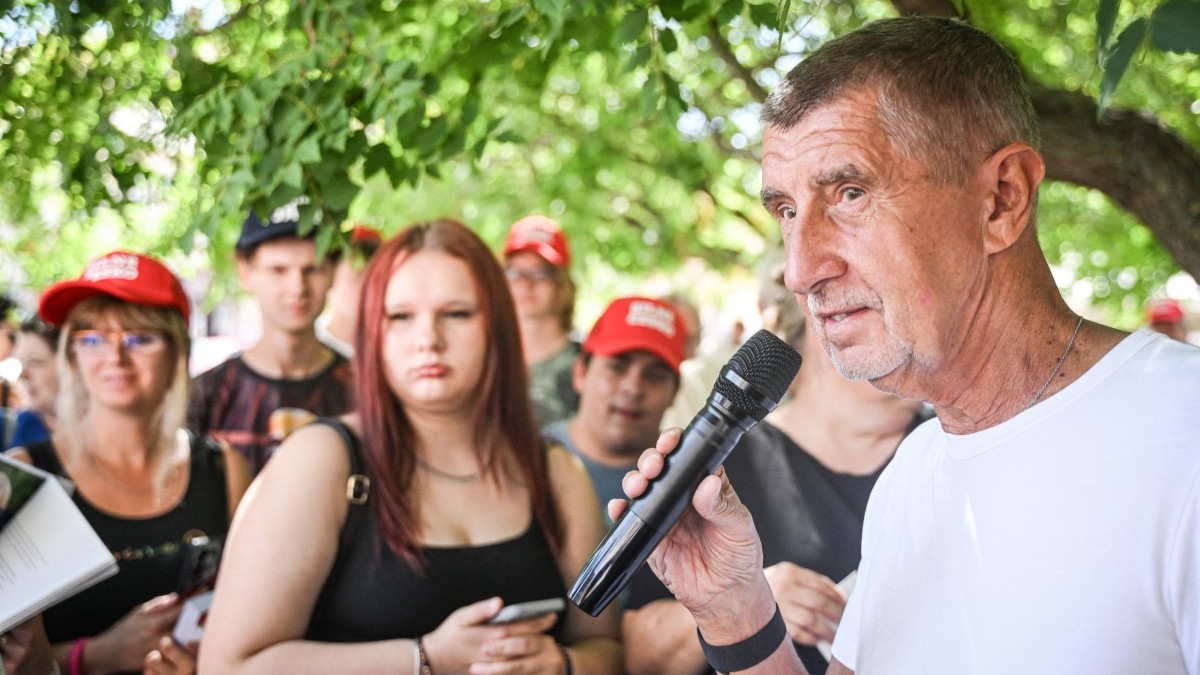
Former prime minister Andrej Babiš, leader of the Czech ANO talks with his supporters during a campaign rally on August 18, 2025.
Michal Čížek / AFP
Former Czech prime minister and opposition leader Andrej Babiš was hospitalised on Monday, September 1st after being struck in the head (reportedly several times) with a metal crutch during a campaign rally in the eastern town of Dobrá.
The incident occurred ahead of next month’s parliamentary elections, scheduled for October 3-4.
Police said the assailant was immediately detained and the incident is being investigated as disorderly conduct, though charges could be widened.
Babiš, leader of the sovereignist ANO movement, was taken to a hospital, where doctors carried out a CT scan before discharging him.
In a message to supporters, Babiš thanked them for their concern and said doctors had recommended rest, forcing him to cancel at least one campaign event.
Děkuju všem za podporu, budu doufám v pořádku. Zítra budu čekat ještě na další posouzení výsledků vyšetření, doktoři mi ale doporučili klid, proto budu muset bohužel minimálně zítřejší program v Olomouckém kraji zrušit. Moc se omlouvám všem, kteří jste se chtěli setkat, kolegové…
— Andrej Babiš (@AndrejBabis) September 1, 2025
The assault has been widely condemned across the political spectrum. Prime Minister Petr Fiala described it as unacceptable, emphasising that “violence does not belong in politics,” while Interior Minister Vít Rakušan also denounced the attack.
However, Babiš’s party blamed the ruling coalition for creating a climate of hostility. His deputy, Alena Schillerová, said the incident was “a direct consequence of their campaign based on fear and division.”
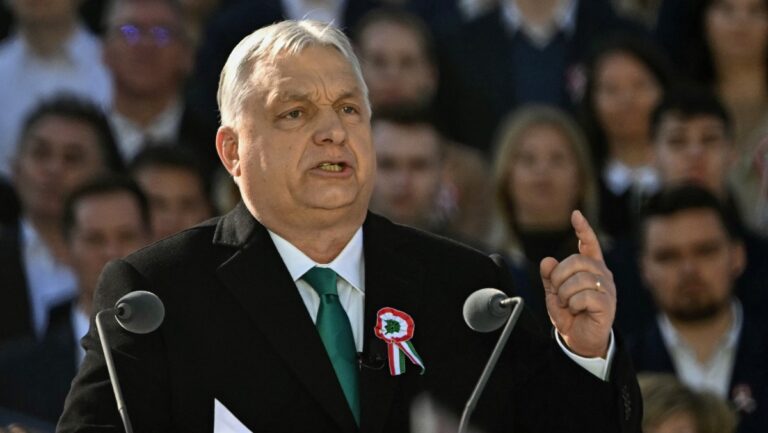
Hungarian prime minister Viktor Orbán, who wished the Czech opposition leader a speedy recovery in a social media post, also pointed out the growing “demonisation” of conservative leaders like Babiš, reminding on X about the assassination attempt against Robert Fico last year.
After Slovakia, violence has seeped into Czech politics as well. No wonder. His political adversaries have demonised @AndrejBabis for years. This is the result. But they will not stop him. He will go on and win the elections!
— Orbán Viktor (@PM_ViktorOrban) September 1, 2025
Get well soon, my friend!
Babiš, who led the Czech Republic from 2017 until his electoral defeat in 2021, remains a leading contender in next month’s vote. Polls suggest ANO has a strong chance of returning to power.
Opinion polls point to the steady rise of anti-establishment forces, parties opposed to the policies of Brussels, inincluding military aid to Ukraine, the EU’s Green Deal and migration quotas.