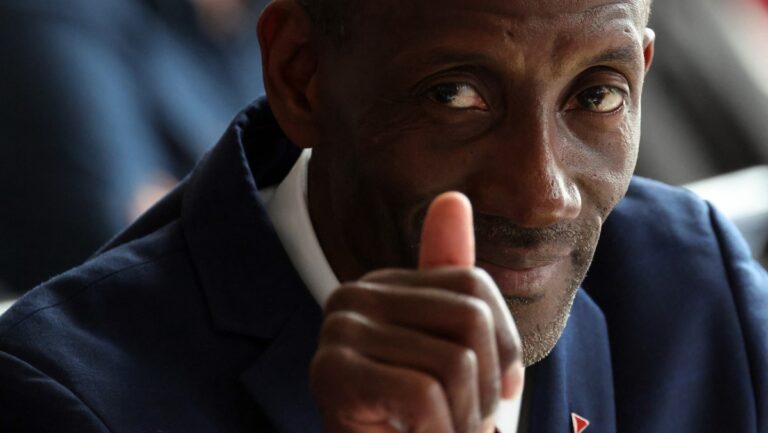
Andrej Babiš, leader of the ANO movement, reacts as he arrives at the ANO headquarter on October 04, 2025 in Prague during the parliamentary elections.
Michal Cizek / AFP
The party of former Czech Prime Minister Andrej Babiš has emerged as the clear winner in the general election, securing 35.2% of the vote with 97% counted. His ANO (Yes) party campaigned on a “Czechs first” platform, pledging to prioritize welfare, limit military aid to Ukraine, and focus on domestic concerns.
Outgoing Prime Minister Petr Fiala’s coalition, Together, finished second with 22.9%, while its partner STAN garnered 11.1%. Overall, six parties are projected to enter parliament.
Czechia: 97,63% polling places counted:
— Europe Elects (@EuropeElects) October 4, 2025
National parliament election
ANO-PfE: 35.08% (+8.0)
SPOLU-ECR|EPP: 22.95% (-4.8)
STAN-EPP: 11.09% (n.a.)
Piráti-G/EFA: 8.72% (n.a.)
SPD-ESN: 7.88% (-1.7)
Auto-PfE: 6.81% (new)
Stačilo!-NI|S&D: 4.36% (n.a.)
Přísaha-PfE: 1.09% (-3.6)
+/-… pic.twitter.com/6tpr0pq0cg
Babiš, 71, who led the country from 2017 to 2021, has centered his campaign on pledges for more affordable energy, reduced taxes, and enhanced pensions, while emphasizing the protection of Czech sovereignty against Brussels’ excessive influence on migration and climate policies.
While he favors a single-party government, preliminary results suggest he will need partners, potentially forming a minority administration with support from smaller right-wing groups such as the Motorists Party and the Freedom and Direct Democracy (SPD).
During his first term, Babiš was advocating for Czech interests and closer cooperation with regional partners like Hungary and Slovakia. He has vowed to pursue a ‘Czechs first’ approach, calling for domestic priorities to guide government action, particularly regarding welfare and Ukraine-related policy.
Although critics label him as lenient toward Russia, Babiš describes himself as a “peacemonger” aiming for a ceasefire in Ukraine rather than continued escalation. He has emphasized that the Czech Republic will stay in both the EU and NATO, but will act according to pragmatic, national-interest considerations.
President Petr Pavel is set to begin talks with party leaders on forming the next government.