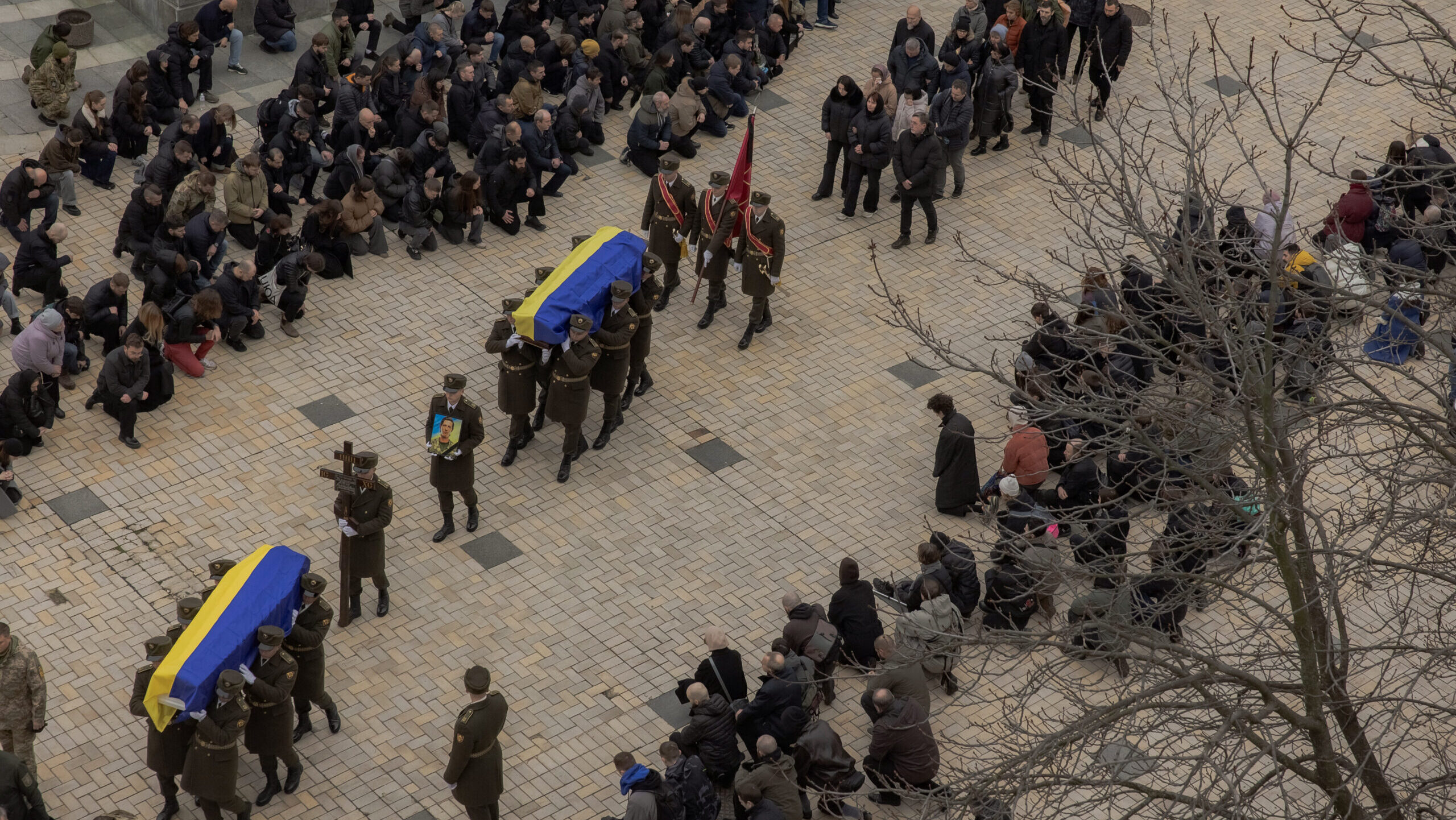
Mourners kneel as the coffins of Ukrainian soldiers Myroslava Kopcha and Artur Vilchynskyi are carried during a funeral in Kyiv on November 28, 2025.
Roman PILIPEY / AFP
For two years, European leaders have insisted that the war in Ukraine is a moral imperative, a civilizational battle, and an unavoidable stand against aggression. Yet the numbers tell a radically different story. While citizens are urged to prepare for conflict, stockpile emergency kits, and accept the reintroduction of military service, the world’s biggest arms manufacturers are experiencing the most profitable cycle in modern history.
According to the latest findings from the Stockholm International Peace Research Institute (SIPRI), the world’s top 100 defence companies reached record revenues of $679 billion in 2024, nearly 6% higher than the previous year. The institute attributes this growth directly to the war in Ukraine and the rush to replenish, modernise, and expand military stockpiles across the West.
Meanwhile, several European governments have adopted or debated new forms of conscription, expanded defence budgets, and promoted a narrative of unavoidable conflict.
Behind the rhetoric of unity and “European preparedness,” the war economy is thriving. Three companies, in particular, have become emblematic of this boom:
What makes this significant is that Europe’s official messaging is now fully aligned with the interests of its defence sector.
Across the continent, governments are reinstating or preparing to reinstate compulsory military service.
Citizens are being advised to keep emergency supplies at home “in case of conflict,” and senior EU officials have openly spoken of Europe being “at war,” despite the absence of any direct military engagement between the EU and Russia.
The message is clear: Europe must prepare for conflict—even as its leadership fails to engage meaningfully in peace negotiations.
While Europe braces itself for hypothetical future wars, the one that is already unfolding just beyond its borders has become a perfect engine of profit.
SIPRI’s analysis is clear: the surge in defence spending is closely tied to the war in Ukraine.
This aligns with previous revelations such as the Johnson Files, which exposed how politicians pushed to prolong the conflict to secure valuable defence contracts for national industries.
Meanwhile, Russia has reorganised its economy around permanent wartime production, rendering sanctions ineffective. A fully militarised Russia facing a militarising Europe ensures a vicious cycle in which both sides now depend on sustained conflict—politically for some, economically for others.
Europe is being conditioned to expect—and accept—war.
There are profit incentives, clearly visible in the record-breaking financial results of Western defence manufacturers.
While ordinary Europeans face rising costs, demographic challenges, and political instability, a handful of corporations and political elites are shaping a future built on endless militarisation.