@AthenaForumEU on X
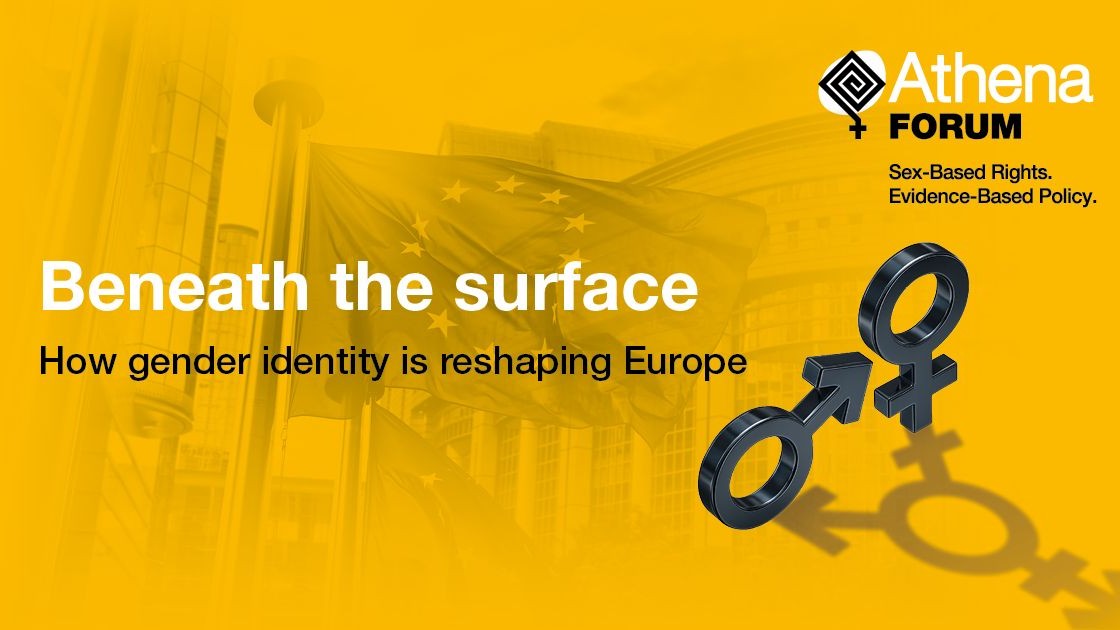
Across Europe’s governing institutions, a quiet but sweeping change is underway. The Athena Forum report titled Beneath the Surface, authored by Faika El-Nagashi and Anna Zobnina, describes this process as a “steady and largely unexamined expansion of gender identity frameworks.” The report finds that concepts once limited to activist discourse have now been systematically integrated into public administration, influencing laws, policies, and institutional culture across multiple sectors, from classrooms and clinics to national equality strategies.
According to the report, the EU and the Council of Europe have cultivated a dense web of agencies, expert groups, and advisory panels whose non-binding recommendations increasingly shape legislative agendas. Supported by tens of millions of euros from EU programs and human rights foundations, these organizations act as “experts” in consultations and hearings, using their advocacy frameworks to steer both soft law and binding policy.
Under the banners of inclusion and human rights, these groups have expanded their influence through strategic litigation, lobbying, and comprehensive training campaigns within EU institutions, civil society, and the media. The result, the report warns, is an institutional environment where questioning gender identity orthodoxy can carry professional or legal risks.
The EU and the Council of Europe have incorporated SOGIESC (sexual orientation, gender identity and expression, and sex characteristics) principles into anti-hate and equality frameworks, funding extensive programs that include educational toolkits, police training manuals, and digital awareness campaigns. As a result, schools, universities, media organizations, and judicial bodies are increasingly trained to operate within a narrow corridor of permissible expression. Failing to affirm gender identity can trigger complaints, investigations, or disciplinary action.
Criticism of gender identity ideology, even when factual and respectful, is now frequently categorized as hate speech. Mechanisms originally intended to combat incitement and discrimination have, the authors argue, become instruments for enforcing ideological conformity, deterring dissent through social and institutional pressure.
This transformation extends beyond Europe’s borders. As the world’s largest development donor, the EU wields vast influence through initiatives such as the UN Spotlight Initiative. Yet rather than reinforcing sex as a legal and biological category, the Union has increasingly promoted gender identity frameworks abroad. In one EU-funded program in India, 425 individuals obtained legal sex changes through self-declaration, the report highlights. In a country where women face high rates of sexual violence and widespread homophobia, the authors warn that such policies risk serious unintended consequences.
The export of these frameworks, they argue, represents a broader trend: EU funding, diplomacy, and policy networks are being mobilized to globalize gender identity norms under the guise of human rights promotion.
Within the EU, several institutions have played central roles in advancing this agenda. The European Parliament’s Intergroup on LGBTIQ+ Rights has acted as a conduit for transactivist demands, while agencies like the Fundamental Rights Agency and the European Institute for Gender Equality (EIGE) have reinforced the ideology through reports, recommendations, and data collection. Eurobarometer surveys, designed to measure public attitudes, often feed back into policymaking in ways that amplify the same advocacy-driven priorities.
The result, according to Beneath the Surface, is not a minor policy adjustment but a “structural realignment of European law and governance.” The authors warn that Europe’s “Union of Equality” risks transforming into a “union of ideology,” where biological reality is replaced by self-declaration and where dissenting voices, especially those of women’s rights advocates, educators, and journalists, are marginalized.
El-Nagashi and Zobnina call for renewed transparency and open debate about the principles guiding Europe’s human rights agenda. They urge a return to a framework that “protects everyone while remaining grounded in biological reality,” warning that without it, Europe’s institutions may continue to drift further from democratic accountability and material truth.