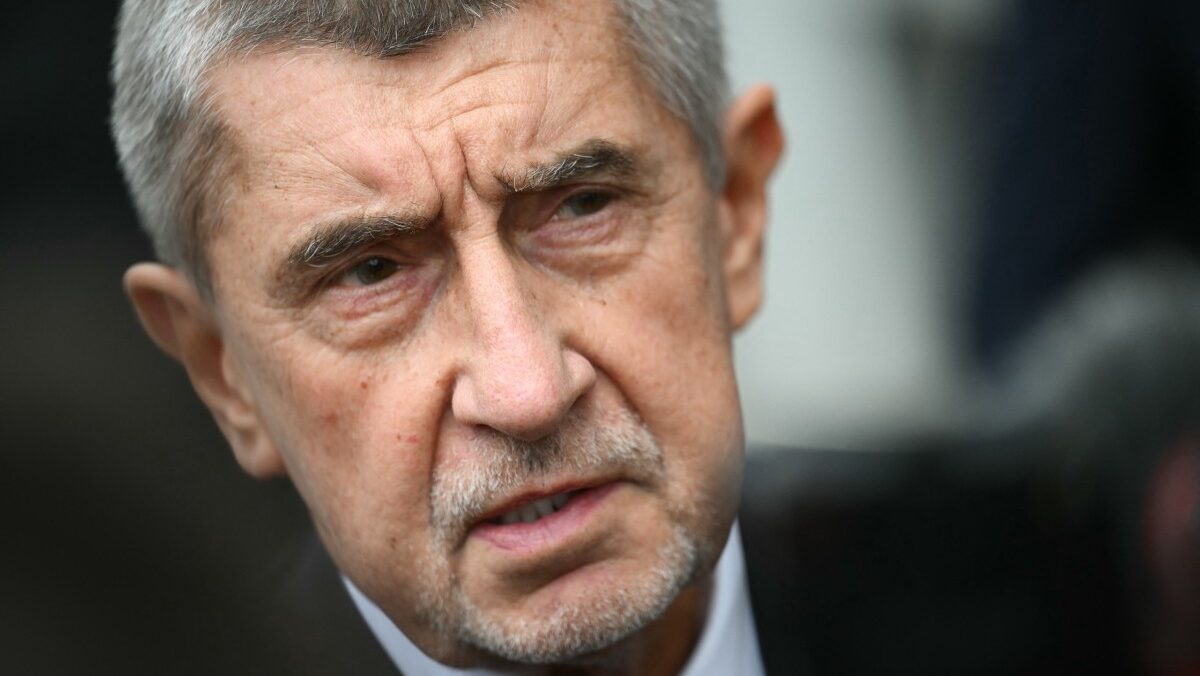
Czech Republic’s Prime Minister Andrej Babiš speaks to journalists prior to a meeting with the leaders of the European political party ‘Patriots.eu’ ahead of the European Council in Brussels on December 17, 2025.
NICOLAS TUCAT / AFP
New Czech Prime Minister Andrej Babiš announced on Tuesday that Prague’s flagship arms-for-Ukraine initiative will not be scrapped, despite having previously described it as “rotten.” But his criticisms of the scheme have resulted in him ensuring that its funding comes from elsewhere, which will no doubt be appreciated by the Czech taxpayer.
He said after attending Tuesday’s meeting of the so-called ‘coalition of the willing’ that the project—launched in 2024 after delays in American supplies left Kyiv starved of ammunition—“will continue, and the Czech Republic will be in the role of coordinator.” But,
No money from Czech citizens will be invested in the ammunition initiative.
Dnes jsem se účastnil jednání tzv. koalice ochotných v Paříži. Poprvé se v tomto formátu jednalo hlavně o míru, a to je velká změna oproti minulosti. Taky to bylo poprvé, co Spojené státy poslaly dva nejdůležitější vyjednavače. Řešili jsme to, co bude po ukončení bojů na…
— Andrej Babiš (@AndrejBabis) January 6, 2026
Former Prime Minister Petr Fiala has criticised the move, saying that “you can’t long-term demand everything from our partners and give nothing in return.”
Muniční iniciativa bude pokračovat především díky tlaku zahraničních partnerů.
— Petr Fiala (@P_Fiala) January 7, 2026
Nová vláda se na ní nechce podílet, jen ji nechá pokračovat. Je to škoda, protože iniciativa byla výrazným zahraničním úspěchem naší vlády a celé země. Podobně sice Andrej Babiš nezablokoval finance…
But BBC journalist Rob Cameron noted that “the lion’s share of the money has always been supplied by EU/NATO partners,” anyway, meaning “there will be little change.” Fiala’s comments therefore appear rather performative.
Babiš noted that the decision to continue coordinating the scheme without dipping into Czech taxpayer cash was reached “after consulting with coalition partners” after “all the meetings I have already attended,” suggesting governments from other countries offered their voice, too.
Commenting more broadly on the ‘coalition’ meeting, which was attended for the first time by U.S. officials, the PM said that “for the first time in this format, the discussions focussed mainly on peace, and that is a significant change compared to the past.”
We addressed what will happen after the end of the fighting in Ukraine, and how to establish security guarantees so that the peace is lasting and so that a peace agreement can even be created at all.
He also ruled out sending Czech soldiers to Ukraine as part of peacekeeping efforts.