Ralf HIRSCHBERGER / AFP
Germany’s insistence on maintaining a political ‘firewall’ against the Right is coming under strain in Brussels, where shifting parliamentary numbers are forcing the European People’s Party (EPP) into alliances Berlin still refuses to accept.
The controversy erupted after it emerged that European People’s Party MEPs had coordinated positions with conservative groups to secure a majority in favour of tightening migration policy. The reaction in Germany was immediate and unusually harsh, reflecting how strongly the debate is still shaped by the logic of the ‘firewall,’ even when the parliamentary arithmetic in Strasbourg points in another direction.
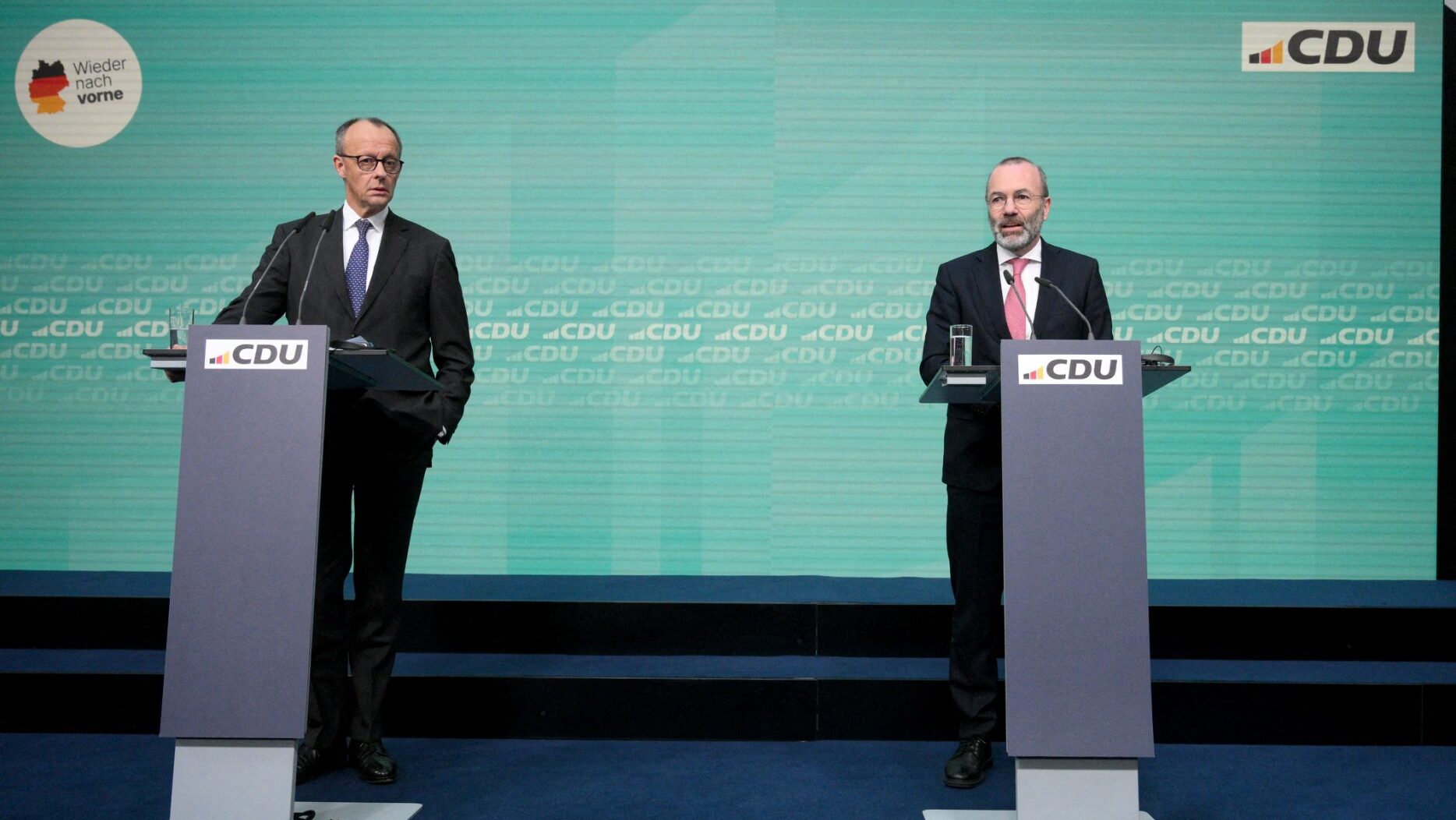
CDU leader Friedrich Merz distanced himself from EPP chairman Manfred Weber and demanded explanations, insisting that cooperation with parties to the right of the traditional bloc “is not acceptable”. At the same time, the SPD went further and threatened consequences in the Bundestag if the EPP continues to rely on such majorities in Brussels.
Social Democratic MP Sebastian Roloff warned, “The Union should think very carefully about whether it wants to tear down the firewall for such Pyrrhic victories.”
The threat amounts to a warning that even decisions adopted at the European level could face obstacles in Germany if they were approved with the support of parties on the Right. It also shows how strongly the German political consensus continues to shape the European debate, even as the balance of power in the European Parliament changes.
In the European Parliament, the EPP increasingly needs the votes of conservative groups to pass initiatives on migration, security or economic policy. In Germany, however, the political culture still treats any form of cooperation with AfD as a red line, regardless of the context.
The contradiction becomes even more striking when considering that AfD belongs to the ESN group and not to Patriots for Europe, meaning it is not even part of the same political space with which the EPP already cooperates on certain files in Brussels. In practice, cooperation with parties to the Right already exists in the European Parliament but remains politically unacceptable in the German domestic debate.
Merz’s criticism of Weber must also be understood in domestic terms.
The CDU leadership needs to maintain balance within the governing coalition, where the SPD continues to defend the firewall as a non-negotiable principle. By threatening to block decisions, the Social Democrats made clear that they are prepared to use their parliamentary weight to prevent any change to that rule, even if it complicates Germany’s position in Europe.
Within the ECR itself, the cooperation is openly described as deliberate. Swedish MEP Charlie Weimers explained that his group acted as a bridge between the different parties to the right of the centre to secure a majority in favour of tightening return rules.
Europe’s future cannot be held hostage to Berlin’s brandmauer
— Charlie Weimers MEP 🇸🇪 (@weimers) March 17, 2026
There is a lot of political spin regarding chats and meetings relating to the conservative and patriotic victory on the Return Regulation. Since, Ehrlichkeit währt am längsten, I want to set the record straight and… pic.twitter.com/1rOcgqVHb7
“Europe’s policy cannot remain hostage to Berlin’s Brandmauer logic,” he said, defending the negotiations that made the compromise in committee possible.
Weimers also confirmed that his office initiated contacts between the different groups and shared draft texts to build a common position. The objective, he argued, was not political optics but results: stricter return rules, more tools for member states and measures that enjoy support from several governments but would be difficult to pass within the traditional centrist majority.
In his view, cooperation between ECR, Patriots, ESN and the EPP shows that an alternative majority exists in Brussels, one that reflects the outcome of the last European elections more closely than the old alliance of conservatives, socialists, liberals and greens.