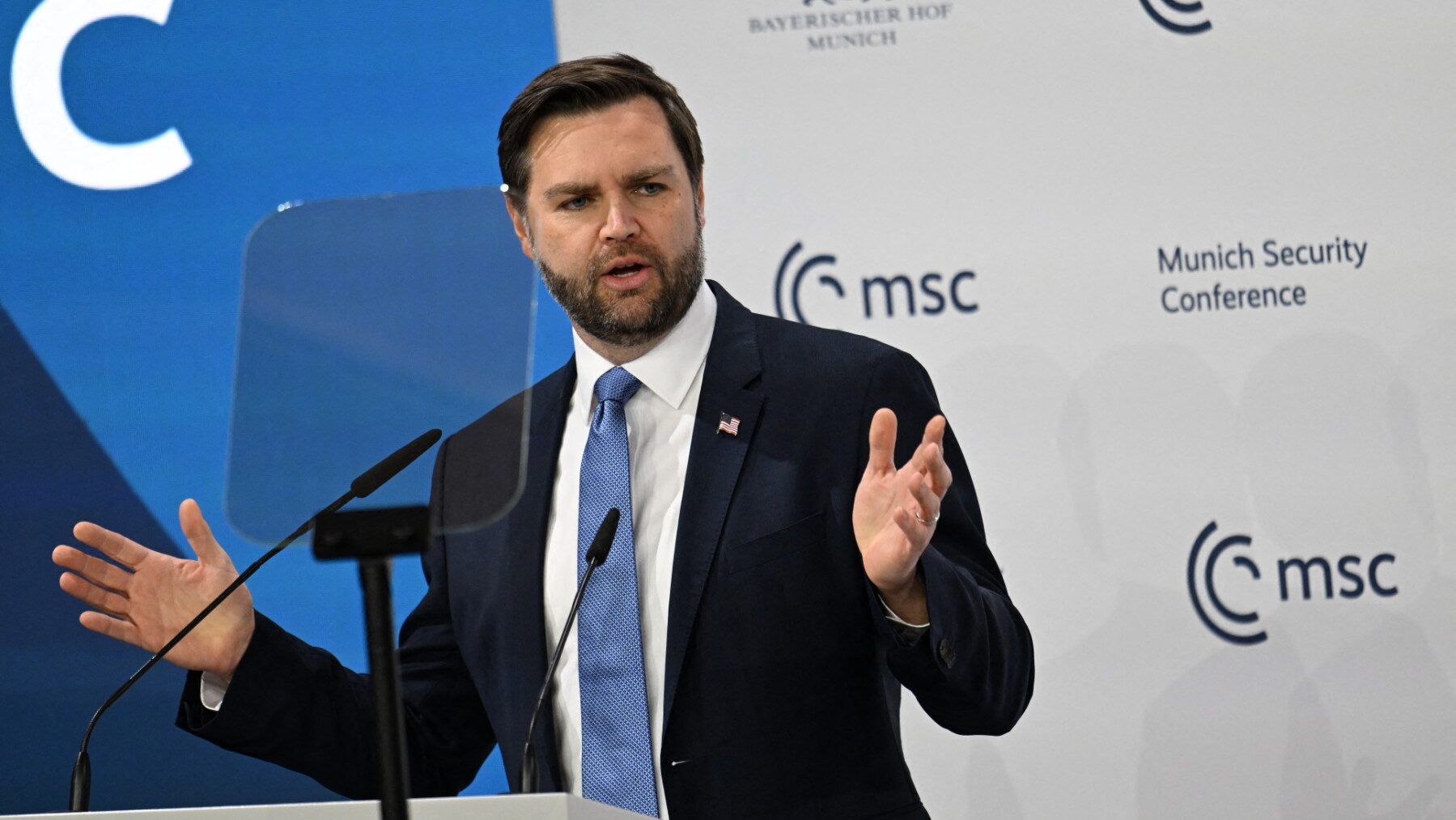
J. D. Vance delivering his speech at the Munich Security Conference in 2025
THOMAS KIENZLE / AFP
A Belgian online news outlet has been reprimanded by the country’s press ethics body after publishing the full text of a speech by U.S. vice president J.D. Vance, sparking debate about censorship and media freedom.
The controversy stems from a speech delivered on February 14th, 2025, at the Munich Security Conference, a major annual gathering of Western political and military leaders. Speaking the day after a deadly attack in Munich, Vance sharply criticised what he described as a decline in freedom of speech and democratic values across Europe.
Among the examples he cited were censorship of social media, threats to shut down online platforms, the cancellation of a presidential election in Romania, and the criminalisation of prayer in the United Kingdom. The remarks were widely discussed in the international media.
The following day, Belgian outlet 21News published the speech in full. The site said the complete text was difficult to find and that publishing it would give readers direct access to the original source. French newspapers including Les Échos and Le Figaro also printed the speech without controversy.
Almost a year later, on February 18th, Belgium’s Conseil de déontologie journalistique (CDJ) ruled that the outlet had breached journalistic standards.
The complaint had been filed by two anonymous individuals. Their argument relied on Belgium’s cordon sanitaire, a self-regulatory principle dating back to the 1990s that seeks to limit media exposure for politicians deemed to be on the extreme right.
Although the CDJ acknowledged the outlet’s editorial freedom, it said the speech should have been verified, contextualised, or corrected before publication. By printing it without commentary, the council argued, the outlet risked allowing the vice president’s messaging to circulate without sufficient critical distance.
The ruling requires 21News to publish the council’s decision on its website for two days.
Éric Dujardin, director of 21News, defended the decision, arguing that reproducing a political speech does not mean endorsing it and that readers should be able to access primary sources without mandatory interpretation.