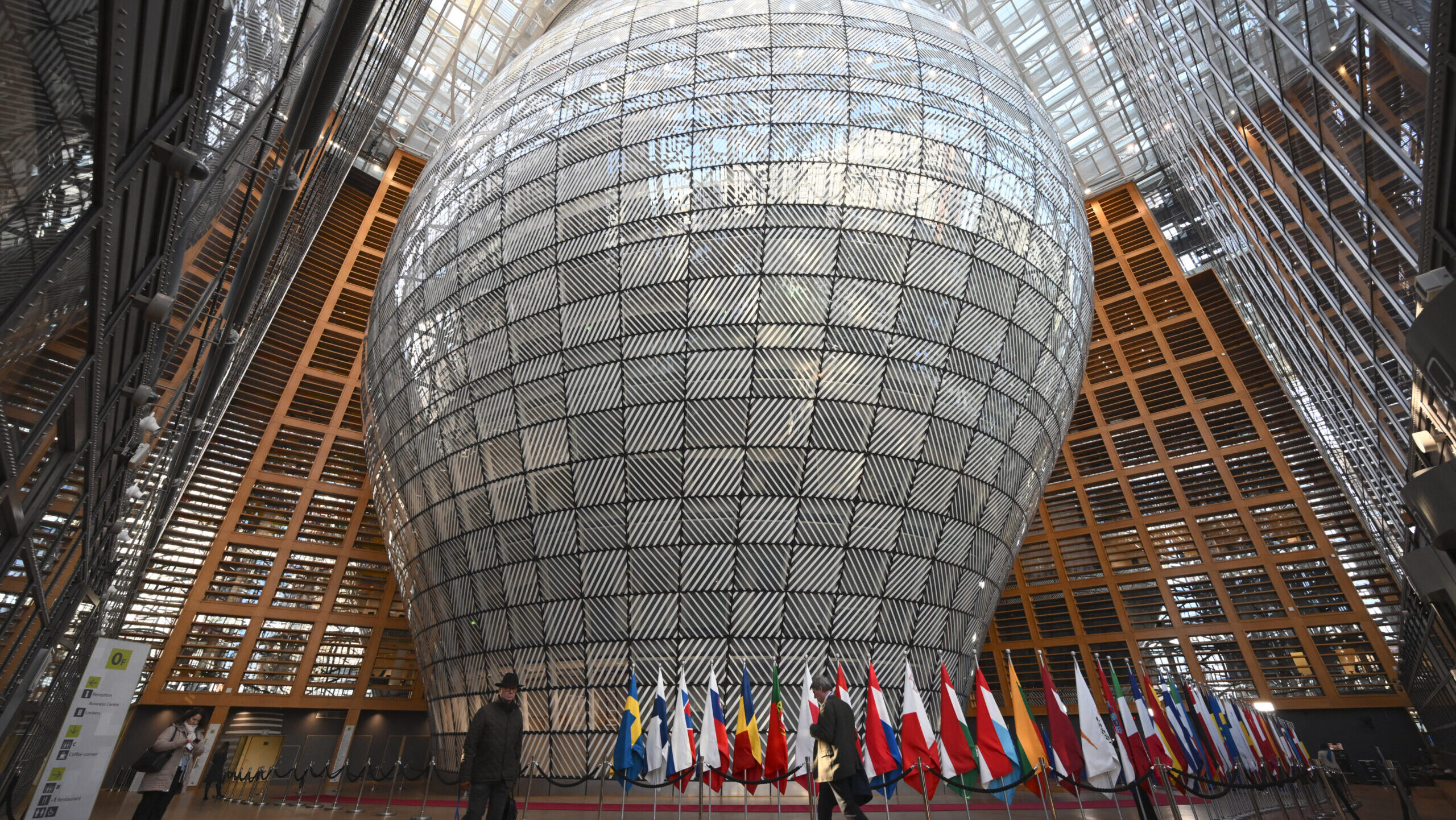
The Europa building, the European Council building dedicated to Summits, in Brussels
Nicolas TUCAT / AFP
Just hours before heads of state and government gather in Brussels for this week’s European Council (EUCO), Belgium has moved to dampen expectations: frozen Russian assets will not feature prominently on the agenda. Far from any decisive breakthrough, the message coming out of the EU capital is one of deadlock and retreat.
Brussels believes that negotiations on the use of Russian assets are “going backward.” Belgium’s position is pivotal: around €210 billion in Russian assets are immobilised at Euroclear, the major financial depository based in Belgium. The Belgian government, led by Bart De Wever, is unwilling to assume financial and legal risks without unlimited guarantees from its European partners against potential retaliation from Moscow. Despite the belligerent rhetoric regularly voiced in Brussels, no member state has so far shown a willingness to take concrete action.
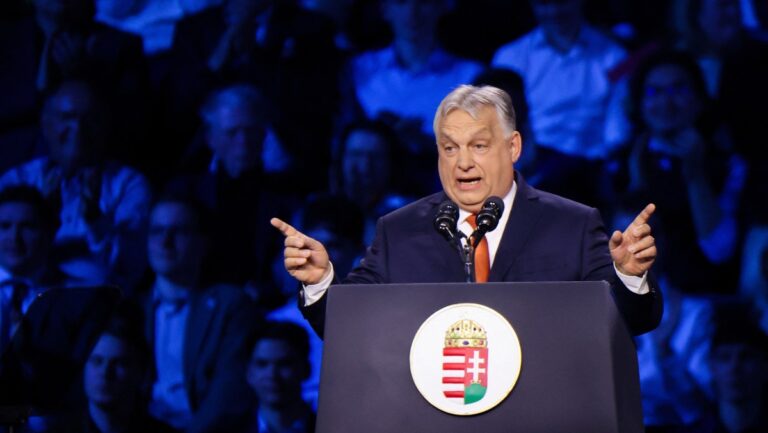
Belgium’s caution echoes warnings from Hungarian prime minister Viktor Orbán, who says that Russia has told several European leaders that seizing its state assets would violate international law and provoke economic and legal retaliation. Budapest, which has already threatened to veto further aid to Kyiv, is using this argument to bolster its opposition to the strategy promoted by the European Commission.
The result is a scene of paralysis on the eve of the EUCO: Belgium wants the issue taken off the table to avoid a hasty decision, while Hungary warns of the political and economic cost of crossing a red line with Moscow.