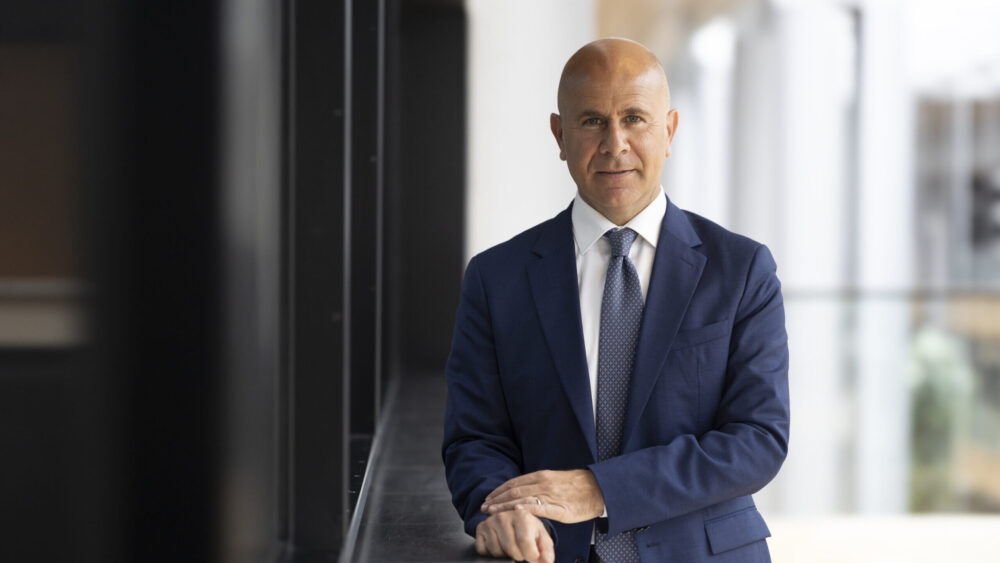
Salvatore DE MEO in the EP in Strasbourg
Alain ROLLAND © European Union 2025 – Source: EP
Belgian authorities have formally asked the European Parliament to lift the immunity of five MEPs as part of an ongoing investigation into alleged corruption involving the Chinese tech giant Huawei. The request, which has not yet been officially published, exclusively targets members of the Parliament’s three establishment political groups: three from the European People’s Party (EPP), one from the Socialist group (S&D), and one from the liberal Renew Europe group.
The case—dubbed “HuaweiGate”—centers on allegations that the tech company attempted to buy influence inside the European Parliament through gifts, paid trips, and indirect financial incentives. Authorities suspect that Huawei cultivated relationships with MEPs and their staff to promote its interests, particularly in securing a role in Europe’s 5G rollout, despite growing security concerns from Western governments.
Despite the gravity of the case—which involves suspicions of active corruption, money laundering, and participation in a criminal organization—mainstream media coverage has been surprisingly limited, with little emphasis on the political affiliations of those involved.
So far, two MEPs have publicly confirmed they are under investigation. These are Maltese Socialist Daniel Attard and Bulgarian Renew MEP Nikola Minchev, both of whom were reportedly linked to a visit last September to Huawei’s corporate box at the Anderlecht football stadium in Brussels. Attard stated he was unaware the invitation originated from a company or that the purpose was to discuss Huawei. He asserts that following a subsequent meeting with company representatives—which he says was properly declared—he had no further contact and took no action in favor of Huawei’s interests.
Minchev also proclaimed his innocence and expressed his willingness to cooperate with judicial authorities. The offices of his parliamentary assistant, Adam Mouchtar, were raided by police in March.
Italian MEP Salvatore De Meo, from the EPP and former chair of the European Parliament’s Constitutional Affairs Committee, also confirmed to Italian media that he is among those under investigation. The accusation is based on his attendance at an informal event, which, according to him, was not organized by Huawei but where company representatives were also present, unbeknownst to him.
De Meo expressed astonishment at the request to lift his immunity: “I have never defended Huawei’s interests, nor signed letters, nor tabled amendments or legislative initiatives favorable to them,” he said. In his view, the investigation represents “a dangerous trivialization of parliamentary work and an unjustified weakening of the institutions.”
Beyond the five current MEPs, Belgian authorities are also investigating eight lawmakers who in 2021 signed a letter to European Commissioners urging that geopolitical tensions should not hinder the development of 5G in Europe—a stance favorable to Huawei. Authorities are probing whether these MEPs received financial compensation in exchange for their support.
At least eight individuals have already been formally charged, including one of Huawei’s most senior executives in Europe. Police raids have taken place in Belgium, France, and Portugal. Among the accused is an Italian parliamentary assistant against whom a European arrest warrant was issued. However, an Italian court refused her extradition to Belgium at the end of April.
Parliament President Roberta Metsola will officially announce the names of the MEPs involved during the next plenary session in Strasbourg. The Parliament’s Committee on Legal Affairs will then assess whether to proceed with lifting their immunity. The procedure may be expedited within a few weeks or extended up to a year in particularly sensitive cases.
It’s important to note that lifting an MEP’s immunity does not imply guilt. This is a routine legal step in criminal investigations involving elected officials.