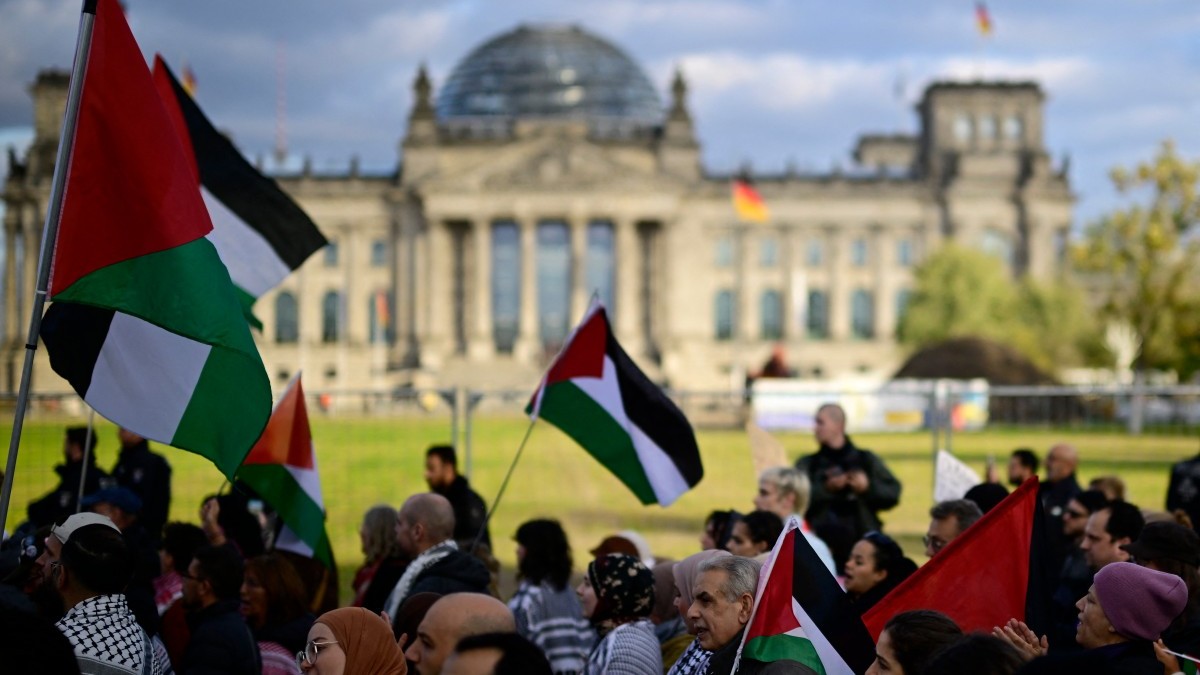
Pro-Palestinian protesters demonstrate on October 11, 2025 in front of the Reichstag building housing the Bundestag in Berlin, Germany.
TOBIAS SCHWARZ / AFP
The Berlin Senate did not invest a single euro in prevention projects against left-wing extremism from 2021 to 2025, while the same period saw around €16.7 million spent on combating “right-wing extremism” and €2.7 million on religiously motivated extremism.
For 2026, the Senate plans to allocate more than €4.1 million to combat “right-wing” extremism—a 6.3% increase compared to 2025—while funding for religiously motivated projects will decrease by over 5%. Once again, left-wing extremism prevention projects will receive exactly zero euros.
This long-standing neglect comes amid a rising wave of left-wing violence in Berlin. According to preliminary data from the Berlin Senate, politically motivated left-wing crimes nearly doubled in 2025 compared with 2024, rising from 123 to 220 incidents, with 872 left-wing offenses registered overall. Religious extremist offenses also rose, reaching a record 508 cases.
The dangers of inaction were starkly illustrated on January 3, 2026, when high-voltage cables in the southwestern district of Steglitz-Zehlendorf were deliberately set on fire. Tens of thousands of households and businesses were affected: around 45,000 households and 2,200 businesses lost electricity, forcing schools and hospitals to close. Power was fully restored by January 7th, according to Berlin’s Senator for Economic Affairs, Franziska Giffey.
The attack, claimed online by a group calling itself the Vulkangruppe (‘Volcano Group’), was identified by authorities as a known left-wing extremist organisation. Interior officials described the incident as an act of left-wing terrorism. Barbara Slowik, Berlin’s police president, said the attack underscored a real and ongoing danger from loosely connected far-left networks targeting essential services. She urged institutions and the public to prepare for the possibility of further sabotage.
Chancellor Friedrich Merz (CDU) commented for the first time only 127 hours after the blackout began, calling it an “attack” and praising the crisis management by local authorities, including the deployment of the Bundeswehr and other emergency services. He stopped short of explicitly blaming left-wing extremism or terrorism for the arson.
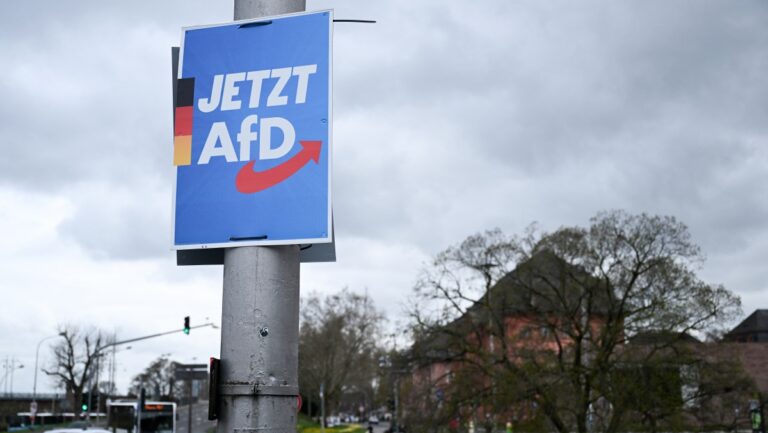
The Senate’s approach has drawn criticism from AfD MP Jeannette Auricht. She pointed out that the complete inaction on left-wing extremism, which has manifested in attacks like the January blackout, is “frightening.”
SPD Senator Cansel Kiziltepe, responsible for extremism prevention through the State Anti-Discrimination Office and the Senate Department for Labour, Social Affairs, Equality, Integration, Diversity and Anti-Discrimination, has long been seen as a left-wing hardliner. For years, her administration has financed numerous left-wing NGOs with millions in public funds. Meanwhile, no public statements from Kiziltepe have addressed the ongoing series of left-wing extremist attacks.