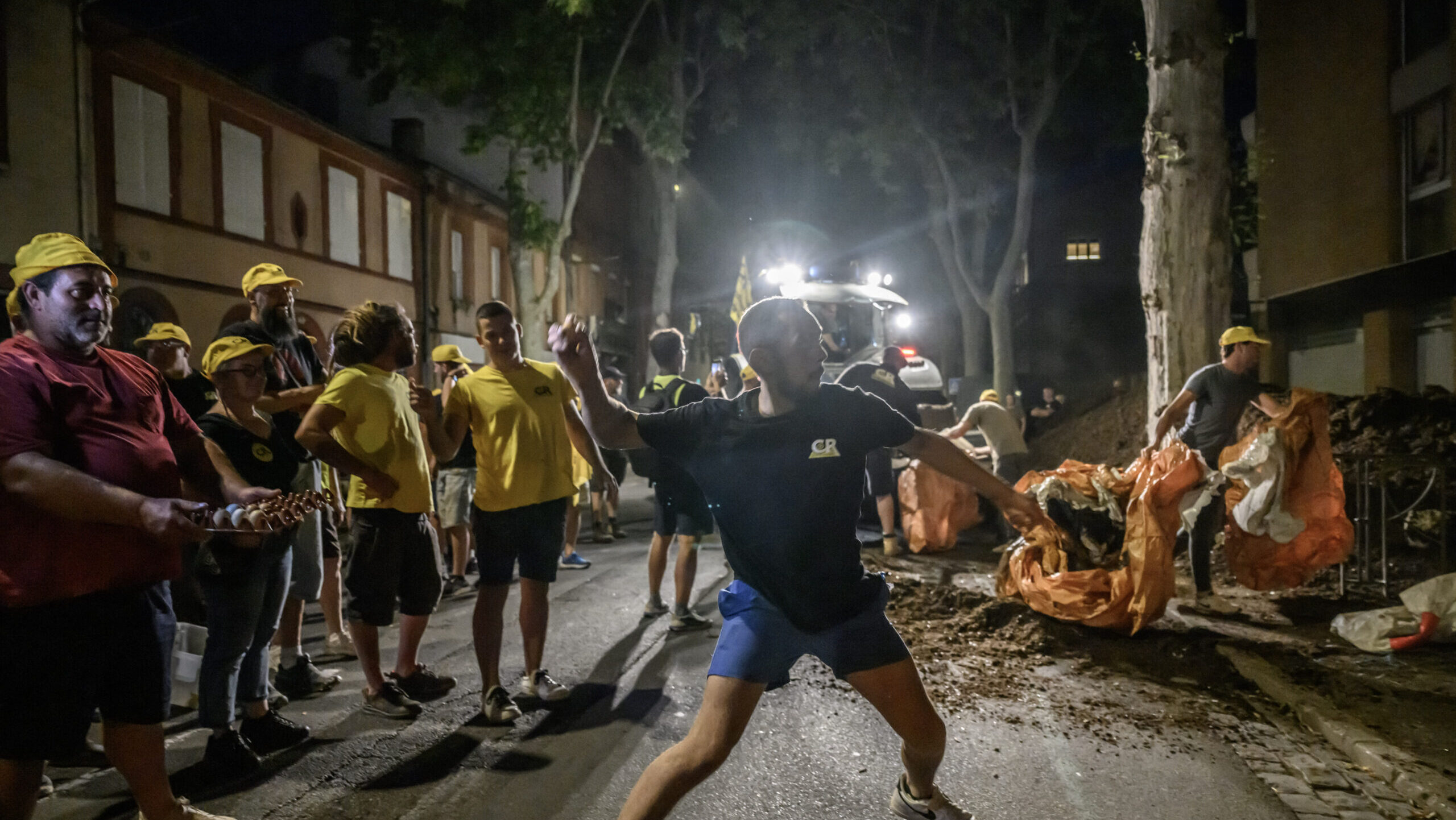
Farmers protest in Toulouse on July 22, 2025.
Ed JONES / AFP
The return to the political season could turn into a veritable powder keg in France. Since mid-July, the slogan “Bloquons tout!” (“Let’s block everything!”) has spread like wildfire on social media, calling for a total shutdown of the country on September 10. The spark: the drastic cuts announced by Prime Minister François Bayrou, which include a €43.8 billion adjustment, the freezing of social spending, the elimination of two public holidays, and other austerity measures that have lit the fuse of public discontent, primed for years.
This is not just about numbers in a budget. Many French citizens see these cuts as confirmation that they are being asked to make more sacrifices. At the same time, the state has spent enormous sums on mass immigration policies and subsidies that rarely benefit the native population. For large sectors of society, especially in areas hardest hit by crime and unrest, the Islamisation of the country has not come cheap: it has been financed by their taxes, leading to the deterioration of entire neighbourhoods and increasing the feeling of abandonment.
The situation is reminiscent of 2018, when the gilets jaunes (yellow vests) paralysed the country in protest against rising fuel prices. Now, the cocktail is similar, but even more explosive: economic crisis, loss of purchasing power, rising crime, uncontrolled immigration, and a political class perceived as distant and arrogant. The September 10 protest aims to go beyond a general strike: consumer boycotts, withdrawal of funds from “complicit” banks, and the occupation of public buildings.
The political climate does not help. After the snap elections of 2024, Emmanuel Macron lost his majority, and his coalition has survived only thanks to ad-hoc deals. Bayrou, one of the least popular politicians of the Fifth Republic, survived his eighth no-confidence vote in July solely because of the abstention of Marine Le Pen’s Rassemblement National (RN), which has already warned that it will not continue to prop up the government if it persists in “attacking French workers and pensioners.”
In this context, Le Pen and the RN could emerge strengthened, presenting themselves as the only real alternative to a weakened executive and a divided Left. Macron’s agenda, already unpopular, now faces the power of the streets—a “third power” in France capable of bringing down governments.
The central trade unions have called for protests from September 1 until the end of November, denouncing measures they describe as “brutal and unjust.” The question is whether the so-called Bloquons tout! will manage to unite the discontented from across the political spectrum into a movement as broad as it is uncontrollable.
If the September 10 protest materialises, the French autumn could herald a new political earthquake. Once again, the tremors will come not only from the economy but also from the deep sense that the social contract has been broken and that Paris listens more to Brussels and migration lobbies than to its own citizens.
Yet the situation is not much different in neighbouring countries. German and Spanish politicians have already “flirted” with the same idea, so the French effect could well spread beyond its borders.