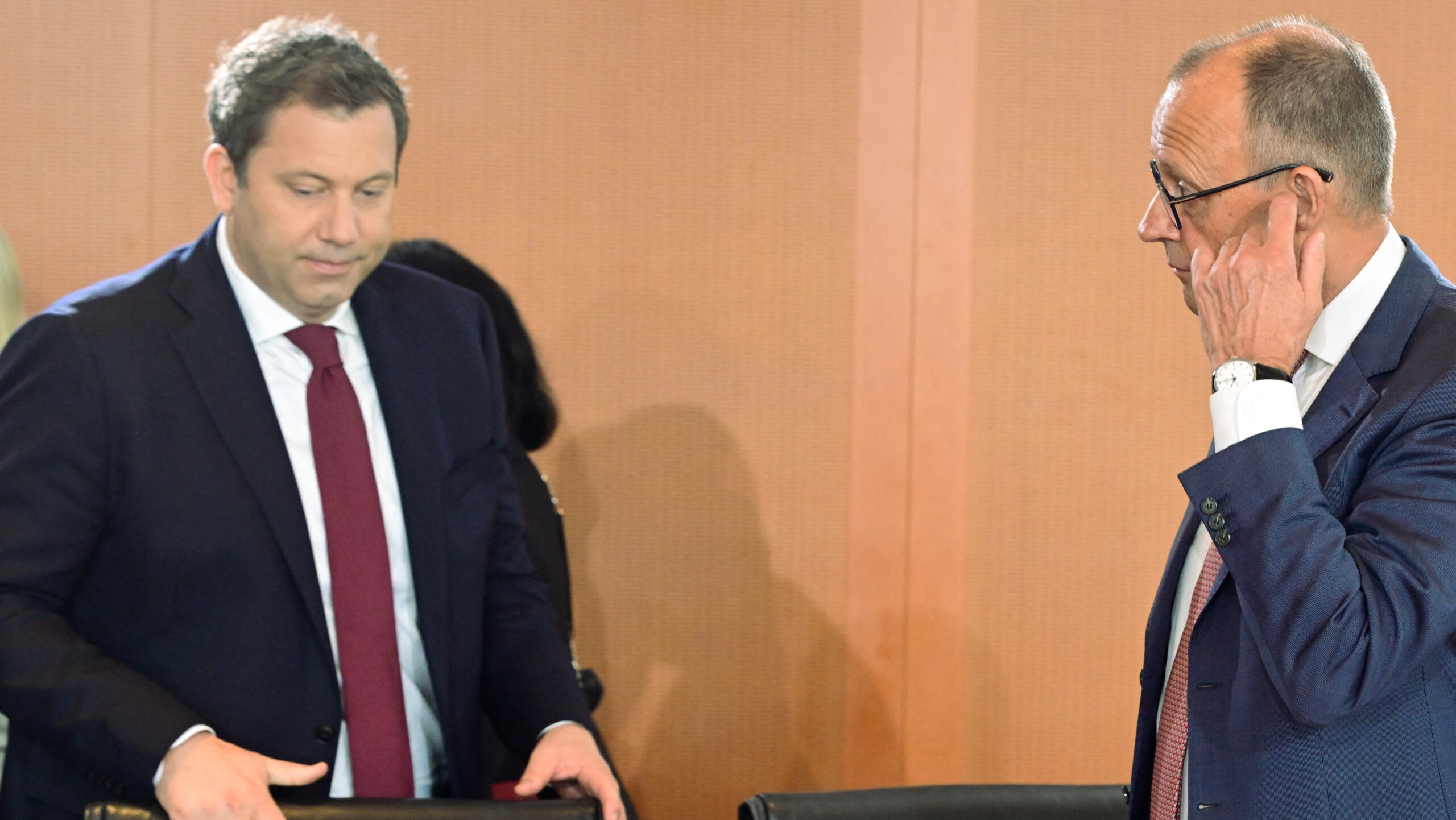
German Chancellor Friedrich Merz (R) and German Finance Minister and Vice Chancellor Lars Klingbeil
John MACDOUGALL / AFP
Germany’s governing coalition is locked in a bitter dispute over how to deal with the country’s worsening finances.
Chancellor Friedrich Merz, leader of the centre-right CDU party, is under fire not only from his coalition partners, the Social Democrats (SPD), but also from critics who say he could be on the verge of breaking another one of his campaign promises to appease the SPD.
The row centres on how to close a €172 billion budget gap over the next few years.
Finance minister and SPD co-leader Lars Klingbeil wants tax increases on the wealthy, a higher inheritance tax, and possibly a new wealth tax.
Merz, however, insists there will be no new taxes, pointing to the coalition agreement signed when the government was formed earlier this year. “We have a coalition agreement, and we have agreed that taxes will not be raised. And this agreement stands,” he told broadcaster ZDF on Sunday, August 31st.
But many do not believe him. Since narrowly winning the chancellorship, Merz has gained a reputation for backtracking.
He once promised a tougher asylum policy, but quickly softened his stance. He pledged not to take on massive new debt, yet his government has approved nearly a trillion euros for military spending. He also promised to investigate state funding of NGOs, but that plan has quietly disappeared.
Now, sceptics wonder if his no-tax pledge is simply another promise that will soon be broken.
The coalition mood has turned poisonous. Labour minister and SPD co-chair Bärbel Bas called Merz’s push to cut social spending “bullshit” during a speech at a party conference. She argued that the welfare state must be protected, not reduced.
While the Social Democrats continue to push for the rich to contribute more, even some CDU members, such as MP Andreas Mattfeldt, have suggested higher taxes on the wealthy in exchange for social reforms.
Meanwhile, Markus Söder, the leader of the CDU’s sister party, the Bavarian CSU, is calling for deep welfare cuts, saying “fewer benefits and more incentives to work” are required for Germany to remain competitive.
Merz himself has echoed this line, blaming excessive sick leave, high labour costs, and weak productivity for Germany’s decline.
The coalition’s troubles are not new. Only weeks ago, the SPD’s nomination of Frauke Brosius-Gersdorf as a constitutional judge caused deep tension between the partners. The latest confrontation over taxes and welfare spending threatens to be even more explosive, raising doubts about whether the government can hold together.
The public quarrel comes at a dangerous time for Merz.
In his home state of North Rhine-Westphalia, important local elections take place on September 14. The right-wing AfD is enjoying a surge in support. Within the CDU, there are growing fears that voters may punish them if they are seen to support tax rises.
For a country facing its third year of recession, the perception of weak and untrustworthy leadership could hardly come at a worse moment.
As conservative outlet Tichys Einblick points out:
The whole country has known Merz, ever since his election as chancellor, as a turncoat who promises A and then does B. It is no coincidence that since his narrow victory in the second round, Merz has been regarded as the chancellor of broken election promises and broken CDU hearts.