European Commission President Ursula von der Leyen speaks to the press as she arrives to attend the European Council meeting in Brussels on December 18, 2025.
John Thys / AFP
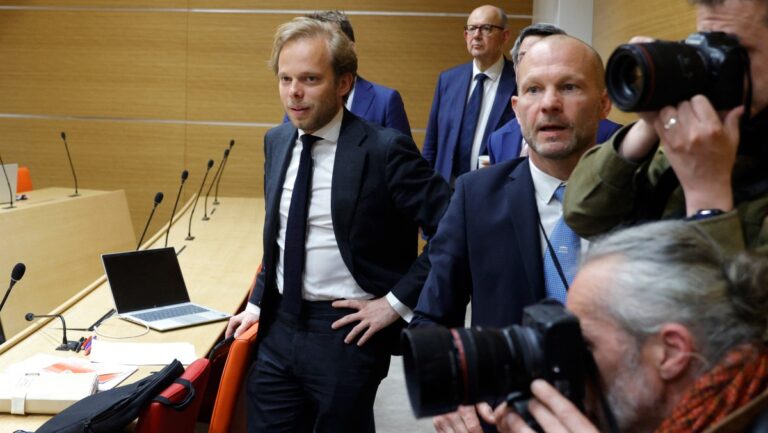
European leaders have been arriving in Brussels this morning for what is being described as one of the Council’s most high-pressure meetings yet, in particular due to tensions surrounding the EU establishment’s push to confiscate frozen Russian assets to help fund Ukraine.
The bloc’s top diplomat, Kaja Kallas, said on her way into the summit that the concerns expressed by Belgium, where most of these assets are held, have been “addressed.”
EU leaders meet today, 18 December, in Brussels for #EUCO. They will hold strategic debates on Ukraine, the next multiannual financial framework, enlargement and the geo-economic situation in the EU.
— European External Action Service – EEAS 🇪🇺 (@eu_eeas) December 18, 2025
Watch HR/VP @kajakallas doorstep: https://t.co/KxQOU4f9g6
In reality, Brussels has relied more on threatening tactics, not genuine persuasion, and Belgium appears to remain unconvinced that the risks of confiscation will be shared across the EU. Others, including Hungary, say that even if this were the case, using the assets is the wrong move and would be viewed by Russia as “a declaration of war.”
Another option being floated for putting together a more than €200 billion package for Kyiv is a joint EU loan. Typically, some of those European leaders who back using frozen Russian assets to fund Ukraine—such as Dutch Prime Minister Dick Schoof—are firmly opposed to bloc-wide borrowing, highlighting the difficulty of the position the Brussels establishment has put itself in.
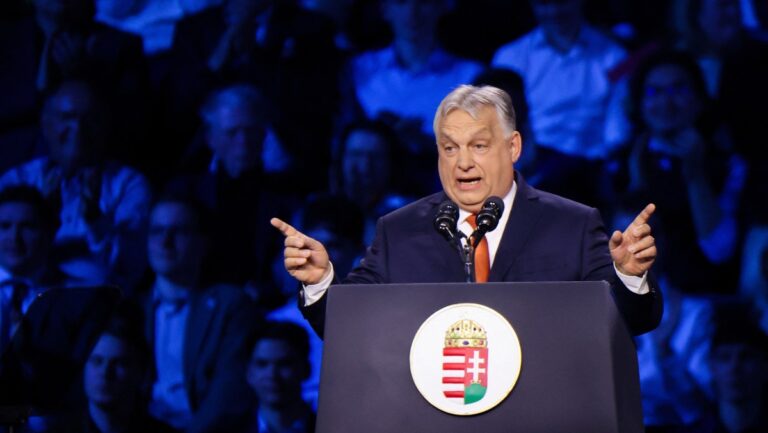
Hungarian PM Viktor Orbán said on Thursday morning that the current squabbling in the EU capital is best described as “Brusselian hubris at its peak.” He also suggested that if Wednesday’s EU-Western Balkans summit—which Serbian President Aleksandar Vučić decided to boycott—was anything to go by, this latest meeting is bound not to go smoothly.
Brusselian hubris at its peak. That is the most accurate way to describe what is happening in Brussels these days.
— Orbán Viktor (@PM_ViktorOrban) December 18, 2025
They managed to prepare yesterday’s EU-Western Balkans summit in such a way that the Serbian president did not even attend. No wonder. He has been strung along for… pic.twitter.com/FgJRd2EgB9
More broadly, Orbán believes any deal focussed on “the financing of the war,” rather than of peace, is bad, and that officials need to restart the entire discussion.
Leaders have vowed to talk through the night if that is needed to reach a decision. Indeed, Belgian PM Bart De Wever said upon arriving at the summit that for all his opposition to using Russian assets, “no solution … is the ultimate geopolitical failure of Europe, which we will feel for decades to come.”
Commission President Ursula von der Leyen is, at least, convinced that “we will find a solution today.”
We will be following for updates.