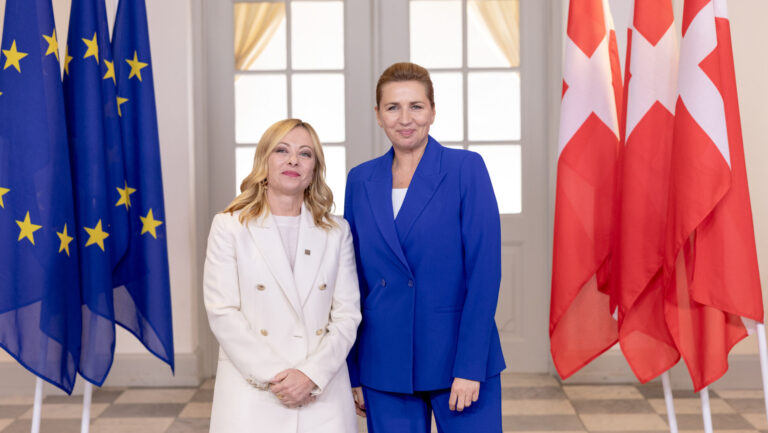
Commissioner for the Mediterranean Dubravka Šuica
Valentine Zeler © European Union, 2025. Source EC – Audiovisual Service
The European Commission has announced a new plan to open the EU’s Erasmus exchange program to students from Africa and the Middle East, further pushing the agenda of letting in people from these regions instead of improving the lives of Europeans.
The new initiative, part of the “Pact for the Mediterranean,” would extend Erasmus and Horizon Europe to countries including Algeria, Egypt, Israel, Jordan, Lebanon, Libya, Morocco, Palestine, Syria, and Tunisia. It also proposes doubling the EU’s budget for that region to €42 billion.
European Commission President Ursula von der Leyen said the pact centers on “people, economy, and the link between security, preparedness and migration.” Yet the inclusion of non-EU students from regions already linked to migration flows into Europe is tone-deaf, as many member states struggle with overburdened asylum systems and growing domestic discontent.
Commissioner for the Mediterranean Dubravka Šuica called the initiative a way to “connect young people,” presenting it as part of a “Mediterranean University.” She said it would “scale up talent partnerships with Morocco, with Tunisia and with Egypt, and facilitate issuance of visas in particular for students” from these countries. But expanding visa access and mobility from outside the EU risks further inflaming tensions in countries already skeptical of Brussels’ migration policies.
Šuica described migration as both the “greatest shared challenge” and a “shared opportunity,” suggesting the pact aims to prevent illegal departures while establishing “legal pathways to address Europe’s labor needs.” Many see the program as a platform to whitewash immigration into the Old Continent, to keep the influx of immigrants up, under a new guise.
The EU opens the Erasmus Program to North Africa and the Middle East in a "Pact for the Mediterranean" worth 42 billion euros to facilitate visa issuance, particularly for students from Morocco, Tunisia, and Egypt pic.twitter.com/MtAsVDGqDc
— Visegrád 24 (@visegrad24) October 20, 2025
There is, however, no getting around the double standard in Brussels’ approach. Hungary, an EU member state, remains excluded from the Erasmus program after the European Commission suspended grants to several of its universities. The decision, taken in December 2022, is seen as a way for Brussels to hold Hungarian policy choices hostage and withhold money from students to strongarm the government.
Gergely Gulyás, cabinet minister in Prime Minister Viktor Orbán’s office, called the move “anti-Hungarian, racially-based revenge,” arguing that the suspension punished Hungary for its conservative stance on migration, LGBT issues, and the rule of law.
The European Commission’s decision has affected tens of thousands of Hungarian students and teachers, effectively cutting them off from participation in Erasmus and Horizon programs. Despite compliance efforts after the initial ban from the program, the EU has maintained the suspension and demanded even more changes that were not initially part of the deal.
Against this backdrop, Brussels’ decision to extend Erasmus access to non-EU countries in the Mediterranean appears inconsistent. While a member state like Hungary is sanctioned and isolated, students from countries outside the Union are invited in. Whether the governments of the North African countries the Commission want to extend these academic programs to are aligned with ‘European values’ does not seem to have been part of the consideration.
The plan has already created outrage on social media. Dutch commentator Eva Vlaardingerbroek said, “I used to joke that the Erasmus Program is the only good thing the EU has ever brought forth. Guess we can cross that one of the list now as well.”
Ralph Schoellhammer, assistant professor of political theory and international relations at Webster University Vienna, also commenting on X, said,
Yesterday’s Islamic head-chopper and rapist from Syria or Hamas will be tomorrow’s “student” at your local university. Btw, while Hungarian students are excluded from the Erasmus program, Syrians and Palestinians will be admitted. This tells you, what the EU leadership wants.
Yesterday's Islamic head-chopper and rapist from Syria or Hamas will be tomorrow's "student" at your local university.
— Ralph Schoellhammer (@Raphfel) October 20, 2025
Btw, while Hungarian students are excluded from the Erasmus program, Syrians and Palestinians will be admitted.
This tells you, what the EU leadership wants. pic.twitter.com/wuMBtgnNj8