Ludovic MARIN / AFP
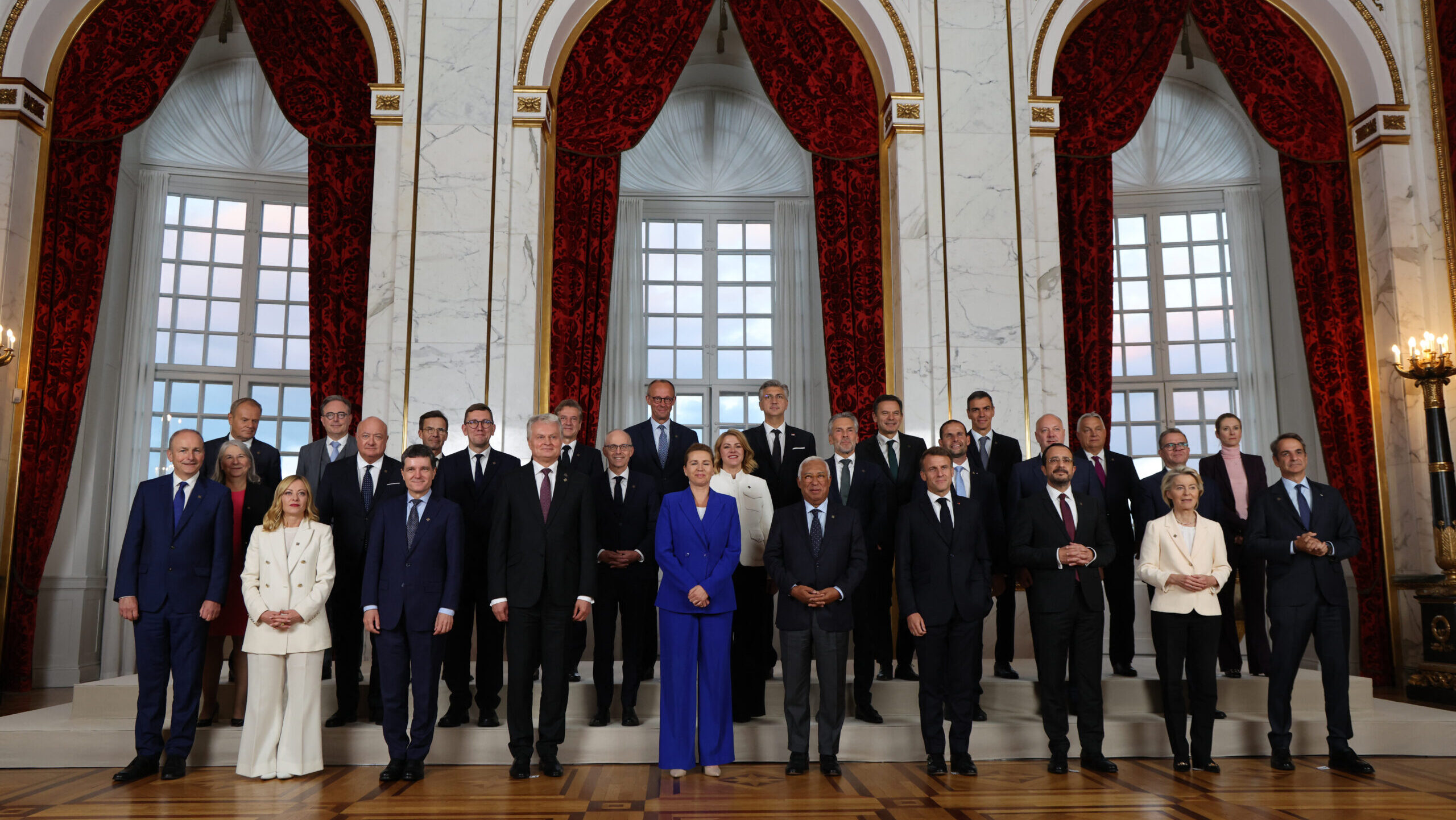
The European Council meeting held yesterday in Copenhagen made clear what many prefer to deny: there is no real consensus within the European Union on how to address the continent’s major challenges and, even less when it comes to handing over more power to Brussels.
While some leaders, led by the Commission and the Council, are pushing for more integration, more regulation, and an acceleration of Ukraine’s accession to the bloc, others warn of the danger of sacrificing national sovereignty in the name of a strategy that increasingly resembles a war project. Among them, Hungary once again emerges as the country willing to stand up to the EU machinery.
Prime Minister Viktor Orbán did not simply repeat his opposition to Brussels’ plans. He went further, announcing that in Hungary a signature collection campaign could be launched against what he called the Union’s “war plans.” “Every proposal on the table is a war proposal,” he said. “Let’s give the Ukrainians more money, let’s give them weapons, let’s speed up their accession to the Union. Everything revolves around war.” Orbán said the pressure was immense—not just against Hungary’s national interests, but against peace and stability in Europe as a whole.
Once again, Hungary is being cast as Europe’s scapegoat. Brussels singles it out in every negotiation, and there is no shortage of those who accuse it of being a Russian “Trojan horse.” However, what happened in Copenhagen shows that Orbán is not alone. Germany, France, and Greece also expressed reservations regarding proposals such as abolishing the right of veto in the opening of accession negotiations.
This proposal from Council President António Costa to switch to a qualified majority sank within hours. The irony is that changing this rule would itself require unanimity—the very principle now targeted for abolition. This explains better the attacks and pressure on Budapest.
But while the larger countries seek to preserve spheres of power, Hungary takes on the political cost of defending basic principles: respect for treaties, the need for unanimity in momentous issues, and the priority of peace over a logic of war. Brussels blames Budapest for every failure in the EU, portraying Orbán as stubborn in order to hide the bloc’s own internal divisions.
The Copenhagen summit was supposed to reinforce common security and advance financing for Ukraine through frozen Russian assets. None of that moved forward. Belgium blocked the loan proposal, while countries like Italy and Spain pointed out that the concept of “security” cannot be limited to Eastern Europe but must also take into account uncontrolled immigration in the Mediterranean. The ‘union of values’ Brussels likes to proclaim was exposed as nothing more than a patchwork of clashing interests.
The clearest example was Ursula von der Leyen’s “drone wall” project. France and Germany dismissed it as unfeasible in its current form, while southern countries demanded that it also include protection of their maritime borders. Once again, grandiloquent rhetoric collided with the reality of 27 national governments, which, whether Brussels likes it or not, still have the final say.
The fact that Hungary is the constant target of criticism does not mean it acts out of pure national interest. Orbán understands that the battle is about preserving sovereignty as a non-negotiable principle.
Brussels, trying to impose qualified majority voting on vital matters, seeks to turn Member States into mere provinces of a superstate. The Hungarian refusal is, in that sense, a reminder that the EU can only exist as a voluntary union of free nations.
At a time when Europe’s elites seem fixated on waging a proxy war in Ukraine and pushing integration without public support, Hungary stands out as the voice warning that Europe cannot be built against its peoples—or against peace. Orbán summed up his position clearly: “We will need all our strength to stay out of this war.”