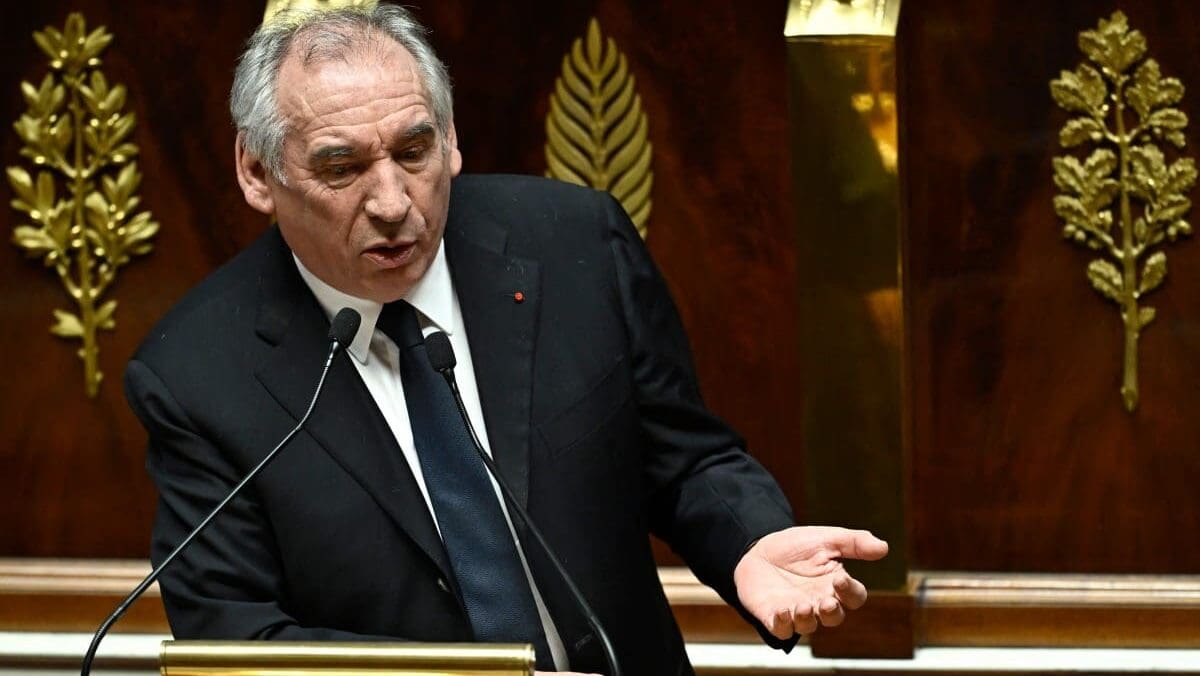
Contested from all sides, French Prime Minister François Bayrou presented his budget roadmap on Tuesday, April 15th, with a programme of drastic cuts likely to seriously damage his already fragile popularity. The spectre of a no-confidence vote against his government is once again surfacing.
At a press conference dedicated to budgetary issues, the tone was dramatic. Bayrou piled on the doomsday rhetoric, speaking of “mountains of difficulties,” or even of an “untenable situation.” “The survival of our country is at stake”, warned the pressured centrist PM.
A few days earlier, the Minister for the Economy announced that an additional €40 billion in savings would be needed. Aware of the fragility of his position, the PM once again stated that he was firmly opposed to any tax increases. However, to cover the billions missing from the budget, he has launched a broad cost-cutting plan that is sparking public outcry.
Several cost-saving measures have been outlined: tackling what is known in France as the ‘territorial mille-feuille’, i.e., the proliferation of intermediate administrations that often duplicate efforts and unnecessarily inflate public spending; slowing down the ‘energy renovation’ policy, which is highly dependent on public subsidies; cutting social spending, with a new reform of unemployment insurance or a possible reduction in the 10% tax allowance for pensioners.
None of these issues have been addressed or tackled frankly. The PM is exploring options and launching trial balloons, at the risk of confusing an audience that does not know exactly where he is heading.
On the Left, discontent is growing and the word ‘austerity’ is being brandished—a term with a highly negative symbolic charge, as it is associated in France with the Greek crisis and the collapse of public finances. The Greens are also alarmed at the relegation of climate and energy policies to the status of secondary concerns. The socialists are upping the ante, declaring that, in the absence of negotiations with the Left, the prime minister could fall “as early as May.” Indeed, without them, Bayrou cannot hope to remain in power.
On the Right, scepticism prevails. A powerful signal was sent to the prime minister by David Lisnard, member of the Les Républicains party and president of the Association des Maires de France, who boycotted the press conference, refusing to play the role of “extra in yet another communication sequence.”
Equally critical, the Rassemblement National (RN)—which now has little to lose since Marine Le Pen’s conviction by the courts—has raised its voice. “We will not let measures against the French pass when there is so much waste and mismanagement of public finances,” the leader of the RN deputies said on X. The RN is insistently criticising the centrist government for its failure to act, having not yet undertaken any substantial reforms since coming to power. “I wonder what the ministers have been doing for the last six months,” said RN MP Jean-Philippe Tanguy, known for his outspokenness. The RN continues to insist, in vain, on the need to cut spending caused by uncontrolled immigration.
In the middle of the storm, Bayrou displays a confident smile. Deep down, he knows full well that, paradoxically, doing nothing is his best chance of survival.