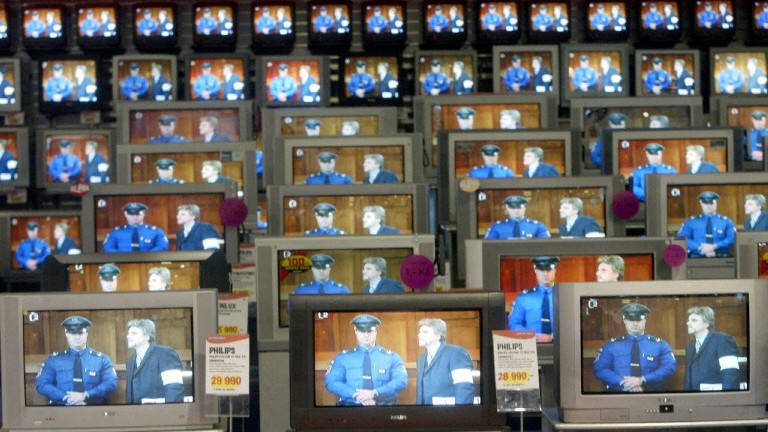
TV monitors on display in a Prague shop show Karel Srba (R), former Foreign Ministry secretary sentenced in June 2003 in Prague to eight years in jail for plotting to kill in July 2002 an investigative Czech journalist, Sabina Slonková, entering in the dock 30 October 2003 in the Prague Appeal Court.
DAN MATERNA / MAFA / AFP
The Czech ruling coalition is hoping to radically change the funding of public television broadcasting by relieving many citizens of the requirement to pay a licence fee.
A bill set to be submitted to the Chamber of Deputies on Tuesday, March 24th, would abolish the fee for seniors, companies, dependent young people under the age of 26, and individuals with physical disabilities.
Tomio Okamura, speaker of the Czech parliament’s lower house, expressed his hope that this shift “will lead to an update in the definition of public service”—especially since trust in public broadcaster Czech Television (CT) last year fell to its lowest level yet. He added that this was no surprise, since “many people feel that CT promotes Brussels propaganda and cheers for the current opposition.”
Důvěra v Českou televizi 📺 loni klesla na dosud nejnižší úroveň. 📉 Za posledních pět let se snížila o deset procentních bodů na 62 procent. Naopak nedůvěra v ČT se za stejné období zvýšila z 23 na 33 procent. Vyplývá to ze zprávy Hodnocení plnění veřejné služby ČT, kterou… pic.twitter.com/teVnFp9ubv
— Tomio Okamura (@tomio_cz) March 20, 2026
Prime Minister Andrej Babiš (ANO) has also previously told parliament that “citizens should no longer pay for untransparent institutions that are being misused for the benefit of this [the previous Czech] government.”
Similar calls have sprung up elsewhere in Europe, with a particularly fierce debate on the licence fee having been ongoing in Britain for well over a decade. Nigel Farage’s insurgent Reform UK party has described the BBC’s current funding model as “completely unacceptable” and has vowed to use legislation to turn this on its head.
Taxpayer-funded broadcasting has also come under heavy scrutiny from German officials connected to the anti-immigration Alternative für Deutschland (AfD), including Ulrich Vosgerau, who is a legal representative for the party.
Czech Minister of Culture for Motorists Oto Klempíř told reporters that the change to the funding of public broadcasting should come into effect in July this year.