European Council, 2025
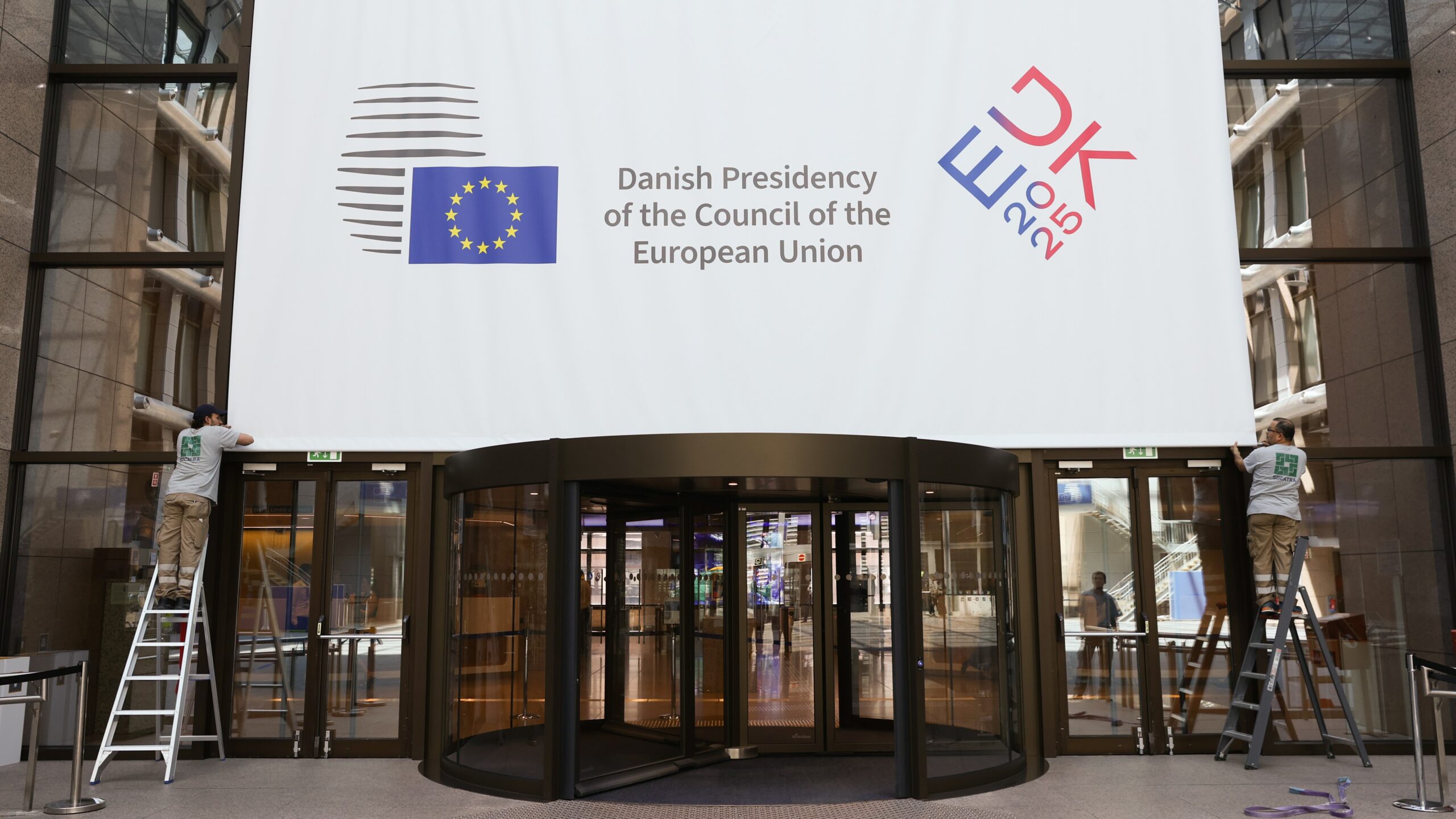
As of July 1st, Denmark took over the European Council’s rotating presidency from Poland, which enables it to introduce its priorities when setting the agenda for the next six months.
On top of the list is enhancing European security—not only through rearmament but also via Ukraine’s fast-tracked EU accession, which the presidency program defines as a “geopolitical necessity”—as well as balancing green goals and competitiveness, and, of course, migration.
Although agreeing with the EU mainstream on most issues, PM Mette Frederiksen’s social-democrat-led government has long been an outlier when it comes to its approach to migration. Now it could show the way to other countries with its simple, common-sense asylum policies, as well as EU-wide proposals that would be considered ‘far-right’ if pushed by anyone else.
“The flow of irregular migrants towards Europe must be reduced, and the EU’s external borders must be secure. Irregular migration cannot be allowed to threaten European cohesion,” the Danish Council presidency program states. “We must stop dangerous journeys to Europe and ensure that people without legal residence are returned.”
The so-called Danish model—which, in fact, is one of Europe’s toughest asylum laws—is all about control, integration, and most importantly, deterrence: actively disincentivizing economic migration by limiting welfare programs, restricting family reunifications, and refusing to naturalize refugees, whose temporary protection status is regularly reviewed and often revoked if the conditions in their home country improve.
This strategy earned the criticism of many human rights groups but also the praise of other EU countries. “What Denmark has achieved in recent years is truly exemplary, and together we are also moving towards new and stricter asylum rules in the European Union,” said German Chancellor Friedrich Merz recently, even though he immediately backtracked on most of his promises on stricter border controls for a chance at governance with the Left after the election.
What Denmark has but others like Germany don’t, is a broad political consensus even among the leftist parties against unrestricted migration flows. While socialist, green, and far-left parties in Europe often only see potential voters showing up at the borders, Denmark understands—also through learning from the example of neighboring Sweden, whose spectacular turnaround may have come too late—that preserving its relative ethnic and cultural homogeneity is key to its political stability.
As Council president, Denmark now has a chance to bring about some positive change in Brussels as well. “The Danish Presidency will work on new and innovative solutions to control irregular migration and reduce arrivals into the EU,” says the program, highlighted in bold.
One major policy priority of the presidency will be advancing dialogue on the Commission’s Return Directive proposal—a package meant to complement the Migration Pact by streamlining deportations—including its controversial return hubs, which are offshore deportation facilities operated outside EU soil in third countries, modeled after Italy’s ‘Albania Protocol.’
In fact, together with Czechia, Denmark leads a coalition of EU countries that have been calling for the establishment of third-country reception centers, which would not only process deportations but also the asylum requests of incoming migrants, like the original purpose of the Albanian facilities. The Commission, so far, has refused to entertain such a plan out of ‘human rights’ concerns, which is why it’s not in the Return Directive’s draft.
The Danish presidency also supports reviewing the EU’s ‘safe third-country’ (STC) rules, which will allow for both an expansion of the list of countries where migrants can be deported, as well as making deals with other countries similar to the UK’s failed ‘Rwanda plan.’
As regards countries of origin that don’t want to take back their failed asylum seekers, Copenhagen would dangle both a carrot and a stick, arguing that the EU should promise economic investments as well as threaten with foreign aid and visa suspensions.
What’s also quite controversial is that Denmark, together with Italy and seven other EU countries, is leading the charge against the European Court of Human Rights to reinterpret its rules regarding asylum seekers, arguing that the Court too often hinders member states’ ability to protect their borders and deport illegal migrants.
At the helm of the EU Council, Denmark could gather even more allies for this cause, and even push the EU Commission to take their side and put pressure on the Court, even though it’s not an EU institution.
It’s clear that there are benefits of having a country whose leadership is tough on migration yet firmly embedded in the EU’s center-left mainstream—and therefore not immediately called a ‘fascist’ for wanting to secure EU borders—as the EU Council President.
The question of whether this presidency will succeed, however, will come down to the Commission, which all too often allows itself to be swayed by the leftist groups in the EU Parliament. The majority of member states in the Council had made it clear that they expect significantly tougher migration policies time and time again, so Denmark’s main job will be to make sure von der Leyen actually listens and they will not be left with empty promises.