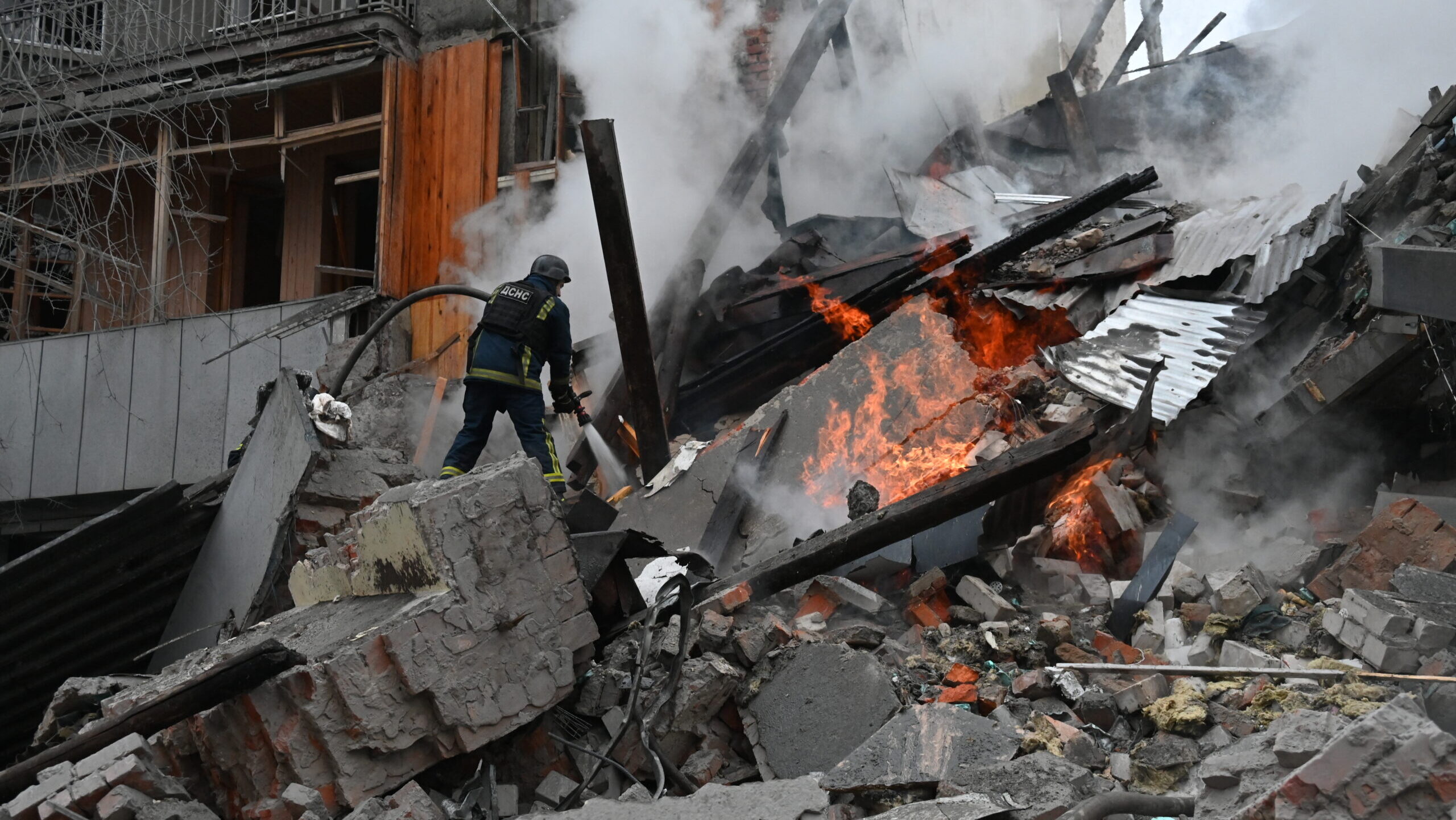
A Ukrainian firefighter extinguishes a fire in a residential building following a Russian air strike in Kharkiv on January 2, 2026
SERGEY BOBOK / AFP
Fresh accusations of civilian casualties from a drone strike in Russian-occupied Ukraine have cast a shadow over U.S.-led efforts to secure a peace deal, as Kyiv and Moscow traded sharply conflicting accounts of what happened.
Russia accused Ukraine of carrying out the deadly drone strike on a hotel and café in the Russian-occupied village of Khorly, in Ukraine’s southern Kherson region, during New Year celebrations.
Russian authorities said the death toll had risen to 27, including two children, after drones struck what Moscow said was a civilian gathering on the Black Sea coast.
Vladimir Saldo, the Russian-installed governor of the region, described the incident as a “terrorist act” and said more than 100 people had been celebrating at the venue. Images released by his administration showed a fire-gutted building and what appeared to be charred bodies amid rubble.
Ukraine’s military confirmed a strike took place but denied targeting civilians. A defence source said the attack was aimed at a military gathering that was closed to civilians, while army spokesman Dmytro Lykhoviy accused Russia of “disinformation and false statements.”
The competing claims come at a sensitive moment, as Washington steps up efforts to end Europe’s deadliest conflict since World War II.
President Volodymyr Zelensky said in his New Year’s Eve address that a U.S.-brokered peace agreement was “90% ready,” though the remaining issues—particularly territorial ones—would “determine the fate of peace, the fate of Ukraine and Europe.”
Russia, which occupies around 19% of Ukraine, has shown little sign of softening its demands.
President Vladimir Putin has vowed to continue fighting until Moscow secures full control of territories it claims as its own, while the Kremlin recently said it would “toughen” its negotiating stance.
The New Year period has also seen a surge in aerial attacks. Zelensky said Russia launched more than 200 drones overnight into January 1, targeting energy infrastructure across seven regions. “On New Year, Russia deliberately brings war,” he wrote, warning that Western delays in air defence deliveries could not be afforded.
Russia, meanwhile, accused Ukraine of attempting a drone attack on one of Putin’s residences—a claim Kyiv and several Western officials have dismissed as lacking evidence. Moscow said it would provide “decrypted data” to the United States to support its allegation.
Despite the violence, Russia’s territorial gains in 2025 remained limited. According to the Ukrainian open-source mapping project DeepState, Russian forces captured less than 1% of Ukraine’s territory last year, though fighting continued along much of the front line amid the ongoing talks.
As civilian deaths mount and both sides trade blame, the persistence of heavy fighting is raising doubts about whether diplomacy can prevail over the battlefield.