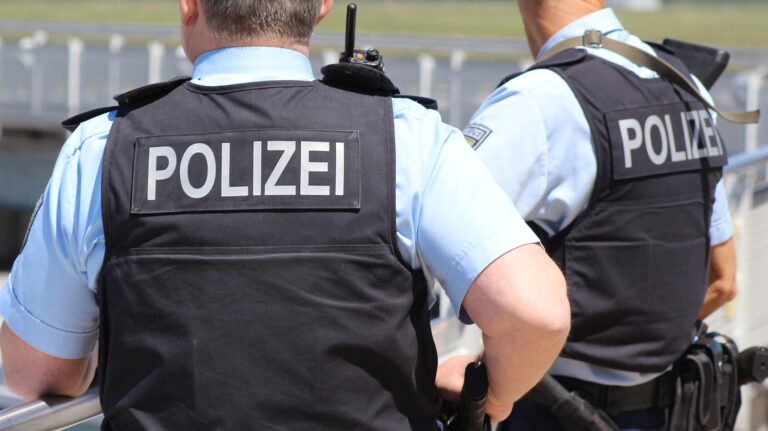
Believers pray at the Jalsa Salana, the annual gathering of the Ahmadiyya Muslim Jamaat (AMJ) on the fair grounds on Mendig airport outside city of Mendig, western Germany, on August 29, 2025.
Kirill Kudryavtsev / AFP
A new agreement granting Muslims in Schleswig-Holstein two additional public holidays has triggered sharp criticism from opposition parties, who warn that the move risks privileging one faith community and sidelining broader concerns over integration.
Last week, the state government signed a treaty with the Northern German Association of Islamic Cultural Centres (VIKZ). The agreement allows Muslim officials, employees, and pupils to take time off on the first day of Ramadan and on Eid al-Adha.
It also confirms the Association’s right to run its own educational institutions and train imams, while paving the way for Islamic studies to be introduced as a regular school subject.
Cultural Minister Dorit Stenke (of the centre-right CDU) defended the deal, calling it an important sign of recognition and equal treatment of religious communities. She insisted it merely formalised “lived practice” in schools and workplaces.
VIKZ leaders welcomed the accord, with vice-chairman Muhlis Şahin stating: “The treaty makes it clear: Islam is a part of our social life. It has taken deep root here and continues to thrive.”
But opposition voices were quick to condemn the move.
The liberal FDP’s parliamentary leader, Christopher Vogt, said: “We have great respect for different religions and their holidays, but we believe that school lessons should not be missed for religious reasons. This is the completely wrong signal.” He also raised concerns about imam training, arguing that “we should not continue to leave this to foreign governments.”
The right-wing Alternative für Deutschland (AfD) denounced the treaty in even stronger terms. Bundestag member Lukas Rehm said: “Enough is enough! Germany must finally stand up for itself again. We say clearly: an end to this self-abandonment.”
The party’s Cloppenburg-Vechta branch in Lower Saxony warned that “German culture is being sacrificed to ideology.”
Academics have also voiced scepticism. Islamic scholar Susanne Schröter criticised the state’s decision to partner with the conservative VIKZ: “That is the fundamental imbalance in the German Islam debate: only actors from a very specific, ultra-conservative spectrum are heard. The many Muslims who are more liberal or moderate, we hardly hear at all.”
The treaty underscores a growing divide in Germany over how to recognise the country’s estimated 5.5 million Muslims. While the state government insists it is ensuring equality for religious communities, critics argue it marks a step towards appeasement rather than integration.