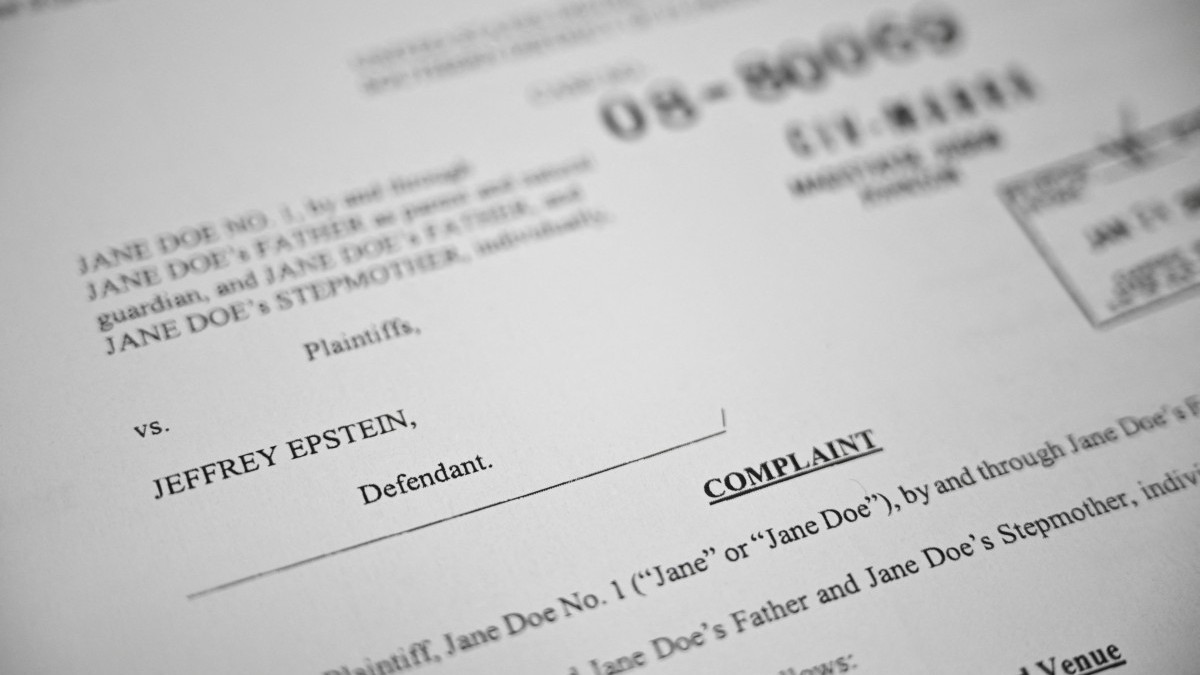
A photo showing a court document after the U.S. Justice Department began releasing the long-awaited records from the investigation into the case of convicted sex offender Jeffrey Epstein.
MANDEL NGAN / AFP
On November 18th, 2025, U.S. lawmakers voted overwhelmingly to release government data related to sex offender Jeffrey Epstein, after President Donald Trump dropped his opposition to making the material public.
Trump urged Republicans to support disclosure, stating that they should vote to release the files “because we have nothing to hide.” Congress subsequently approved the Epstein Files Transparency Act, compelling the publication of unclassified documents linked to the investigation into Epstein’s activities and his death in prison, which was ruled a suicide.
The release of the files has since had political consequences extending beyond the United States, triggering resignations and scrutiny of political figures across Europe.
In the United Kingdom, Lord Peter Mandelson resigned his membership in the Labour Party after documents connected to Epstein alleged that the former New Labour Cabinet Minister received payments totaling $75,000 (€69,000) in 2003 and 2004. Mandelson said he stepped down to avoid causing “further embarrassment” to Labour while he investigated allegations he described as false.
He stated that he has no record or recollection of receiving the payments and questioned the authenticity of the documents, citing formatting errors. He also called on JP Morgan to confirm that the records and individual cheques were genuine.
Separate documents alleged a payment to his male partner, which Mandelson also disputed. Emails included in the files suggested Mandelson remained in contact with Epstein after the financier’s 2008 conviction. Photographs appearing in the documents showed Mandelson in his underwear, though he said he could not identify the location or circumstances.
Political fallout was also felt in Slovakia, where Prime Minister Robert Fico’s national security adviser, Miroslav Lajčák, resigned after files revealed email exchanges with Epstein discussing young women. Lajčák denied any criminal or unethical conduct, condemned Epstein’s crimes, and said he resigned to prevent political damage to the prime minister. Fico accepted the resignation, describing Lajcak as an experienced diplomat.
In Norway, Crown Princess Mette-Marit became embroiled in controversy after newly unsealed files reportedly revealed years of extensive contact with Epstein. Norwegian media reported that the documents include nearly 1,000 references to the crown princess and contain scores of email exchanges between the two from 2011 to 2014, years after Epstein had pleaded guilty in the United States to charges that included soliciting prostitution from a minor.
The emails suggested a close and informal relationship, including affectionate language and jokes that later drew public criticism. The files also indicated that Mette-Marit stayed for four days at Epstein’s residence in Palm Beach, Florida, in 2013, although Epstein was reportedly not present at the time.
In a statement issued through the royal palace, Mette-Marit apologised for what she described as “poor judgment,” expressed sympathy with Epstein’s victims, and said she regretted having any contact with him. The palace said she ended written contact with Epstein in 2014 after concluding he was attempting to use the relationship for leverage.
President Trump has said the release of the Epstein files would expose connections involving powerful Democrats, while reiterating that he severed ties with Epstein years earlier and barred him from his property.