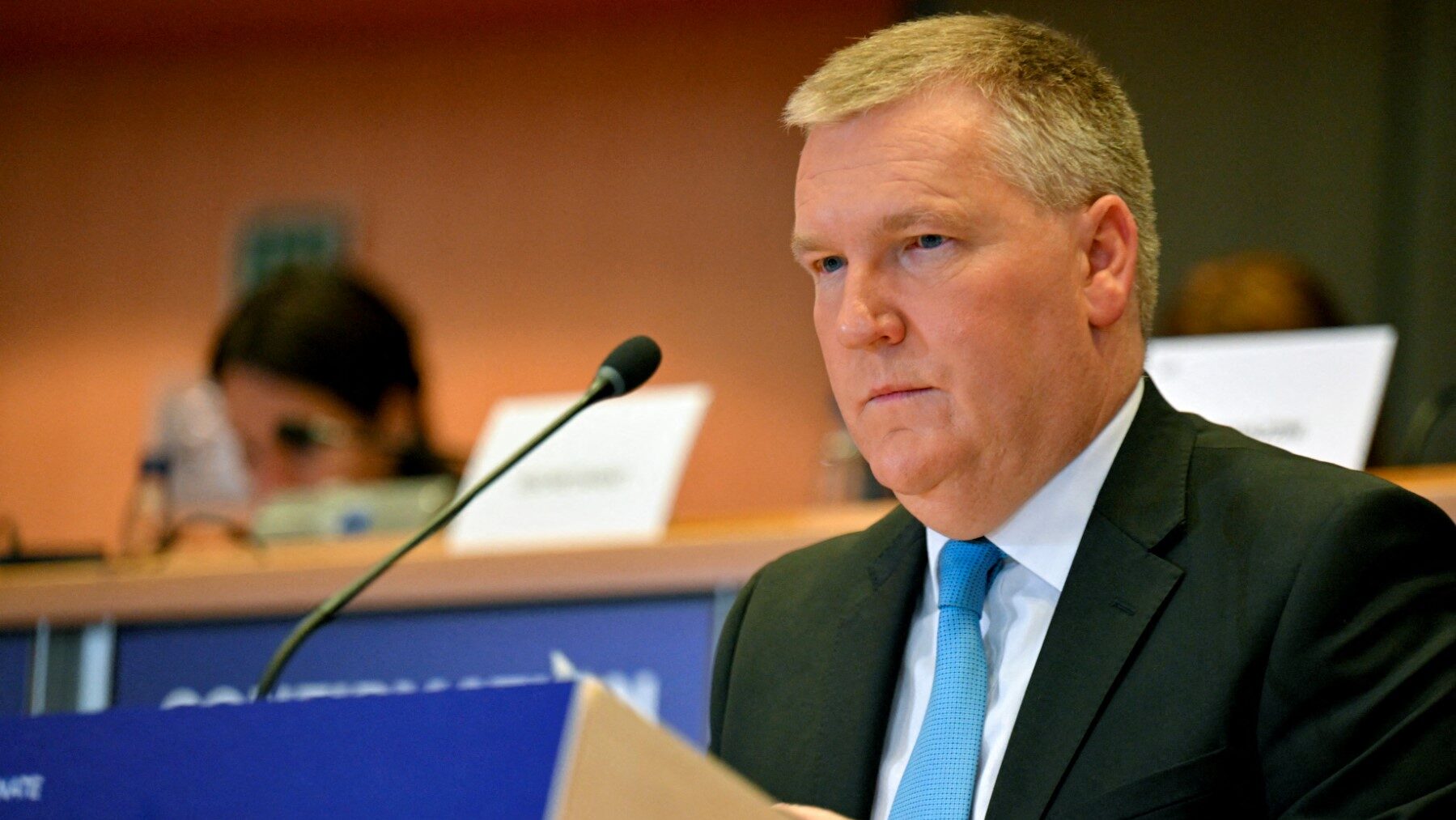
Michael McGrath
Nicolas TUCAT / AFP
The European Commission on Tuesday launched a new body to combat “foreign information manipulation”—a move Brussels says will protect democracy, but one that significantly expands the EU’s role in overseeing elections and public debate.
The initiative forms part of the broader “European Democracy Shield,” a framework the Commission argues is necessary in a world where information is increasingly “weaponised.”
Justice Commissioner Michael McGrath formally launched the European Centre for Democratic Resilience during a lunch with ministers at the General Affairs Council.
Commission President Ursula von der Leyen claimed the Centre was needed in a world where information “is being weaponised,” arguing that it will safeguard that debate remains “open and fair.”
The concern is not that foreign influence campaigns exist, but how far the EU’s response is set to go.
The new Centre will do more than share intelligence. It is tasked with strengthening “resilient elections,” drafting a common European plan to counter foreign information manipulation, coordinating with media organisations and online platforms, and even organising citizens’ panels under Commission oversight.
Taken together, the measures suggest Brussels is strengthening its role in managing how information and political debate are handled across the bloc.
Although the official text says the Centre will operate “in full respect of national competences,” its structure suggests something more than simple voluntary cooperation.
The Commission will back the Centre through its own secretariat and strengthen coordination with the European External Action Service and the EU’s rapid alert system, which monitors suspected disinformation campaigns.
In practice, this places Brussels at the centre of decisions about how “information threats” are defined and addressed.
The broader concern is that, in the name of protecting the EU from outside interference, the Union continues to expand its capacity to influence electoral processes, public narratives and internal political dynamics. What counts as “disinformation” or “manipulation” is not a neutral question. Such judgments can shape electoral campaigns and affect the freedom of national governments and political parties.
The Commission cites Eurobarometer data indicating that 42% of citizens view foreign manipulation as a serious threat to democracy, though the survey does not clearly define what counts as “manipulation.”
The Centre is also expected to work with candidate countries, extending this approach beyond the EU’s current borders. That would embed Brussels-led standards in states seeking membership, shaping their policies before they formally join the bloc.