Ludovic MARIN / AFP
The war in Ukraine risks becoming a “forever war” unless European leaders begin seriously engaging with Russia, a foreign policy expert warned in Budapest on Wednesday.
Speaking at the MCC Budapest Summit on Reclaiming the West, organised by the Mathias Corvinus Collegium, Philip Cunliffe of University College London said he saw little chance of a peace settlement while current EU leaders remain in power.
Cunliffe said the conflict could drag on for years even if a ceasefire were reached, as unresolved territorial disputes would remain.
He also warned that several conflicts around the world risked reinforcing a pattern of prolonged proxy wars, pointing to the U.S.-Israeli attack on Iran, a conflict that now involves several regional actors, including Lebanon, Kurdish forces, and Azerbaijan.
U.S. military action risks strengthening hardliners in Iran and prolonging conflicts in both the Middle East and Eastern Europe, Cunliffe said. He argued that attempts by outside powers to impose political change often backfire, insisting that “freedom can only be claimed by people themselves.”
He added that a widening regional war could trigger an energy crisis and further destabilise global politics.
Cunliffe argued that any lasting peace would require a new European security architecture that includes Russia and helps heal the divide between Moscow and the rest of Europe. He pointed to the earlier vision of Charles de Gaulle, who argued that Europe should not be geopolitically divided or exploited by outside powers.
Without such a settlement, Cunliffe warned that Europe could become the arena of a new geopolitical confrontation between the United States and a China–Russia partnership.
He also criticised Europe’s economic decisions, saying countries such as Germany had hollowed out parts of their industrial base by abandoning Russian energy supplies and turning to more expensive imports of American liquefied natural gas.
Cunliffe defended the approach taken by Hungary, rejecting accusations that the country acted as a proxy for Russia. Instead, he argued that Budapest was pursuing its own national interests by maintaining access to affordable energy despite political pressure from other European governments.
The conference also heard from Michael von der Schulenburg, a former United Nations assistant secretary-general and current Member of the European Parliament.
Speaking on Tuesday, he said European policymakers should prioritise negotiations between Ukraine and Russia rather than further escalation. He criticised a lack of serious discussion about peace initiatives within the European Parliament and called for renewed dialogue with Russia as part of a broader European security arrangement.
Von der Schulenburg also criticised Western leaders for their role in halting early peace negotiations between Ukraine and Russia in 2022. Talks held in Turkey shortly after the invasion produced a preliminary ten-point framework that could have opened the way to a settlement, including provisions allowing Ukraine to pursue EU membership and a long consultation period on the status of Crimea.
Western governments rejected the emerging agreement, which Schulenburg described as a “great tragedy,” emphasising that the opportunity for an early compromise had been abandoned.
"The European Union has given up on its peace project. It has become really a war project."@mvdschulenburg at #MCCBudapestSummit pic.twitter.com/KJSm9mw3dt
— Mathias Corvinus Collegium (@MCC_Budapest) March 11, 2026
The session also featured remarks by Gladden Pappin, president of the Hungarian Institute of International Affairs, who reflected on the evolution of the Western political order.
Pappin said that after the catastrophic wars of the twentieth century, Western leaders attempted to build a rules-based international system centred on institutions such as the United Nations, the World Trade Organization, and the European Union.
However, he argued that over time, this framework expanded beyond its original purpose, as international organisations increasingly intervened in economic, social, and cultural issues while promoting a progressive political agenda.
In recent months, Pappin noted, even supporters of the existing order had begun to question its foundations. He cited remarks by Mark Carney at the World Economic Forum in Davos, where the Canadian prime minister said the rules-based international order had been based on a number of false or hidden pretences, including the decisive role of American power.
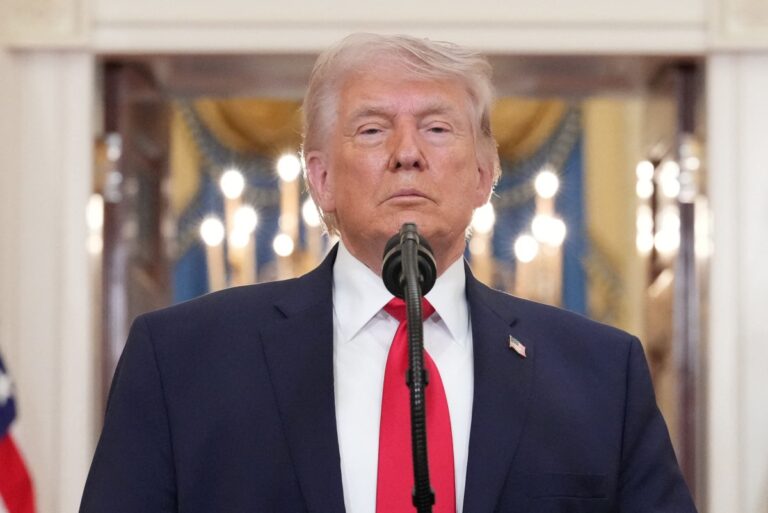
According to Pappin, the emerging alternative could be seen in the policies of the second administration of Donald Trump, which he said emphasises national strength, family policy, and industrial renewal.